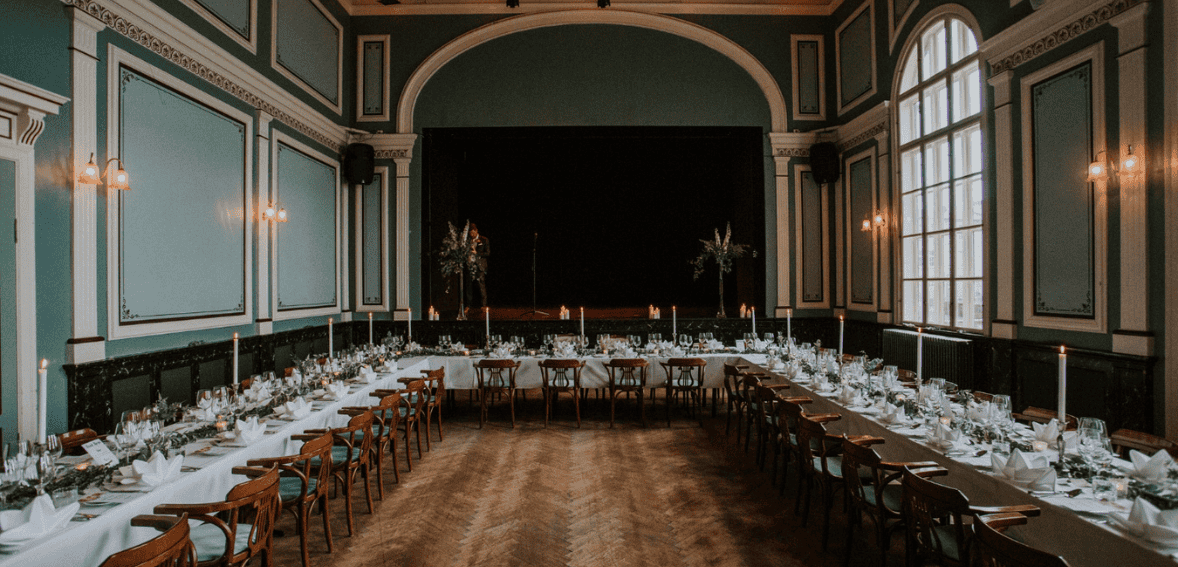
Planning a successful event involves much more than choosing a menu or sending invitations. Behind every well-organised wedding, corporate function, birthday celebration, or gala dinner is a carefully coordinated catering team working to ensure food is served on time, guests are comfortable, and the event runs smoothly. One of the biggest factors influencing this process is the size of the venue.
Many people assume that staffing depends only on the number of guests attending an event. While guest count is certainly important, the physical layout and dimensions of the venue often have an equally significant impact on catering operations. A compact venue with two hundred guests may require a different staffing plan than a spacious venue hosting the same number of people. Walking distances, kitchen access, serving stations, storage areas, and dining layouts all influence how efficiently food and beverages can be delivered.
Understanding the relationship between venue size and catering operations helps organisers make better decisions when planning an event. With the right staffing strategy and service approach, caterers can provide a seamless experience regardless of whether the venue is intimate or expansive.
Why Venue Size Matters More Than Many People Realise
When people visit an event, they usually notice the food, service quality, and overall atmosphere. They rarely think about the planning that takes place behind the scenes. However, professional caterers understand that the physical environment directly affects nearly every aspect of service delivery.
A smaller venue often allows staff to move quickly between preparation areas, serving stations, and dining tables. In contrast, larger venues require longer walking distances, additional equipment, multiple serving points, and stronger communication between team members. These logistical differences can significantly affect service speed and efficiency.
For example, a wedding held in a ballroom where the kitchen is located next to the dining area requires fewer staff movements than an outdoor celebration where food preparation takes place hundreds of metres from the guest seating area. Even with identical guest numbers, staffing requirements may differ considerably because of the venue’s layout.
This is why professional caterers evaluate venue size during the earliest stages of event planning rather than relying solely on attendance estimates.
Guest Numbers and Venue Size Must Be Considered Together
Although guest count remains one of the primary factors in staffing decisions, it should never be considered independently. The relationship between attendance and physical space determines how smoothly food service can be managed.
A compact venue serving one hundred guests may require fewer team members because tables are located close together, food stations are easily accessible, and staff can complete multiple tasks efficiently. On the other hand, a large convention centre with the same number of guests may require additional servers simply because staff spend more time travelling between service points.
Wide floor plans, multiple dining sections, outdoor areas, separate cocktail spaces, and remote kitchens all increase the workload for catering teams. Even simple tasks such as clearing plates or refilling drinks take longer when staff must cover greater distances.
Professional catering management involves analysing both attendance and venue layout together to ensure sufficient staffing while maintaining efficient service throughout the event.
Large Venues Require More Careful Staffing Strategies
Large venues offer many advantages, including impressive aesthetics, flexible layouts, and greater guest capacity. However, they also present operational challenges that require careful planning.
Long walking distances increase the time needed to deliver meals, collect used dishes, replenish buffet stations, and respond to guest requests. Staff members may spend considerable time moving between kitchens, storage areas, bars, and dining sections, reducing the number of tasks they can complete within a given period.
To overcome these challenges, caterers often divide staff into dedicated teams responsible for specific sections of the venue. Instead of assigning servers randomly, supervisors allocate responsibilities according to dining zones, ensuring every area receives consistent attention.
Additional supervisors may also be assigned to coordinate communication between kitchen staff, service teams, bartenders, and event organisers. Effective planning allows catering staff to maintain service quality even within very large venues.
Small Venues Present Their Own Challenges
Smaller venues may appear easier to manage, but they introduce unique operational considerations of their own. Limited space often means restricted kitchen facilities, narrow walkways, fewer storage areas, and tighter working conditions for staff.
When several team members operate within confined spaces, careful coordination becomes essential. Servers must avoid congestion while maintaining efficient food delivery. Kitchen staff need organised workflows to prevent delays during busy service periods.
Smaller venues also require careful placement of buffet stations, beverage areas, and service equipment to maximise available space without disrupting guest movement. Every metre becomes valuable during event setup.
Experienced catering management professionals understand that smaller venues require efficiency rather than simply reducing staff numbers. Smart planning helps maximise productivity while maintaining excellent guest experiences.
Kitchen Location Can Influence Staffing Requirements
The distance between the kitchen and dining area is one of the most important considerations in catering operations. Even when the venue itself is not particularly large, a remote kitchen can significantly increase staffing needs.
If servers must repeatedly travel long distances carrying meals, beverages, or serving equipment, food delivery becomes slower and more physically demanding. Additional staff may be required simply to maintain timely service.
Some venues include satellite preparation areas closer to dining spaces, allowing caterers to stage food before service begins. Others require temporary kitchens or mobile catering units to reduce transportation time.
Understanding kitchen logistics allows planners to determine the appropriate number of catering staff needed while maintaining food quality and serving meals at the correct temperature.
Event Layout Affects Service Efficiency
Venue size alone does not determine staffing requirements. Internal layout also plays a major role in operational efficiency. Two venues with identical square footage may require completely different staffing strategies depending on their floor plans.
Open dining spaces generally allow faster movement between tables. Venues with multiple rooms, staircases, outdoor sections, or divided seating areas often require additional staff to ensure every guest receives consistent attention.
Special event features such as dance floors, stages, decorative installations, or exhibition booths can further influence staff movement by creating obstacles or reducing direct access between service areas.
Successful event service depends on understanding these practical challenges before the event begins rather than reacting to problems during service.
Different Service Styles Require Different Staffing Levels
The chosen catering style also interacts closely with venue size. Plated meals, buffets, food stations, family-style dining, and cocktail receptions each require different staffing approaches depending on the available space.
Plated service generally requires more servers because meals must be delivered directly to each guest. In larger venues, this often means assigning dedicated teams to specific seating sections to maintain synchronised service.
Buffets reduce table service but require staff to monitor food levels, assist guests, maintain cleanliness, and replenish serving stations. Large venues may require multiple buffet locations to minimise queues and improve guest flow.
Cocktail receptions rely heavily on circulating servers who continuously move throughout the venue with food and beverages. In expansive venues, additional personnel help ensure guests across all areas receive equal attention.
Matching service style with venue size allows organisers to create smoother experiences while avoiding unnecessary staffing shortages.
Communication Becomes More Important in Larger Venues
As venues become larger, effective communication becomes increasingly critical. Staff members working across different sections cannot rely solely on verbal instructions or visual contact.
Many professional catering companies use radios, headsets, or mobile communication systems to coordinate meal service, kitchen updates, guest requests, and schedule changes throughout large events. This helps supervisors respond quickly to unexpected situations without disrupting service.
Clear communication also reduces duplication of tasks. Staff know which tables have already been served, which buffet stations require replenishment, and where additional assistance may be needed.
Strong communication systems allow event service teams to maintain consistency even when operating across complex or multi-level venues.
Staffing Ratios Are Not Always Fixed
Many event planners search for standard staffing ratios, such as one server for every twenty guests. While these guidelines provide useful starting points, experienced caterers understand that no universal formula applies to every event.
Venue size, service style, menu complexity, guest expectations, accessibility, and event duration all influence staffing requirements. A luxury formal dinner often requires more personnel than an informal buffet serving the same number of attendees.
Similarly, outdoor venues may require additional staff for transportation, equipment setup, and weather-related adjustments compared with indoor locations.
Professional catering management involves evaluating each event individually rather than relying solely on standard staffing calculations.

Beverage Service Is Also Influenced by Venue Size
Food service receives much of the attention during event planning, but beverage operations are equally affected by venue layout. Large venues may require multiple bars or beverage stations to prevent long queues and reduce congestion.
Guests should never need to walk excessive distances for refreshments. Well-positioned beverage stations improve convenience while allowing staff to distribute workloads more evenly throughout the event.
Servers assigned specifically to beverage service also reduce delays by ensuring drinks are replenished without interrupting food delivery operations. This division of responsibilities helps improve overall efficiency.
Carefully planned beverage operations contribute significantly to successful event service, especially during larger functions where guest movement is spread across multiple areas.
Outdoor Venues Require Additional Planning
Outdoor events present unique challenges that make staffing decisions even more important. Gardens, beaches, vineyards, parks, and private estates often involve greater distances between preparation areas and guest seating.
Temporary kitchens, portable refrigeration, weather protection, and equipment transportation all require additional personnel and coordination. Uneven ground, changing weather conditions, and limited infrastructure further increase operational complexity.
Staff may need extra time to transport food safely while maintaining appropriate serving temperatures. Additional supervisors often monitor logistics to ensure smooth coordination between preparation teams and serving staff.
Outdoor events clearly demonstrate how venue size extends beyond square footage to include practical operational considerations that directly affect staffing decisions.
Technology Is Supporting Modern Catering Operations
Technology is helping catering companies manage staffing more efficiently regardless of venue size. Digital planning software allows managers to create detailed floor plans, assign service zones, schedule staff, and monitor event timelines.
Mobile applications also improve communication by allowing supervisors to update team members instantly when schedules change or unexpected situations arise. Digital checklists help ensure equipment, food stations, and service areas remain fully prepared throughout the event.
Some companies even use location tracking and workflow analysis to identify inefficiencies and improve future staffing decisions. These tools support better planning while reducing unnecessary labour costs.
Technology has become an important part of modern catering management, allowing teams to deliver consistently high service standards across venues of all sizes.
Training Helps Staff Adapt to Different Venues
Every venue presents different challenges, making staff training an essential part of successful catering operations. Experienced employees understand how to adjust their workflows according to venue layout, guest movement, and service style.
Training covers efficient carrying techniques, communication procedures, table service etiquette, food safety, time management, and problem-solving under pressure. Staff also learn how to remain professional while adapting to unexpected situations such as weather changes or last-minute schedule adjustments.
Cross-trained employees provide greater flexibility because they can assist with multiple responsibilities when required. This adaptability becomes particularly valuable during large events where workloads may change throughout the day.
Well-trained catering staff contribute significantly to smooth operations regardless of venue size or event complexity.

Guest Experience Depends on Effective Staffing
From a guest’s perspective, successful catering appears effortless. Meals arrive promptly, drinks remain available, tables stay clean, and staff respond quickly to requests. Achieving this level of service requires careful planning long before the event begins.
Insufficient staffing often results in delays, long queues, empty buffet trays, slow table clearing, and frustrated guests. Excessive staffing, however, can increase costs without improving service quality.
Finding the right balance requires understanding how venue size, guest numbers, service style, and event schedule interact with one another. Experienced planners carefully evaluate every operational detail before determining staffing levels.
Ultimately, excellent event service depends not simply on employing more people but on assigning the right people to the right responsibilities within the specific venue.
The Future of Catering Staffing
As events become increasingly sophisticated, catering operations will continue evolving alongside new technologies and changing guest expectations. Data analysis, workforce scheduling software, automation, and digital communication tools will help companies allocate staff more accurately according to venue characteristics.
Sustainability will also influence staffing strategies. Efficient workflows reduce unnecessary movement, minimise food waste, and improve resource management while supporting environmentally responsible event operations.
Personalised guest experiences will become increasingly important, encouraging caterers to invest in staff training and operational planning rather than relying solely on traditional staffing formulas.
Regardless of technological advancements, successful events will always depend on experienced professionals who understand how venue characteristics influence every aspect of catering operations.
Conclusion
Venue selection plays a much greater role in catering success than many people realise. While guest numbers remain important, the physical layout, accessibility, kitchen location, service style, and operational complexity associated with venue size all influence how catering teams plan and deliver their services.
Professional catering management carefully evaluates these factors to determine appropriate staffing levels, organise efficient workflows, and maintain consistent service quality throughout the event. Well-trained catering staff supported by thoughtful planning can adapt to venues of every size while ensuring food is served efficiently, safely, and professionally.
Whether hosting a small private gathering or a large corporate function, understanding how venue characteristics affect event service allows organisers to create smoother experiences for guests while helping catering teams perform at their best. With careful planning and experienced staff, every venue can become the setting for a memorable and successful event.