
By Jermaine Thomas February 8, 2026
Sustainability has moved from being a niche concern to a central business consideration, especially in food and catering services. Customers today are more aware of how their choices affect the environment, and packaging is one of the most visible indicators of a brand’s commitment to responsible practices. For catering businesses, packaging is not just about carrying food safely. It reflects values, quality standards, and long term thinking.
As events grow larger and food delivery becomes more common, the volume of single use packaging used by caterers has increased significantly. This has brought eco friendly packaging catering solutions into sharper focus. Sustainable packaging is no longer limited to high end or niche caterers. It is becoming a practical, expected part of everyday operations. Understanding compostable food packaging and broader green packaging options helps caterers make informed decisions that balance cost, performance, and environmental responsibility.
Why Sustainability Matters in Catering Packaging
The nature of the business of caterers involves food, service, and hospitality. This makes the environmental impact of the business highly visible. Every single box, cup, or piece of cutlery used in the business becomes part of the service. When the packaging is disposed of as waste after an event, it has a direct effect on how clients view the business. This makes eco-friendly packaging an important consideration for caterers who want to establish trust and credibility with their clients.
Eco-friendly packaging catering solutions are a great way to go green and meet the changing demands of clients. Many clients today inquire about the type of packaging materials used before hiring a caterer. Sustainability has become a consideration in the selection process for corporate events, weddings, and institutions. Going green is no longer a marketing strategy. It has become a consideration for businesses. Caterers who are early adopters can establish themselves as forward-thinking and environmentally responsible without compromising on food quality and presentation.
Understanding the Basics of Sustainable Packaging
Sustainable packaging refers to materials and designs that minimize environmental impact throughout their lifecycle. This includes sourcing, manufacturing, usage, and disposal. In catering, sustainability often focuses on reducing plastic use, improving recyclability, and transitioning to compostable food packaging where possible.
Green packaging options are typically made from renewable, recyclable, or biodegradable materials. However, not all alternatives are equal. Some materials may be recyclable but not accepted everywhere, while others require specific composting facilities. For eco-friendly packaging catering to be effective, caterers must understand how packaging behaves after use. Choosing materials that align with local waste systems ensures that sustainability efforts translate into real environmental benefits rather than good intentions alone.
Compostable Food Packaging and How It Works
Compostable food packaging is meant to decompose naturally into its elements when subjected to composting conditions, without leaving any toxic residue behind. Compostable food packaging is usually made from plant-based materials such as sugarcane fibers, cornstarch, or bamboo. In the catering industry, compostable food packaging is commonly used in the form of plates, bowls, food containers, and cutlery.
An important point to note is that compostable food packaging may be meant for industrial composting or home composting. Some compostable food packaging may need to be composted industrially in order to decompose completely, while other types may be able to decompose in home composting systems. It is important for caterers to know what type of packaging they are using and to inform their customers accordingly if needed. If done properly, compostable food packaging can be an effective way of reducing waste in the long run.
Recyclable Packaging in Catering Operations
Recyclable packaging remains a significant part of sustainable catering strategies. Materials such as paperboard, cardboard, aluminum, and certain plastics can be recycled when clean and properly sorted. Recyclability supports resource reuse and reduces the demand for virgin materials.
For eco-friendly packaging catering, simplicity is essential. Packaging made from a single material is easier to recycle than mixed material products. Clear labeling also helps customers dispose of items correctly. While recyclable packaging is widely available and often cost effective, it relies heavily on user behavior and local infrastructure. Caterers should assess how their events are managed and whether recycling facilities are available on site. When recycling is properly supported, it plays a valuable role alongside compostable food packaging in a balanced sustainability approach.
Paper Based Packaging Solutions
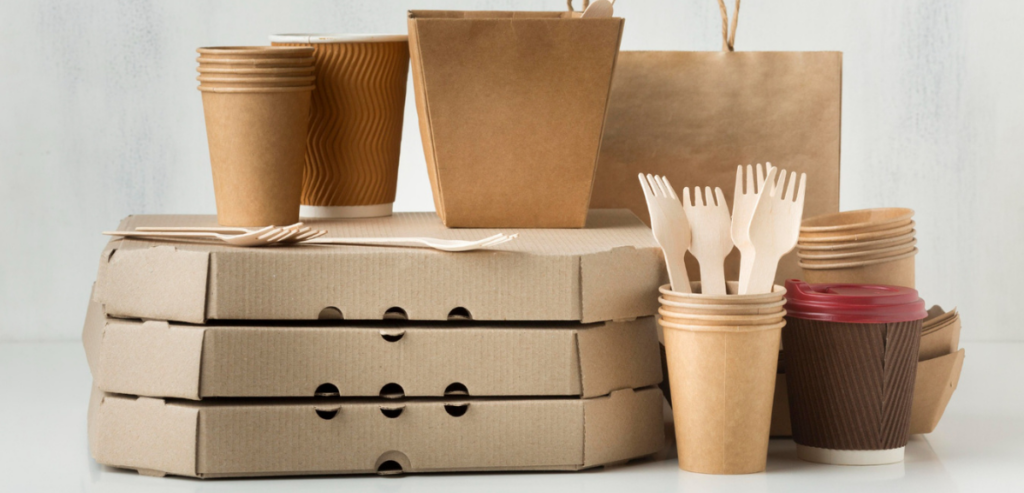
Paper based packaging is one of the most popular green packaging options for catering businesses. Paper bags, boxes, wraps, and trays are widely accepted by consumers and generally easier to dispose of responsibly. When sourced from sustainably managed forests or made from recycled content, paper packaging can significantly reduce environmental impact.
However, food service packaging often requires coatings to resist grease and moisture. Traditional plastic coatings can hinder recyclability. Newer innovations include water based or compostable coatings that maintain performance without compromising sustainability. Eco friendly packaging catering strategies increasingly favor paper based solutions that combine durability with environmental benefits. Caterers benefit from packaging that feels familiar to customers while aligning with compostable or recyclable waste streams.
Plant Based and Fiber Packaging Options
Plant fibers like bagasse, bamboo, and palm leaves are also being used as an alternative to plastic packaging. Bagasse, which is a byproduct of sugarcane processing, is being widely used for compostable food packaging in the form of catering trays, plates, and clamshell packaging. These are strong, heat-resistant, and ideal for hot and cold foods.
Fiber-based green packaging provides a natural look that is ideal for food presentation, especially for high-end or green events. From a practical standpoint, plant-based packaging is also suitable for tough catering operations. Moreover, plant-based packaging also conveys a strong sustainability message without needing much explanation. For caterers who want to improve their packaging without compromising functionality, plant-based packaging is a trustworthy and increasingly cost-effective option.
Reducing Plastic Use Without Sacrificing Convenience
Plastic has long been valued in catering for its durability, low cost, and convenience. However, environmental concerns and regulations are pushing businesses to reduce plastic usage wherever possible. Transitioning away from plastic does not mean eliminating convenience. It means choosing smarter alternatives.
Eco friendly packaging catering strategies often focus on replacing single use plastic items first, such as cutlery, cups, and takeaway containers. Compostable food packaging and paper based products can fulfill the same roles with minimal disruption. For items that still require plastic properties, such as lids or seals, caterers can explore recyclable or reduced plastic options. Gradual change allows operations to adapt smoothly while demonstrating commitment to green packaging goals.
Packaging Design and Portion Control
Sustainable packaging is not only about materials but also about design efficiency. Oversized packaging wastes resources and increases disposal volume. Thoughtful portion specific packaging helps reduce material use while improving presentation and practicality. Caterers can evaluate menu items and select packaging that fits portion sizes accurately. This approach supports eco-friendly packaging catering by minimizing excess material and food waste simultaneously. Packaging that feels intentional also enhances the customer experience. When form and function align, green packaging becomes an asset rather than a compromise.
Managing Cost Concerns in Sustainable Packaging
One of the concerns that most catering companies have is related to the cost. Green packaging may be more costly than plastic packaging, but this difference is gradually being bridged as more people show interest in it. Long-term costs are also important. Green packaging catering services can help companies save on waste disposal charges, enhance their reputation, and even attract environmentally conscious customers who are willing to pay a little extra. Most catering companies have found that customers are willing to pay a little extra if the company is open with them about the green packaging.
Regulations and Compliance in Food Packaging
Packaging regulations vary by region, but the trend is clear. Governments are placing stricter controls on single use plastics and encouraging sustainable alternatives. Catering businesses must stay informed about local requirements to avoid compliance issues. Green packaging and compostable food packaging often support regulatory compliance while future proofing operations. Choosing approved materials and working with reliable suppliers ensures packaging meets food safety and environmental standards. Compliance is not just about avoiding penalties. It reinforces credibility and professionalism in a competitive catering market.
Educating Staff and Customers on Proper Disposal
Even the most sustainable packaging fails if disposed of incorrectly. Staff play a crucial role in implementing eco friendly packaging catering practices. Training teams to understand materials and disposal requirements ensures consistency at events and during service. Clear communication with customers is equally important. Simple disposal instructions on signage or packaging help guide responsible behavior. When compostable food packaging is used, customers should know whether it belongs in compost or general waste. Education bridges the gap between intention and impact, making green packaging efforts truly effective.
Supplier Selection and Material Transparency
Selecting the best packaging supplier is an important aspect of sustainability. Caterers should look for suppliers who are transparent about their packaging materials, certifications, and sustainability. This will help businesses avoid greenwashing. Suppliers who deal with eco-friendly packaging for caterers can help with advice on product selection, functionality, and disposal. Long-term relationships with reputable suppliers will ensure consistency and quality. This will also enable caterers to adjust to new compostable food packaging innovations that come into the market.
Branding Opportunities Through Sustainable Packaging
Packaging is a powerful branding tool. Sustainable choices allow caterers to communicate values without saying a word. Natural textures, simple designs, and eco conscious materials create a positive emotional response. Green packaging aligns well with modern branding that emphasizes responsibility and authenticity. For catering businesses, this can be especially valuable at events where presentation and perception matter. When packaging reinforces a sustainability message, it enhances brand recall and differentiation. Eco friendly packaging catering becomes part of the story clients and guests remember.
Handling High Volume Events Sustainably
Large scale catering presents unique challenges for sustainable packaging. High volumes increase waste generation and require careful planning. However, scale also offers opportunities for impact. Standardizing compostable food packaging across menus simplifies logistics and waste management. Coordinating with event organizers to provide composting or recycling stations improves disposal outcomes. Green packaging choices become more effective when aligned with event planning and waste strategies. With proper coordination, even high volume catering can operate responsibly without sacrificing efficiency.
Measuring Impact and Continuous Improvement
Sustainability is an ongoing process rather than a one time switch. Caterers benefit from tracking packaging usage, waste reduction, and customer feedback. These insights help refine eco friendly packaging catering strategies over time. Small improvements such as reducing material weight, changing suppliers, or redesigning packaging can create meaningful impact. Continuous learning keeps businesses aligned with industry developments and customer expectations. Green packaging evolves, and successful caterers evolve with it.
The Future of Sustainable Packaging in Catering
Innovation in sustainable materials continues to accelerate. New compostable food packaging options, improved recyclability, and smarter designs are reshaping the industry. Caterers who stay informed can adapt proactively rather than reactively. The future of catering packaging lies in balance. Performance, cost, aesthetics, and environmental responsibility must work together. Green packaging will continue to move from alternative to standard practice. Businesses that embrace this shift early will be better positioned to meet both regulatory demands and customer values.
Sustainable Packaging for Different Catering Formats
Catering businesses operate across a wide range of formats, from corporate lunches and weddings to food stalls and private events. Each format places different demands on packaging, which means sustainability solutions must be flexible rather than generic. A boxed meal for a conference, for example, requires secure stacking and temperature retention, while plated outdoor catering focuses more on presentation and sturdiness.
Eco friendly packaging catering solutions work best when matched to the service style. Compostable food packaging made from molded fiber is ideal for high volume boxed meals, while elegant paper based or palm leaf options work well for premium events. Green packaging must perform reliably under real service conditions, including transport, reheating, and extended display times. By selecting packaging based on use case rather than habit, caterers can reduce waste and improve efficiency. Matching packaging format to catering style ensures sustainability does not compromise food quality, guest experience, or operational flow.
Food Safety Considerations in Sustainable Packaging
Food safety remains a top priority for catering businesses, and sustainable packaging must meet the same standards as conventional materials. Some caterers worry that eco-friendly materials may not perform as well when it comes to moisture control, heat resistance, or food protection. Modern compostable food packaging has evolved significantly to address these concerns.
Many green packaging materials are now certified food safe and designed specifically for hot, oily, or acidic foods. Eco friendly packaging catering suppliers increasingly test products for real world performance, ensuring they maintain structure and hygiene during service. Proper storage and handling are also important, as some compostable materials are more sensitive to humidity than plastic. When selected and managed correctly, sustainable packaging meets food safety requirements while supporting environmental goals. Understanding these standards helps caterers adopt greener options with confidence rather than hesitation.
Waste Sorting and End of Event Cleanup Strategies
The success of sustainable packaging does not end once food is served. What happens after the event plays a critical role in environmental impact. At large gatherings, waste sorting can quickly become chaotic if systems are unclear. Even the best compostable food packaging loses its value if it ends up in the wrong waste stream.
Eco friendly packaging catering works best when paired with simple, visible waste management plans. Clearly labeled bins for compost, recycling, and general waste help guests dispose of items correctly. Coordinating with venue staff ensures that collected waste is handled appropriately after the event. Green packaging becomes most effective when disposal is planned from the start rather than treated as an afterthought. Caterers who take ownership of this process demonstrate leadership and reinforce their sustainability commitment beyond the plate.
Communicating Sustainability to Clients Without Overstatement
While sustainability is important, how it is communicated matters just as much. Clients appreciate transparency and honesty, but they may be skeptical of exaggerated claims. Caterers should focus on explaining what they are doing, why it matters, and how it benefits both the event and the environment.
Eco friendly packaging catering initiatives can be shared through simple descriptions in proposals, menus, or event briefings. Highlighting the use of compostable food packaging or recyclable materials reassures clients without turning sustainability into a sales pitch. Green packaging speaks powerfully through action, especially when guests can see and feel the difference. Clear, grounded communication builds trust and avoids the risk of greenwashing. By keeping the message practical and factual, caterers position sustainability as an integrated part of quality service rather than a marketing tactic.
Conclusion: Making Sustainability Practical and Profitable
Sustainable packaging is no longer a distant ideal for catering businesses. It is a practical, visible, and increasingly essential part of service delivery. From compostable food packaging to recyclable and plant based materials, today’s options offer both functionality and environmental benefit. By understanding materials, planning thoughtfully, and educating teams and clients, caterers can implement eco-friendly packaging catering solutions without disrupting operations. Green packaging becomes not just a responsibility but an opportunity to strengthen brand trust and future proof the business. In a world where sustainability matters more every day, the right packaging choices can make a lasting difference.