By Jermaine Thomas May 14, 2026
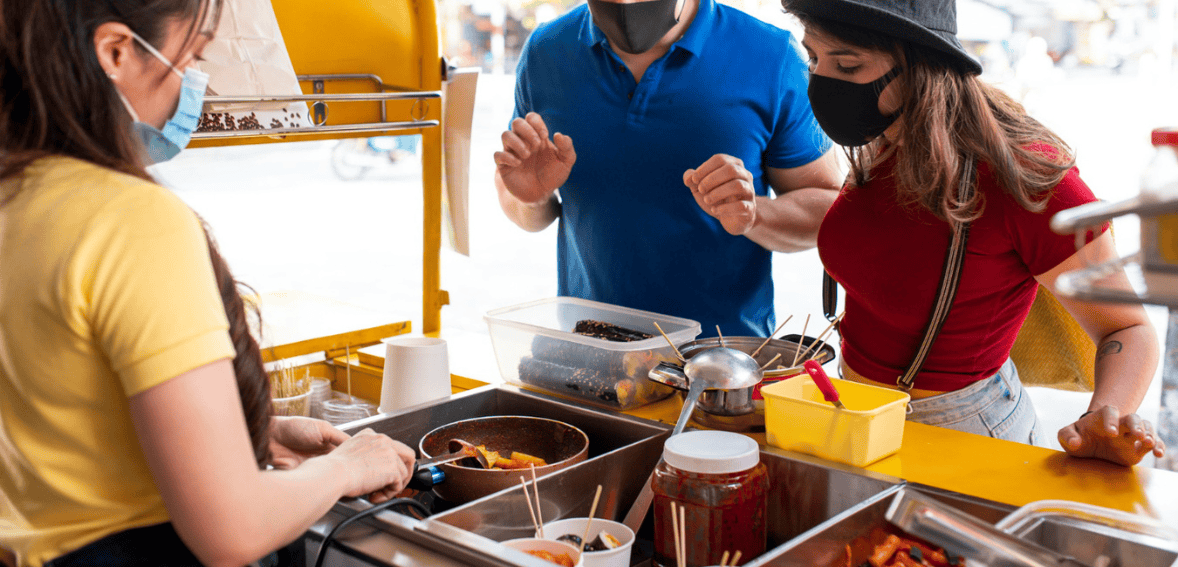
There is something about street food that formal catering has never quite managed to replicate, and it is not the food itself. The best street food from any corner of the world carries with it an energy, an immediacy, and an accessibility that plated dinners and buffet lines simply cannot manufacture. When someone hands you a taco from a cart in Mexico City, a bánh mì from a stall in Hanoi, or a lamb kofta wrap from a market in Istanbul, the experience is complete in itself, requiring no table, no cutlery, no ceremony. It is food that trusts itself, food that does not need the scaffolding of formal service to feel special.
Event planners, couples planning weddings, and corporate hosts have noticed this quality and have increasingly turned to street food catering ideas to bring that energy into their celebrations. The result has been one of the most genuine shifts in modern event food that the catering industry has seen in years, a move away from the formal and the expected toward the vibrant, the shareable, and the globally inspired. This shift is not just about aesthetics or novelty. It reflects a real change in how people want to experience food at celebrations, prioritizing flavor adventure, social interaction, and the kind of joyful abundance that the best street food markets have always delivered.
Why Street Food Catering Has Taken Hold
The rise of street food catering ideas in the mainstream event market reflects several converging forces that have made the formal catering model feel dated to a growing proportion of event clients and their guests. The most fundamental is the shift in how people experience food in their daily lives. A generation that has grown up with food trucks, international food halls, farmers markets, and social media feeds full of global street food content arrives at weddings and corporate events with a much broader culinary reference frame than previous generations had.
A guest who has eaten poke bowls for lunch, ramen for dinner, and Korean BBQ on a Saturday night is not particularly impressed by a three-course dinner of salad, chicken in cream sauce, and chocolate cake. They know what bold flavors taste like, and they notice when the food at an event does not rise to the standard of the restaurants they frequent on an ordinary week. Modern event food that speaks to this guest’s experience brings global street food inspiration into the event setting with the same authenticity and intensity that makes street food compelling in its original context. The social dimension of street food is another major driver of its event appeal.
The traditional setting of dining in seats produces a set arrangement of society where the guests can only converse with those who happen to be sitting next to them. The street food catering process brings about a sense of movement since the guests will move along with the food, stopping at various points to talk to strangers while queuing for their tacos and sitting around the common mezze table together with anyone who happens to be there.
The Building Blocks of a Global Street Food Menu
Building a genuinely excellent global street food menu for an event requires more than simply collecting dishes from different countries and placing them side by side. The curation needs to address balance across flavor profiles, texture contrasts, temperature variety, and dietary diversity, all while ensuring that each individual dish is executed at the quality level that makes it genuinely special rather than a pale approximation of what it should be.
Global street food menus work best when they are organized around a clear concept rather than an unlimited international survey, because a focused menu executed brilliantly is always more satisfying than an exhaustive menu where the cooking is spread too thin. A Southeast Asian street food concept that brings together Vietnamese, Thai, and Indonesian influences has coherence and depth that a six-continent global tour often lacks.
Flavors from Latin America centered on Mexican, Peruvian, and Brazilian foods will form a cohesive flavor profile with intention behind its creation. The idea of a Mediterranean and Middle Eastern street food menu featuring mezze platters, grilled meats, and flatbreads will make for a cohesive story through which guests can engage. However, in whichever idea we choose, the individual dishes have to comply with some logistical considerations regarding events, such as being able to manage the dishes without any cutlery or with minimal utensils, maintaining the freshness of the dish through the whole serving process, consistency when serving each dish equally, and catering to various dietary restrictions of the event attendees.
Latin American Street Food at Events
The vibrancy and accessibility of Latin American street food catering ideas have made this one of the most popular global inspirations for modern event food, and the breadth of the culinary tradition offers caterers extraordinary range from which to build genuinely exciting menus. Mexican street food remains the most widely recognized and most versatile in the event context, offering a family of formats including tacos, tostadas, sopes, and quesadillas that allow remarkable ingredient variety within consistent, familiar structures.
A taco station where guests can choose between slow-braised brisket, chile-marinated chicken, or roasted cauliflower with chipotle, assembled with house-made salsas, pickled onions, and fresh cilantro, creates an interactive experience that accommodates every dietary preference while maintaining genuine culinary quality.
There are no compromises when it comes to the level of excellence required for the best of Mexican street food, which is why catering teams who pay attention to this style of cooking by preparing the tortillas fresh, cooking the meats properly, making the sauces using fresh ingredients rather than commercial imitations, will earn the praise and enthusiasm that the cuisine deserves.
There is no shortage of delicious dishes that would work perfectly for an event and are a part of Peruvian street food traditions; there is no better example than the unique flavor profile of the dishes cooked in Peru, making Lima one of the world’s top culinary cities. Skewers called anticuchos are very easy to adapt into an event menu because of the interesting flavor profile of Peruvian cuisine; the marinade made of aji amarillo peppers, cumin, and garlic gives the meats an incredibly interesting taste.
Southeast Asian Street Food: Complexity in Every Bite
Southeast Asian cuisines offer some of the most flavor-dense and most technically sophisticated street food traditions in the world, and bringing them into the event catering context requires both genuine knowledge of the traditions and careful attention to the specific preparation challenges that some of these dishes present at event scale.
Vietnamese street food is characterized by the balance of fresh herbs, bright acidity, umami depth from fish sauce and fermented ingredients, and textural contrast between crispy and soft elements that makes even simple dishes feel complex and complete. Bánh mì, the Vietnamese sandwich that brings together a crispy baguette with pickled daikon and carrot, fresh cucumber and cilantro, rich pâté, and protein of choice, is one of the most underutilized options in global street food menus for events despite being almost universally appealing, quick to assemble to order, and visually striking when made with quality ingredients.
Summer Rolls with Peanut Sauce provide an innovative choice for a health-conscious guest as well as for an adventurous diner as the transparent rice wrapper makes all the contents of the roll visible to the eye, while the peanut sauce adds the necessary taste to the dish. Thai street food is known for the combination of sweet, sour, salty, and spicy flavors which give a special flavor to the dish.
The satay skewers with peanut sauce represent an excellent choice for any event menu as it goes easily on individual sticks which will allow the guests to walk and eat the food from their sticks. Pad Thai, prepared in individual portions and served in takeaway boxes, with chopsticks offered in addition to forks, creates the street market atmosphere.
Middle Eastern and North African Street Food
The street food traditions of the Middle East and North Africa offer caterers one of the richest and most guest-friendly repertoires for event catering, built around dishes that are inherently shareable, visually abundant, and accessible to a wide range of dietary preferences. The mezze format, which assembles a collection of small dishes including hummus, baba ganoush, tabbouleh, fattoush, stuffed grape leaves, and pickled vegetables around a spread of warm flatbread, creates the sharing table aesthetic that is one of the most social and most visually impressive formats available in modern event food.
A successful mezze spread will take careful attention to quality ingredients; the hummus must be creamy and properly seasoned, the baba ganoush must have actual grill marks on its eggplant and taste charred, and the tabbouleh must contain real parsley, not an ersatz substitute based mainly on grains. Falafel, one of the most popular street foods in the Middle East, also works well as a catered item when freshly prepared and served right away with tahini sauce and proper accompaniments.
The secret to good falafel is making sure to use dried chickpeas instead of canned, soaking them overnight, and grinding them with herbs and spices for frying. This results in a totally different texture than the dense, doughy texture that you get from taking the easy way out. The carving of shawarma off a revolving spit in front of guests creates the drama of the street food concept, and the flexibility of shawarma as a concept means that the dish can be made with chicken, lamb, beef, or even a spiced cauliflower alternative.
Indian Street Food and Its Event Potential
Indian street food represents one of the most underexplored opportunities in global street food menus for events in Western markets, despite offering dishes that are among the most flavor-complex, most diverse in regional variation, and most capable of creating genuinely memorable food experiences that guests have never encountered before. The chaat tradition of North Indian street food is particularly compelling for event catering because the individual dishes, pani puri, sev puri, bhel puri, and papdi chaat, are built around textures and flavor combinations that are unlike anything in Western culinary tradition.
Pani puri, hollow crispy shells filled with spiced potato and chickpea and dunked in flavored tamarind or mint water, creates an eating experience that is simultaneously interactive, surprising, and intensely flavorful in a way that makes every guest who tries it for the first time genuinely animated. The challenge of chaat for event catering is that many of the dishes need to be assembled to order and served immediately to preserve their textural integrity, which requires skilled staffing at the station rather than self-service formats.
This challenge is entirely manageable for caterers with the right preparation and staffing model, and the impact of a well-executed chaat station at an event is consistently among the most talked-about food experiences guests report. South Indian street food offers a different repertoire centered on dosas, the crispy fermented rice and lentil crepes served with coconut chutney and sambar, that can be made to order at a live station with impressive visual drama and genuine culinary substance.
Street Food Stations and the Service Format
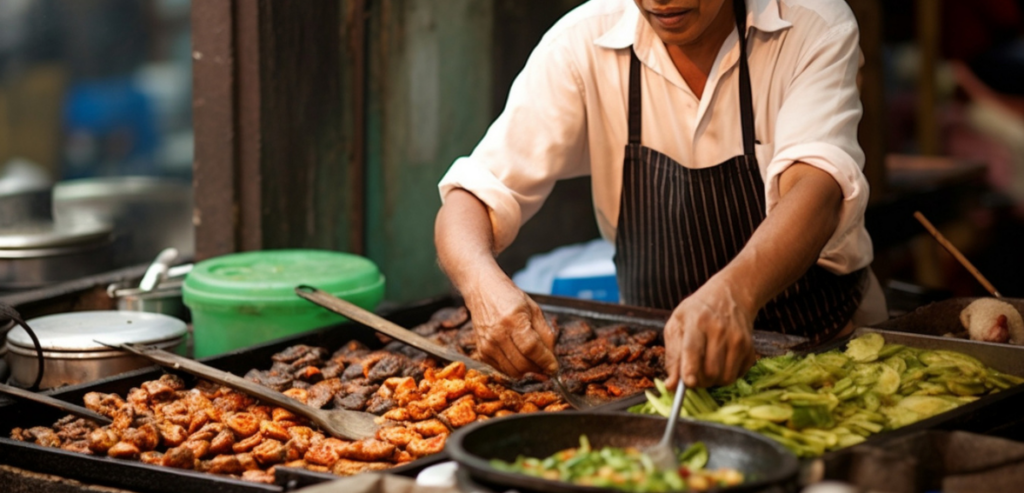
The service format of street food catering is as important as the food itself in determining whether the event experience achieves the energy and engagement that makes street food catering compelling in the first place. The most effective format for most events is a combination of live action stations where food is prepared or finished in front of guests and passed service of small bites that ensures every guest encounters the food regardless of whether they seek out the stations.
Live stations create the visual interest and interactive quality that distinguish street food catering from buffet service, because there is a meaningful difference between picking up a dish from a chafing tray and watching a skilled cook assemble your taco, hand-fold your bánh mì, or carve your shawarma directly onto the bread you are holding.
The human element of live cooking at events creates connection between the guest and the food in a way that self-service cannot, and it provides natural talking points between guests who are sharing the station experience. Passed service of small bites, circulated through the event by servers moving through the crowd, ensures consistent food distribution that prevents the clustering at popular stations and the food dead zones in other parts of the venue that plague station-only service.
The combination of live stations and passing service keeps the food experience active throughout the event rather than concentrated in a rush at the beginning of service, which improves both the quality of the guest experience and the operational sustainability of the catering team. Casual catering trends that have moved away from formal service toward this more dynamic format have consistently produced higher guest satisfaction in post-event research, which is the most direct measure of what event hosts should be optimizing for in their catering decisions.
Dietary Diversity in Global Street Food Catering
One of the practical advantages of global street food menus is the extraordinary diversity of dietary options they naturally encompass, which makes it possible to design an event menu that genuinely serves guests with different dietary requirements without creating the visible accommodation awkwardness that formal catering often produces. Street food traditions across the world include strong vegetarian components that are not afterthoughts but central dishes in their own right, from the vegetable-forward mezze of the Middle East to the tofu and tempeh dishes of Indonesia, the chaat and dosa traditions of India, and the fresh roll and salad formats of Vietnam and Thailand.
These dishes serve the vegetarian and vegan guests not as a reduced-quality substitute for a meat-focused menu but as genuine expressions of their source culinary tradition that are equally compelling for omnivore guests. Gluten sensitivity is accommodated naturally by many global street food traditions that are built around rice, corn, or legume bases rather than wheat, making menu design for gluten-free guests less of a special accommodation challenge than it is in Western-focused catering.
The allergen management challenge in global street food catering, particularly around nuts, shellfish, and sesame, requires careful attention given the prevalence of these ingredients in many Asian and Middle Eastern culinary traditions.
Clear labeling of dishes, staff training on ingredient knowledge, and the identification of specific dishes that are free from major allergens without modification gives guests with allergies the information they need to make safe choices without requiring special separate preparation for every guest with a dietary restriction.
Presentation and the Street Market Aesthetic
The visual environment of a street food catering setup contributes significantly to the overall event experience, and caterers who invest in creating an authentic, visually interesting service environment rather than simply placing food in standard chafing equipment consistently produce more memorable and more photographable events.
The street market aesthetic uses natural materials including wooden boards, bamboo, slate, and ceramic vessels rather than stainless steel hotel pans, individual paper cones and boxes rather than plates and bowls where appropriate, and decorative elements from the source culinary cultures that provide visual context for the food being served. Lighting plays a particularly important role in creating the street market atmosphere at evening events, where string lights, lanterns, and warm directional light over each station create the intimate, festive ambiance of a night market rather than the institutional brightness of a conventional buffet setup.
The naming of dishes on menu cards and station signs should reflect the authentic names from their source cultures rather than anglicized descriptions that flatten the cultural richness of what is being served, because guests who encounter a sign reading bánh mì rather than Vietnamese sandwich, or pani puri rather than Indian hollow bread, are receiving a small piece of culinary education alongside their food that enriches the overall experience.
Conclusion
Global street food catering has earned its place among the most exciting and most guest-appreciated approaches to modern event food not through novelty alone but through the genuine qualities that make street food compelling in any context. Street food catering ideas drawn from the rich traditions of Latin America, Southeast Asia, the Middle East, India, and beyond bring to celebrations the flavor intensity, the social energy, and the cultural richness that formal catering formats struggle to replicate.
Global street food menus designed with genuine culinary knowledge, executed with the same quality that makes street food memorable in its original context, and presented with the visual energy of a well-designed market environment create food experiences that guests genuinely remember and talk about long after the event.
Casual catering trends that have moved away from formal service toward these more dynamic, interactive formats reflect what event guests actually want, which is food that is exciting, accessible, abundant, and genuinely delicious in a way that feels particular to the occasion rather than generic to any event. Modern event food at its best trusts the same things that the best street food has always trusted: great ingredients, skilled preparation, bold seasoning, and the understanding that food shared joyfully in good company is one of the most reliable paths to a genuinely memorable celebration.