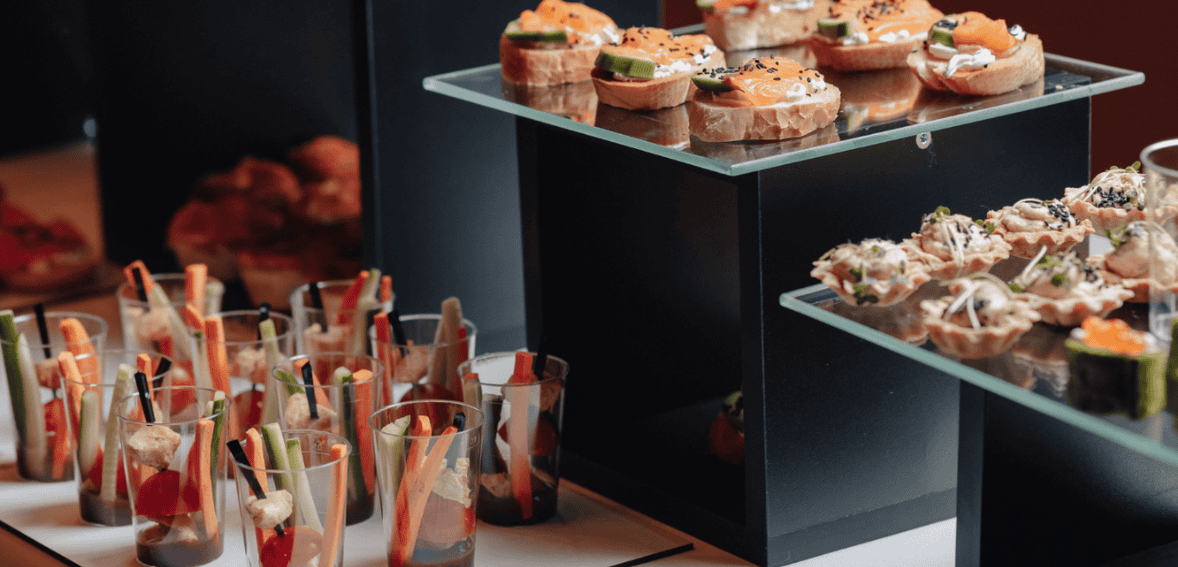
There is something almost magical about a perfectly executed small bite at a catered event. It disappears in one or two mouthfuls, it delivers a complete flavour experience in that brief moment, and it leaves the guest wanting just slightly more, which is precisely the effect that the best catering achieves. The shift toward small plate catering has been one of the most consistent and durable trends in the events industry over the past decade, and it has moved well beyond the predictable territory of miniature quiches and skewered chicken satay into genuinely creative culinary territory that can make the food at an event as memorable as anything else about the evening.
Clients who are planning events today, whether corporate gatherings, weddings, product launches, or milestone celebrations, are increasingly drawn to the small plate format because it aligns with how people actually eat and socialise when they are enjoying themselves. It allows movement, encourages conversation, accommodates dietary diversity with less awkwardness than a plated meal, and creates an abundance aesthetic that feels generous and celebratory without necessarily costing more than a conventional sit-down service. For caterers, developing a genuinely excellent small plate repertoire is both a creative challenge and a competitive advantage, because clients who have experienced beautifully executed bite-sized food at an event consistently rate it as one of the highlights of the occasion.
Why Small Plates Work So Well at Events
The popularity of small plate catering is not simply a matter of fashion. It reflects something genuine about how people experience events and what makes them enjoyable. When guests are standing with a drink in hand, engaged in conversation, and moving between different groups of people, a seated multi-course meal interrupts that flow. Small plates served on platters by circulating staff, or arranged on strategically placed stations throughout the venue, allow guests to eat on their own terms without breaking the social rhythm of the event.
This format also eliminates the social awkwardness that formal dining arrangements can create, where seating assignments become politically charged, guests are locked into conversation with whoever happens to be beside them, and the pace of the entire room is dictated by service intervals rather than by the natural flow of human interaction. Cocktail party catering built around small plates and bite-sized food creates the kind of event atmosphere where people genuinely mingle, where energy levels stay high throughout the evening, and where guests feel that they were treated generously rather than managed through a rigid dining programme.
There is also a practical element that event planners and clients appreciate, which is the flexibility that small plate formats offer in terms of venue configuration. Events that need to accommodate both a cocktail reception and a working portion of the evening, or that are being held in spaces without the capacity for formal seating, or that need to accommodate guests moving between different programming elements, are all much easier to execute when the food component is designed around small plates rather than a structured meal service.
The Art of Designing a Bite-Sized Menu
Creating a bite-sized appetizers catering menu that genuinely impresses requires a different kind of culinary thinking from designing a conventional multi-course menu. The challenge is not simply to miniaturise existing dishes but to create food that is complete in itself in the space of a single bite or two, that delivers its full flavour impact without requiring cutlery, and that holds up to being carried on a platter and handled by guests without losing its integrity.
They are real constraints which differentiate between an average small plates service and an outstanding one. The finest selection of small plate options should be based on the interactions of various flavors rather than just preparing lots of small dishes from a similar group of ingredients. For example, a great small plate menu could offer crispy and creamy options, warm and cold dishes, rich ones and those with a sharp taste, heavy ones and light bites.
Such a variation makes sure the event experience is interesting from beginning until the end, allowing guests with varying palates and tastes to have a great experience. The variety level can be controlled according to the length of the event. For example, if it is an hour-and-a-half-long cocktail party, one could choose about eight or ten different appetizers served throughout the evening to provide enough variation, but not to repeat anything too often. At the same time, for an even lengthier event where these appetizers replace a regular dinner, one needs to have more options and more generous portion sizes, typically fifteen and more pieces.
Canapés and the Classic Small Plate Tradition
The canapé tradition in catering has roots that go back centuries, and its continued relevance in contemporary cocktail party catering reflects how well it solves the fundamental challenge of feeding people elegantly while they are standing and socialising. A great canapé is built on a sturdy base, whether a crisp crouton, a miniature pastry case, an endive leaf, a blini, or a cucumber round, that provides structural integrity and a comfortable platform for the topping without requiring precision handling from the guest.
The topping provides the pay-off in taste, and great canapé toppings must be seasoned just sufficiently well to make themselves known without ever becoming inadvertently bland, garnished in some fashion that provides one last texture or visual cue, and portioned so as to be easily eaten in its totality with a single bite.
The classic canapés continue to provide inspiration since they work, and a properly constructed smoked salmon blini with crème fraiche and a few dill sprigs still stands out as perhaps one of the best examples of the art, in that all elements involved contribute towards making for a perfect dish. However, a reliance on traditional combinations of elements should only act as a starting point, and small plate catering that seeks to add modern flavouring approaches and international culinary influence into the world of the canapés ends up creating dishes that not only look good but actually are very exciting indeed.
A tiny tartlet made using whipped feta cheese with a topping of roasted cherry tomatoes drizzled with aged balsamic vinegar or a crispy wonton cup containing a spoonful of spicy duck confit with pickled cucumbers is but one example of this approach.
Hot Bites and the Challenge of Service
One of the most practically demanding aspects of bite-sized appetizers catering is managing the service of hot items in a way that ensures they reach guests at the right temperature and in the right condition. Cold canapés are relatively forgiving because they can be prepared ahead and held without deterioration for reasonable periods. Hot bites are more demanding because they need to be served immediately after leaving the kitchen or the hot holding environment, they need to be at a temperature that is enjoyable rather than dangerously hot or disappointingly cool, and they need to maintain their textural integrity across the time between cooking and consumption.
Most successful hot canapé programmes are planned taking into consideration the logistics of service, selecting dishes that may be quickly produced one after another from pre-cooked form, which will retain their quality when served from hot boxes or bain marie for a short while between their preparation and consumption, and that will cool to a comfortable dining temperature fast enough that they are not kept waiting on food that remains excessively warm.
Deep frying lends itself very well to small plate menus as it provides dishes that cook very rapidly, that have a visually impressive texture and are nearly universally appealing, and that reach a comfortable dining temperature in no more than a minute from being taken out of the fryer. A small version of a cleverly crafted fried dish, whether it is a mini fish taco inside a crispy wonton shell, a pea and mint arancino covered in parmesan, or prawn tempura with ponzu sauce, is one of those foods that leave customers asking for more and actively looking for the person serving them that dish.
Global Flavours in Small Plate Catering
One of the reasons that mini food trends events have become so compelling in recent years is the embrace of global culinary traditions that offer extraordinary richness in the small bite format. Many of the world’s great food cultures have developed sophisticated small bite traditions, from the dim sum culture of Chinese Cantonese cuisine to the tapas tradition of Spain, the mezze spread of the Middle East, the cicchetti of Venice, and the pintxos of the Basque Country.
Utilizing such traditions provides the caterer with a massive array of proven, culturally inspired appetizer ideas rather than being forced to concoct the idea of bite-sized food out of thin air. An example of a dim sum inspired passing plate menu could contain a series of dumplings with different fillings served in quick succession, crunchy spring rolls with dipping sauces, char siu in little bao buns, and shumai filled with scallops.
An example of a Spanish inspired plate could contain patatas bravas with perfect seasoning served in little cone-shaped containers, mini pan con tomate topped with Manchego cheese, Spanish tortilla sliced just right and accompanied by aioli, and one anchovy served on a crunchy cracker and garnished with pickled pepper. Such menu choices are culturally coherent and interesting in that each plate tells its own story about the cuisine, each plate draws upon traditions which have perfected the balance of flavors, temperatures, and textures of the dish, and diners who are familiar with such traditions and who love them derive great pleasure in finding them on their plates.
Vegetarian and Vegan Small Plates That Impress
The small plate format is particularly well suited to the challenge of creating genuinely impressive plant-based options, because the bite-sized scale allows creativity with vegetable preparations that would be more difficult to execute at full plate scale. Cocktail party catering that relies on the standard trio of stuffed mushrooms, bruschetta, and crudités with hummus is not taking advantage of the creative potential of vegetable-forward small plate cooking, and clients who eat plant-based are often disappointed by catering menus that treat their dietary requirements as a constraint to be minimised rather than an opportunity to showcase genuinely excellent food.
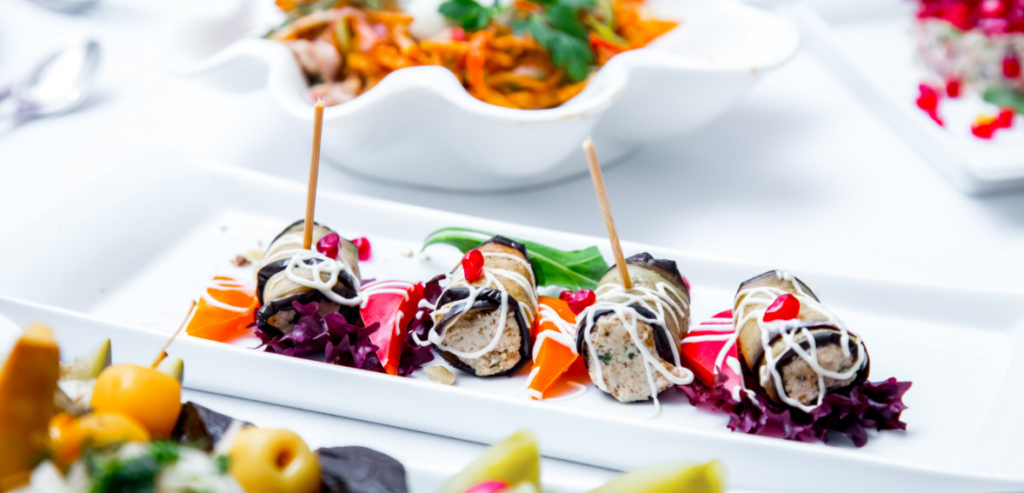
Roasted and charred vegetables developed to their fullest flavour potential through high heat and good seasoning provide the foundation for small bites that are as complex and satisfying as any meat-based preparation. A single baby beetroot lacquered with pomegranate molasses and topped with a quenelle of whipped goat cheese and a scattering of toasted walnuts and micro herbs is a complete, elegant small bite that requires no apology or explanation.
Legume-based preparations, from falafel in miniature formats to smooth hummus served in endive boats with pomegranate and za’atar, deliver the substantial, satisfying quality that plant-based eating requires. Nut-based small bites, from cashew cheese on a seed cracker to walnut and mushroom pâté in a miniature tartlet, provide richness and complexity that equals the satisfaction of dairy-based preparations. Catering teams that develop genuine enthusiasm and skill in plant-based small plate cooking produce menus that impress all guests rather than simply accommodating those with dietary restrictions.
Sweet Bites and Dessert Canapés
The dessert dimension of a small plate catering menu is one of the most eagerly anticipated and most fondly remembered elements of any event where it is done well. Miniature sweet bites solve one of the persistent challenges of catered event dessert service, which is that a full individual dessert is often more than guests want after an evening of grazing, and that serving a plated dessert requires either a seated service moment that breaks the flow of a standing event or a complex passed dessert service that is difficult to execute without mess.
A selection of beautifully made miniature sweets passed on platters in the final portion of the event creates a moment of sweet indulgence without the weight of a full dessert course and without the service logistics of a plated option. The range of miniature sweet preparations available to a skilled pastry team is essentially unlimited, but the most successful dessert canapé selections tend to balance different sweetness levels, different temperatures and textures, and different degrees of richness rather than presenting multiple items that all occupy the same sensory register.
A single bite of dark chocolate ganache tart alongside a miniature lemon curd meringue alongside a tiny choux puff filled with pastry cream and topped with fresh raspberry alongside a small cone of whipped mascarpone with vanilla and seasonal fruit offers variety that maintains interest and that allows guests with different preferences to find their particular moment of pleasure. Mini food trends events are increasingly incorporating dessert canapé stations where guests can choose from an array of miniature sweets displayed visually as well as being passed, which adds a visual drama element to the dessert moment and gives guests more agency in what they select.
Presentation, Plateware, and Visual Impact
The visual presentation of small plate catering is as important as the culinary execution, because in the small bite format the entire experience of the food is compressed into a moment that begins with the visual impression before the first taste. Thoughtful selection of service platters, individual vessels, and garnish creates a presentation that signals quality and care before a guest has even lifted a bite from the tray. The relationship between the plateware and the food needs to be considered for each item rather than defaulting to a single service style across all preparations.
Dense, richly coloured preparations often show best against light or white backgrounds. Delicate preparations that need visual space around them lose their elegance when crowded on a platter. Items that benefit from individual attention, like a single perfect prawn with a precise garnish, are better served in individual ceramic spoons or on individual slate pieces than clustered on a platter where the arrangement is inevitably disrupted by the first guests who take from it. The height and architecture of individual canapés contributes to their visual impact as well.
A preparation that has vertical interest, whether through a tall garnish, a layered construction, or a dramatic topping, photographs well and attracts attention on a passing tray in ways that flat preparations do not. The flourish of an edible flower, a precisely placed herb sprig, or a drizzle of vibrant sauce applied with a squeeze bottle just before service adds a visual finish that communicates genuine craft and elevates the perception of everything else on the menu.
Managing Quantities and Dietary Requirements
The practical side of executing a small plate menu at an event requires careful planning around quantities and dietary accommodation that can make the difference between a service that flows smoothly and one that creates anxiety throughout the evening. Quantity planning for cocktail party catering typically estimates eight to twelve pieces per person per hour for a standalone cocktail reception, and twelve to sixteen pieces per person when the small plate menu is intended to substitute for a meal.
These estimates need to be adjusted for the specific event, taking into account the time of day, the presence or absence of alcohol, the demographics of the guest list, and any intelligence about the specific expectations of the client and their guests. Dietary requirements in a small plate setting require more logistical thought than in a plated meal context because it is not possible to simply substitute one plate for another at a specific seat.
Circulating service needs to include sufficient variety that guests with different requirements always have options available, that servers know which items meet which dietary requirements and can answer guest questions confidently, and that clearly labelled stations or dietary information cards are available for guests who prefer to navigate the menu on their own terms rather than asking. Allergen management in a small plate setting requires particular care because the informal service format creates more opportunities for cross-contamination than formal plated service, and the caterer’s responsibility for accurate allergen information is the same regardless of the service format.
Conclusion
Small plate catering has earned its place as one of the most versatile, most guest-friendly, and most creatively satisfying formats in the contemporary catering landscape. The bite-sized appetizers catering approach, when executed with genuine culinary skill and thoughtful design, creates food experiences that are more memorable than many conventional sit-down meals precisely because of the concentration of effort and creativity that goes into each individual bite.
Mini food trends events have demonstrated across countless occasions that guests respond to well-crafted small plate menus with genuine enthusiasm, that the format creates better social dynamics than formal seating, and that the flexibility it offers both caterers and clients makes it applicable to a wider range of events and venues than any other service format.
Cocktail party catering built on a thoughtfully designed, skillfully executed small plate menu represents one of the most satisfying expressions of what catering can achieve, combining culinary ambition with practical elegance in a format that puts the guest experience at the centre of every decision. The caterers who have invested in developing their small plate repertoire with genuine depth and creativity are consistently rewarded with clients who return, guests who remember, and a reputation for the kind of food that makes events genuinely special.