By Jermaine Thomas June 14, 2026
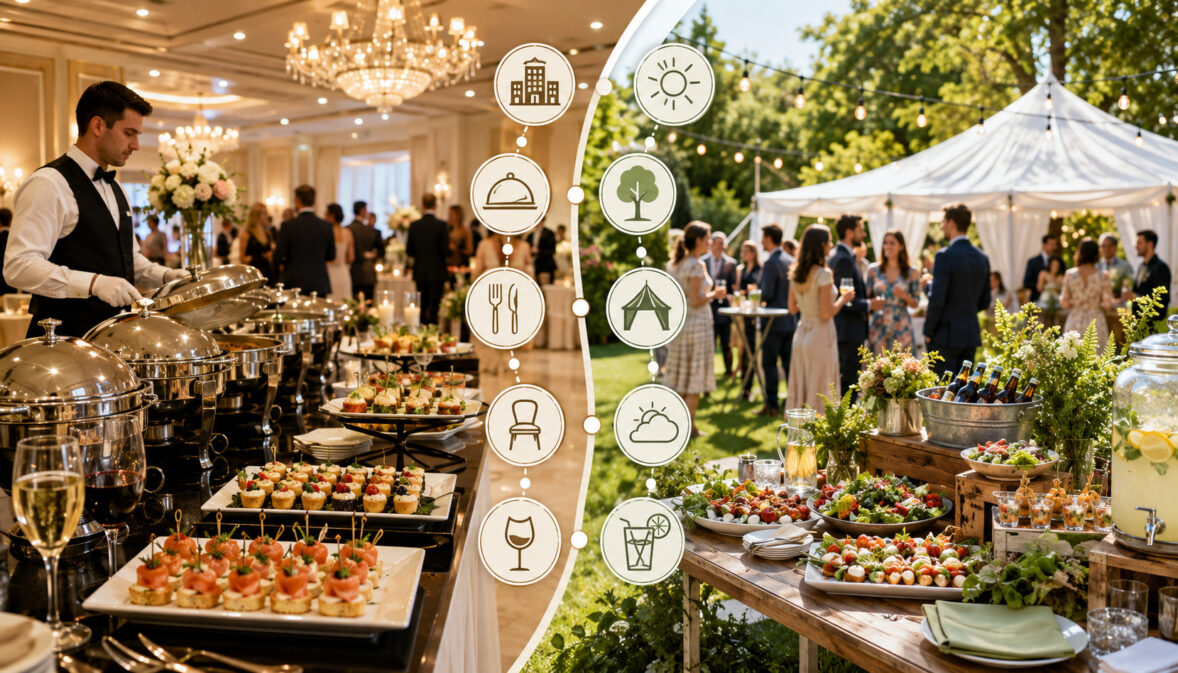
Choosing between indoor and outdoor catering is one of the earliest decisions that shapes an event. The location affects the menu, service style, rentals, staffing, food safety plan, catering budget, guest comfort, setup time, and backup strategy.
A plated dinner in a banquet hall has different needs than a backyard event with food stations, and a corporate lunch inside an office has different logistics than outdoor event catering at a park, festival, or tented reception.
Indoor vs outdoor catering is not about choosing the “better” option in every situation. Both can work beautifully when the catering planning matches the venue, weather, guest count, service style, and available resources.
Indoor catering often offers easier access to power, water, lighting, restrooms, refrigeration, and kitchen support. Outdoor catering can create a relaxed, scenic, open-air experience, but it usually requires more attention to weather, food storage, tents, generators, insects, sanitation, permits, and cleanup.
This guide walks through the practical differences between indoor catering and outdoor catering so event planners, couples, families, office managers, hospitality teams, venue coordinators, and party hosts can make a confident decision.
It covers catering setup, catering logistics, menu planning, food safety, staffing, rentals, utilities, weather backup plans, guest experience, and common mistakes to avoid.
For general event food planning ideas, you can also review helpful articles on matching catering style to the occasion and how catering events move from planning to execution.
Why the Catering Location Matters
The location of your event affects nearly every catering decision. Before selecting appetizers, beverages, bar service, buffet service, plated meals, boxed meals, or food stations, you need to understand where the food will be prepared, stored, transported, served, and cleared. Indoor event catering usually happens in a controlled environment.
Outdoor event catering often requires the caterer to create a temporary service environment from the ground up.
For example, a banquet hall may already have kitchen access, refrigeration, handwashing stations, power outlets, trash disposal areas, staff entrances, and service elevators. An outdoor venue may have none of these.
A park event might require permits, portable restrooms, water tanks, generators, tent weights, and extra serving equipment. A backyard event may feel simple, but it can become complicated if there is limited parking, uneven ground, no dedicated prep area, or insufficient electrical access.
Catering logistics also change based on guest count and event timeline. A small private party with boxed meals can work in many locations.
A formal wedding catering setup with plated meals, passed appetizers, and bar service needs more staff movement, staging space, and timing control. A corporate catering lunch inside an office may require elevator access, building rules, delivery timing, and cleanup coordination.
Indoor vs outdoor catering also influences guest comfort. Indoor events are less exposed to wind, heat, cold weather, insects, and sudden rain.
Outdoor events may offer natural scenery and flexible layouts, but guests may need shade, lighting, restrooms, accessible pathways, and weather protection. Good event catering planning looks beyond the menu and considers how people will move, eat, drink, wait, sit, mingle, and leave.
Indoor Catering: Key Benefits and Planning Considerations
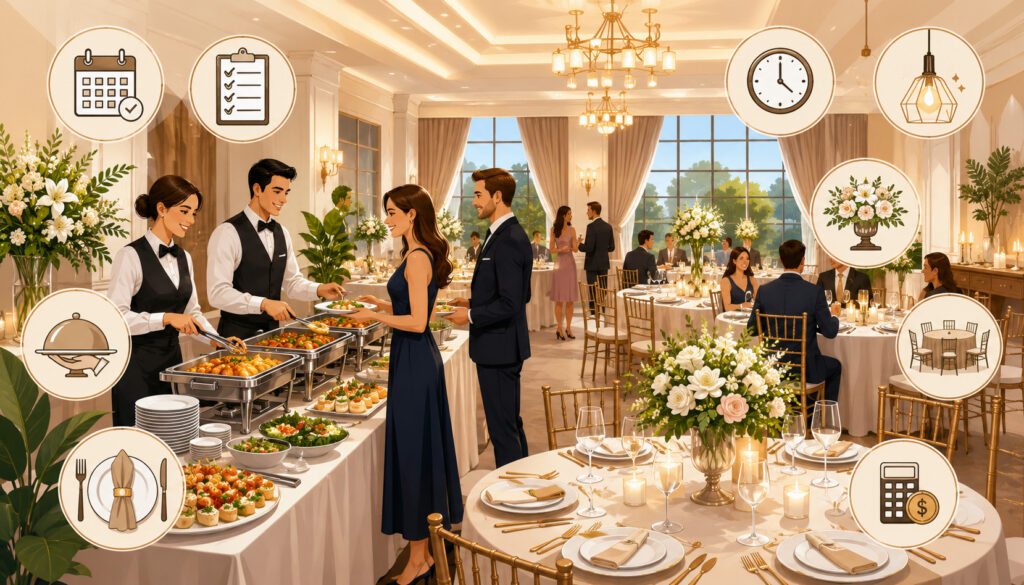
Indoor catering is often easier to control because the environment is protected from most weather conditions. Indoor venues usually provide walls, ceilings, climate control, restrooms, lighting, parking guidance, and basic utilities.
This makes indoor event food service a strong option for formal receptions, corporate events, office meetings, private parties, family gatherings, holiday meals, and events with detailed timelines.
Still, indoor catering has its own planning needs. Venue rules may limit open flames, bar service, outside vendors, equipment placement, delivery times, noise levels, and cleanup procedures.
Some venues require caterers to use specific entrances, service corridors, loading docks, or elevators. Others may require proof of insurance, signed contracts, or approved vendor lists.
Indoor catering planning should begin with the venue layout. Where will guests enter? Where will the buffet line form? Where can food stations be placed without blocking walkways? Where will staff stage extra plates, linens, beverages, and serving equipment? Where will trash and used dishes go during service? These details determine whether the catering setup feels smooth or crowded.
Indoor venues can also create timing pressure. A banquet hall may host multiple events in one day, which can limit setup time and cleanup windows. Office buildings may restrict deliveries to certain hours.
Private venues may have strict end times. Even when the location is indoors, the caterer still needs enough time to load in, set up, serve, replenish, clear, and break down.
Indoor venue advantages
Indoor catering is helpful when consistency matters. Climate control helps protect food quality, flowers, décor, linens, cakes, desserts, and guest comfort. Lighting is usually easier to manage, and restrooms are typically close by. Many indoor venues also have stable flooring, accessible entrances, parking areas, and staff-friendly service paths.
Indoor event catering can support a wide range of service styles. Plated meals are often easier indoors because servers can move through predictable aisles and dining areas. Buffet service can be arranged along walls or in dedicated rooms.
Food stations can be placed throughout the venue to reduce lines and encourage movement. Bar service may be easier to supervise when there is a clear service area and nearby storage.
Indoor venues are especially useful for corporate catering, formal wedding catering, milestone celebrations, awards dinners, and events where presentations, speeches, audiovisual equipment, or strict schedules are important.
If a program includes a meal, slideshow, speaker, dance floor, or ceremony transition, the protected environment can help keep the timeline organized.
Indoor planning challenges
Indoor does not automatically mean simple. Some venues have limited kitchen access or no kitchen at all. Others may offer only a prep room, sink, or small refrigerator. In those cases, the caterer may need hot boxes, portable coolers, warming equipment, extra tables, and careful timing for food delivery.
Space can also be a challenge. A room that seats the guest count may not have enough space for buffet service, food stations, beverage service, dessert displays, coat check, gifts, vendor tables, and staff movement. Crowded layouts can create long lines, slow service, blocked exits, and uncomfortable guest flow.
Venue rules should be reviewed carefully. Some indoor venues restrict red sauces, confetti, candles, outside alcohol, propane, deep fryers, or certain cooking methods.
Office buildings may require certificates of insurance, freight elevator reservations, loading dock approval, or after-hours security access. These details should be confirmed before the catering contract is finalized.
Indoor catering also requires communication between vendors. The caterer, venue coordinator, rental provider, florist, entertainment team, photographer, and planner may all need access to the same space during setup. A shared event timeline helps prevent overlap and confusion.
Outdoor Catering: Key Benefits and Planning Considerations
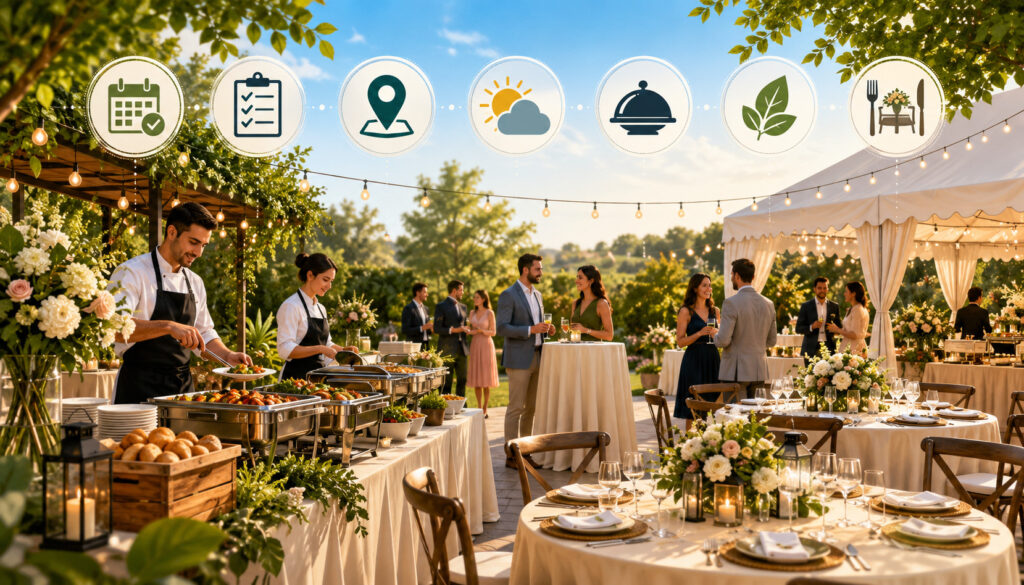
Outdoor catering can create a memorable setting for weddings, backyard parties, family gatherings, community events, festivals, fundraisers, company picnics, and casual private parties.
Outdoor venues offer fresh air, scenic views, flexible layouts, and room for activities. A tented event can feel elegant and open, while a park event or backyard event can feel relaxed and personal.
The main difference is that outdoor catering usually requires more infrastructure. Instead of relying on built-in utilities, the catering team may need portable coolers, refrigeration trucks, generators, water access, handwashing stations, tents, tables, linens, lighting, flooring, waste disposal, insect control, and weather protection.
Outdoor catering planning is often about building a functional temporary workspace that supports safe food service.
Outdoor event food service also depends heavily on weather. Heat can affect cold foods, desserts, beverages, ice, staff comfort, and guest experience. Wind can affect buffet covers, signage, linens, chafing flames, tents, napkins, plates, and décor.
Rain can affect pathways, parking, electrical equipment, and service areas. Cold weather can affect hot food holding, staff movement, guest seating, and bar service.
The best outdoor catering plans account for both the ideal event and the backup version. That means having a rain plan, shade plan, wind plan, power plan, water plan, and cleanup plan. It also means communicating with the venue or property owner about permits, local requirements, fire rules, alcohol rules, noise restrictions, restroom access, and trash removal.
Outdoor venue advantages
Outdoor catering gives hosts more flexibility in layout and atmosphere. You may be able to design separate zones for ceremony seating, cocktail hour, food stations, bar service, lounge areas, games, dancing, dessert, and late-night snacks. This works well for wedding catering, festivals, backyard events, community gatherings, and casual corporate events.
Outdoor venues can also support creative menus. Grilled items, picnic-style meals, food stations, barbecue-inspired spreads, boxed meals, passed appetizers, beverage stations, and casual buffet service can feel natural in an outdoor setting. Guests may enjoy moving between stations instead of sitting for a long formal meal.
An outdoor venue can also help create a strong sense of place. A garden, courtyard, farm, lakeside space, park, or private yard can become part of the event experience. For themed events, outdoor layouts allow more freedom with décor, seating arrangements, signage, and entertainment.
However, outdoor event catering works best when flexibility is paired with structure. Even a casual backyard event needs a clear catering setup, service timeline, staff plan, trash plan, restroom plan, and food safety plan. The more remote or open the site, the more detailed the planning should be.
Outdoor planning challenges
Outdoor catering can become difficult when hosts underestimate the support systems needed for food service. A beautiful lawn may not have level ground for buffet tables. A park pavilion may not have enough outlets. A backyard may not have a safe place for staff to prep, plate, or store food away from guests, pets, and insects.
Weather is the most obvious challenge, but it is not the only one. Outdoor catering may require permits, parking coordination, restroom rentals, lighting, trash hauling, pest control, and extra labor. Some public spaces have strict rules about alcohol, generators, amplified music, open flames, tents, and waste disposal.
Food safety requires special attention outdoors. The FDA’s safe buffet guidance and CDC’s food safety prevention guidance emphasize clean handling, separation, proper cooking, and prompt chilling. Outdoor conditions make these practices more important because food may be exposed to heat, humidity, insects, dust, and longer transport times.
Staff comfort matters too. Catering teams working outside may need shade, water, lighting, safe walking paths, and protection from wind or rain. When the staff area is properly supported, service is usually smoother for guests.
Indoor vs Outdoor Catering: Main Differences
Indoor catering vs outdoor catering comes down to control, infrastructure, flexibility, and risk management. Indoor catering generally offers more environmental control. Outdoor catering offers more layout flexibility but requires more planning for weather, utilities, rentals, and food protection.
The right choice depends on your event type. A formal reception with plated meals, speeches, and a tight timeline may be easier indoors or in a tented event with strong infrastructure.
A casual birthday, backyard event, company picnic, or festival catering setup may work well outdoors if there is enough support for food storage, serving equipment, sanitation, and guest comfort.
Here is a practical comparison:
| Planning Area | Indoor Catering Considerations | Outdoor Catering Considerations | Practical Tip |
| Weather | Mostly protected from rain, wind, heat, and cold | Requires rain plan, shade, wind protection, and seasonal planning | Confirm the backup plan before signing contracts |
| Utilities | Usually easier access to power, water, restrooms, and lighting | May require generators, water tanks, portable restrooms, and temporary lighting | Walk the site with vendors before the event |
| Food safety | Easier temperature control and protected service areas | Needs stronger planning for heat, cold, insects, dust, and food storage | Use thermometers, covers, coolers, and staff monitoring |
| Menu options | Supports plated meals, buffets, stations, and formal service | Best with durable menu items and controlled holding methods | Avoid fragile items in high heat or wind |
| Rentals | Often fewer rentals needed | May need tents, tables, linens, flooring, lighting, coolers, and generators | Build rentals into the catering budget early |
| Staffing | Staff movement is usually more predictable | More staff may be needed for setup, replenishing, transport, and cleanup | Ask how staffing changes by location |
| Guest comfort | Climate control, restrooms, and accessibility are usually easier | Needs shade, seating, restrooms, lighting, parking, and accessible paths | Think through the guest journey from arrival to exit |
| Timeline | Venue rules may restrict setup and cleanup windows | Weather and rental delivery may affect timing | Create a shared event timeline for all vendors |
A useful way to compare options is to ask: “What does this location already provide, and what must we bring in?” Indoor venues often provide more built-in support. Outdoor venues may require more rentals and vendor coordination, but they can also offer a unique atmosphere and flexible event design.
Food Safety, Temperature Control, and Sanitation
Food safety should be part of every catering checklist, whether the event is indoors or outdoors. Indoor event food service may offer better temperature control, but it still requires safe handling, proper storage, clean surfaces, and organized service.
Outdoor event food service can add extra risks because food may be exposed to changing temperatures, longer travel times, wind, dust, insects, and limited handwashing access.
Food safety planning should cover the full journey of the food. Where is it prepared? How is it transported? How long will it be held before service? What equipment keeps hot foods hot and cold foods cold? Who monitors temperatures? Where do staff wash hands? How are used utensils, trash, and leftovers handled?
Temperature control is especially important for foods that need refrigeration or hot holding. The FDA’s Food Code is widely used as a model for food service safety practices, and FoodSafety.gov offers guidance on food safety for events and seasons.
Event hosts do not need to become food safety experts, but they should ask practical questions and choose vendors who understand safe service.
Food temperature control
Temperature control affects menu planning, service style, setup time, and equipment needs. Hot foods may require chafing dishes, insulated carriers, warming cabinets, or heated holding equipment.
Cold foods may require refrigeration, portable coolers, ice, cold wells, or refrigerated trucks. Desserts, dairy-based dishes, seafood, cut fruit, salads, and certain appetizers can be sensitive to heat and holding time.
Indoor catering often makes this easier because refrigeration and kitchen access may be available. Outdoor catering may require extra equipment and tighter service windows.
For example, a seafood display may be appropriate indoors with refrigeration nearby but may be more difficult at an outdoor venue in hot weather unless the caterer has a strong cold-holding plan.
Buffet service needs special monitoring because food sits out while guests serve themselves. Plated meals require timing control so food is served at the right temperature. Food stations need staff oversight, especially if items are cooked, carved, assembled, or replenished on-site.
Sanitation and serving safety
Sanitation is not only about cleanliness; it is about designing the service area so clean and used items never overlap.
Staff should have access to handwashing or approved hand-sanitizing stations, clean utensils, trash containers, gloves when appropriate, and safe surfaces for prep and plating. Guest-facing areas should have enough serving utensils so people are not reaching into food.
Outdoor catering may need added sanitation support. This can include covered food displays, sneeze guards when appropriate, lidded containers, insect protection, trash lids, handwashing stations, and separate disposal areas. Restroom access should also be considered because guest hygiene affects the overall event environment.
Indoor catering has sanitation needs too. A crowded office meeting room or private venue can create limited space for dirty dishes, trash, beverage spills, and staff movement. If the venue does not provide dishwashing access, the caterer may need bus tubs, racks, disposable serviceware, or a plan to transport used items off-site.
Sanitation should be discussed before the event day. The host, caterer, venue coordinator, and rental provider should know who supplies trash cans, liners, cleaning supplies, water, ice, and handwashing equipment.
Weather, Backup Plans, and Seasonal Factors
Weather planning is one of the biggest differences between indoor catering and outdoor catering. Indoor events may still be affected by storms, parking conditions, power outages, or guest travel delays, but outdoor events require a more detailed contingency plan.
A sunny forecast does not remove the need for a backup plan, especially for weddings, corporate events, festivals, and large family gatherings.
Outdoor catering planning should consider rain, wind, heat, cold weather, humidity, and ground conditions. A tent can help with rain and sun, but it does not automatically solve every issue.
Wind can blow rain sideways, affect flames, shift linens, and make buffet service difficult. Heat can affect guest comfort and food temperature. Cold weather can make guests leave early or reduce appetite for certain menu styles.
Seasonal planning also affects menu choices. Light salads, chilled beverages, and grilled items may work well in warm weather when temperature control is managed carefully. Warm entrées, soups, hot beverages, and hearty sides may suit cooler conditions. The goal is not only to match the season but also to select items that can be held and served safely.
Weather planning
A complete weather plan includes more than checking the forecast. It identifies what happens if conditions change before setup, during service, or during cleanup. It also defines who makes the final decision to move, tent, delay, or adjust the event. Without clear decision points, vendors may arrive with different assumptions.
For outdoor event catering, weather planning should include:
- Covered prep and service areas
- Guest shelter or shade
- Ground protection for staff and guests
- Safe placement for electrical cords and generators
- Wind-resistant signage, linens, and buffet covers
- Ice and beverage planning for heat
- Hot holding and wind protection for cold weather
- Lighting for evening service
- A communication plan for vendors and guests
Indoor events still benefit from weather planning. Rain can affect loading docks, parking, coat storage, entryways, and delivery timing. Snow, storms, or extreme temperatures can delay staff and vendors. Even when food service happens inside, the event timeline should allow for weather-related arrival issues.
Rain backup plan
A rain plan should be realistic, not just hopeful. Saying “we’ll move inside if it rains” only works if the indoor space can actually fit guests, tables, food service, bar service, staff staging, entertainment, and equipment. If the indoor backup area is too small, the event may need a tent, adjusted layout, simplified menu, or shorter service window.
For a tented event, confirm whether the tent includes sidewalls, gutters, flooring, lighting, and safe anchoring. Grass can become muddy, so pathways may need mats or temporary flooring. Electrical cords should be protected, and food service areas should be placed where staff can work safely.
For a backyard event, identify a covered garage, patio, porch, rented tent, or indoor room where food can be protected. For a park event, check whether pavilions can be reserved and whether tents are allowed. Some locations restrict staking, so water barrels or weighted anchors may be required.
Rain plans also affect delivery and cleanup. Vendors need safe access to unload equipment, and trash must be removed without damaging the property. These details should be discussed before the event, not during the first downpour.
Heat and cold considerations
Heat affects food, guests, staff, beverages, ice, desserts, and service timing. In hot weather, outdoor catering may require extra ice, shaded service areas, chilled water stations, fans, quick replenishment, and menu items that hold up well. Creamy salads, delicate desserts, chocolate, seafood, soft cheeses, and certain sauces may need special handling.
Cold weather creates a different set of concerns. Hot foods can cool quickly outdoors, especially in wind. Guests may prefer warm beverages, hearty appetizers, and shorter lines. Staff may need protected prep areas and safe surfaces. Metal serving equipment can lose heat quickly, so insulated holding and timely replenishment become more important.
Indoor catering can also be affected by heat or cold if the venue has poor climate control, open doors, crowded rooms, or limited ventilation. A packed banquet hall, office conference room, or private venue may become warmer during service. Ask the venue how temperature is managed during full-capacity events.
Seasonal planning should guide both menu and logistics. Choose food that fits the environment, and make sure the catering setup supports safe holding and comfortable service.
Venue Rules, Permits, Utilities, and Equipment Needs
Venue rules can shape the catering plan as much as the menu. Before choosing indoor catering vs outdoor catering, review the rules for food service, alcohol, deliveries, setup times, cleanup, rentals, power use, water access, open flames, noise, trash disposal, parking, and vendor insurance. These requirements can affect cost, timing, staffing, and menu options.
Indoor venues may have approved vendor lists, kitchen rules, elevator schedules, loading dock procedures, fire codes, alcohol service requirements, and restrictions on cooking equipment.
Outdoor venues may require permits for tents, generators, public park use, alcohol, food service, amplified sound, or large gatherings. Some venues require all trash to be removed by the host or caterer.
Utilities are a major part of catering logistics. A catering setup needs power for warmers, lighting, coffee service, beverage stations, refrigeration, fans, and sometimes point-of-service systems.
Water may be needed for handwashing, beverage service, cleaning, and some prep tasks. Kitchen access may affect whether food can be cooked, finished, plated, or only dropped off.
Power access
Power access is one of the most overlooked parts of event catering planning. Indoor venues may have outlets, but that does not mean they can support all catering equipment. Coffee urns, warmers, refrigeration units, lights, sound equipment, and décor may compete for the same circuits. A blown circuit during service can interrupt food holding or beverage service.
Outdoor catering often requires generators or dedicated power sources. The caterer may need separate power for hot holding, cold holding, lighting, fans, and bar service. Generators should be placed where noise and fumes will not disturb guests or food service. Cords should be covered or routed safely to reduce trip hazards.
Ask vendors for their power requirements in advance. The caterer, rental company, entertainment team, lighting provider, and planner should not discover on event day that they all expected the same outlet. A power map can help assign outlets or generator connections to each vendor.
Water access and kitchen access
Water access supports sanitation, beverage service, cleaning, and sometimes cooking. Indoor venues often have sinks, restrooms, kitchens, or prep areas. Outdoor venues may have limited water access or no convenient connection near the service area. In that case, the caterer may need portable handwashing stations, water containers, or other approved sanitation solutions.
Kitchen access can range from a full commercial kitchen to a small prep room. A full kitchen may allow more complex plated meals, last-minute heating, dishwashing, and refrigeration. A prep room may only allow staging and assembly.
No kitchen access means the caterer must bring food ready to hold and serve, along with equipment for safe transport and service.
For indoor catering, ask whether the kitchen is included in the rental or reserved for in-house staff. For outdoor catering, ask whether cooking is allowed on-site and whether open flames, propane, grills, or fryers are restricted. Fire safety rules may affect the menu and equipment.
Kitchen access also affects cleanup. If dishwashing is unavailable, the caterer may need to pack out used serviceware. If water access is far from the service area, staff may need more time and equipment to maintain sanitation.
Tents, rentals, restrooms, and waste disposal
Outdoor catering often depends on rentals. Tents, tables, linens, chairs, lighting, flooring, fans, heaters, portable coolers, generators, trash cans, and restroom trailers can all influence the catering budget. Tents protect guests and food service areas, but they must be sized correctly and installed safely.
Restroom access is part of guest comfort and sanitation. Indoor venues usually include restrooms, but capacity still matters. Outdoor venues may require portable restrooms or restroom trailers, especially for large gatherings, long events, or locations far from public facilities. Restrooms should be accessible, well-lit, and serviced when needed.
Waste disposal should be planned before the event. Buffet service, boxed meals, beverage stations, disposable plates, bar service, and food prep can create significant trash. Some venues provide dumpsters; others require vendors to remove all waste. Recycling and composting may also be part of the plan depending on the event and location.
Indoor events need waste planning too. Office buildings, private venues, and banquet halls may have strict rules about where trash goes and when it can be removed. Cleanup responsibilities should be listed in the catering contract and venue agreement.
Menu Planning for Indoor and Outdoor Events
Menu planning should match the event location, service style, guest count, season, schedule, and available equipment. The best menu is not always the most elaborate one. It is the menu that can be prepared, transported, held, served, enjoyed, and cleared safely in the actual event environment.
Indoor catering can support a broad range of menu formats because temperature control, lighting, kitchen access, and service flow are usually easier to manage. Outdoor catering can also support excellent menus, but items should be selected with weather, holding time, insects, wind, and guest movement in mind.
A formal indoor reception may work well with plated meals, passed appetizers, and a staffed bar. A corporate event may call for boxed meals, buffet service, beverage stations, or grab-and-go snacks.
A backyard event may suit casual buffet service, grilled items, or food stations. A festival catering plan may require fast service, high-volume production, sturdy packaging, and clear signage.
For more menu inspiration, resources on creative food experiences and live stations can help hosts think about how food presentation affects guest flow and engagement.
Buffet service
Buffet service is popular because it offers variety and can serve many event types. Indoors, buffets can be arranged along walls, in separate rooms, or as double-sided lines to improve flow. Staff can replenish pans, monitor utensils, clear plates, and manage guest movement. Indoor buffets also benefit from stable surfaces, controlled lighting, and easier temperature management.
Outdoor buffet service needs more protection. Food should be shielded from sun, wind, insects, dust, and rain. Chafing dishes, cold displays, covers, and staff monitoring become more important. Lightweight items such as napkins, signage, and disposable plates can blow away if not secured.
Buffet placement matters. Avoid placing outdoor buffets directly in harsh sun, near trash areas, close to restrooms, or far from staff support. For indoor events, avoid blocking exits, dance floors, speaker areas, or guest entrances. Long buffet lines can slow the event, so consider multiple stations or a served buffet for larger groups.
Plated meals and formal service
Plated meals are often associated with formal receptions, weddings, awards dinners, and upscale corporate events. Indoor venues usually support plated service more easily because servers can move through clear aisles, plates can be staged nearby, and kitchen access may be available. Timing is critical because meals should reach guests promptly and consistently.
Outdoor plated meals are possible, but they require strong logistics. Staff may need a covered staging area, level flooring, lighting, hot holding, and clear paths from prep space to guest tables. Uneven ground, long distances, wind, and rain can slow service. If the outdoor venue is large, staffing needs may increase.
Plated meals also depend on accurate RSVP tracking. Guests may choose entrées in advance, and the catering team needs a reliable count. Seating charts, meal indicators, and final counts should be confirmed before the event. Last-minute changes can create service delays or food shortages.
For outdoor weddings or tented receptions, plated meals can work well when the tent, flooring, service area, and event timeline are planned carefully. Without that support, buffet service or food stations may be more practical.
Food stations, boxed meals, appetizers, and beverages
Food stations can work indoors and outdoors because they spread guests across multiple areas. Stations may include carving, salads, sliders, pasta, tacos, desserts, coffee, or themed items.
They encourage movement and can reduce the pressure of one long buffet line. However, each station needs equipment, signage, staff, and replenishment planning.
Boxed meals are useful for corporate catering, park events, conferences, outdoor lunches, school events, team gatherings, and fast-moving schedules.
They simplify service and reduce lines, but they still require food safety planning, labeling, dietary tracking, and waste disposal. Boxed meals can be especially helpful when seating is limited or guests arrive at staggered times.
Appetizers and passed bites require staffing and timing. Indoors, servers can circulate through predictable spaces. Outdoors, guest movement may be wider and less structured, so staff may need more direction. Wind, heat, and insects can affect delicate appetizers, so choose items that hold well.
Beverage service also changes by location. Indoor bars need space, ice, glassware or cups, trash, and staff access. Outdoor bars need shade, ice storage, water, lighting, trash, and sometimes power. For hot weather, plan more water than you think you need.
Staffing, Setup, Service Flow, and Guest Experience
Staffing connects the plan to the guest experience. Even the best menu can feel disorganized if there are not enough people to set up, serve, replenish, clear, and clean. Indoor vs outdoor catering affects staffing because the distance between prep areas, serving areas, storage, trash, and guest seating can vary widely.
Indoor events often have shorter travel paths. Staff may have access to kitchens, elevators, storage rooms, and dish areas. Outdoor events may require more walking, carrying, restocking, and equipment monitoring. A large outdoor venue may need extra staff simply because the bar, buffet, kitchen tent, trash area, and guest seating are spread apart.
Service flow should be planned from the guest’s perspective. Where do guests go first? How do they get drinks? When is food served? How long will they wait? Can people with mobility needs reach the service area? Are signs clear? Are tables easy to find? Are staff visible and helpful?
Setup and cleanup
Setup time is often underestimated. Caterers may need to unload vehicles, place tables, dress linens, assemble buffet equipment, set up beverage stations, arrange serviceware, test power, check food temperatures, review the timeline, and coordinate with other vendors.
Outdoor catering may require even more time for tents, generators, coolers, lighting, weather protection, and site navigation.
Indoor venues may have strict setup windows. If the venue allows access only one hour before guests arrive, the menu and service style must fit that timeline. Outdoor venues may allow more time, but rental delivery, weather, and property access can complicate the schedule.
Cleanup should be just as detailed as setup. Who clears guest tables? Who handles trash? Who removes rentals? Who packs leftover food if allowed? Who sweeps or wipes surfaces? Who checks for spills, broken glass, or forgotten equipment? The answer may involve the caterer, venue staff, rental company, host, or separate cleanup crew.
Guest comfort and accessibility
Guest comfort includes seating, shade, room temperature, restrooms, parking, lighting, accessible pathways, line management, and clear communication. Indoor venues often provide many of these features, but hosts should still check capacity, restroom lines, elevator access, coat storage, and room flow.
Outdoor events need more attention to comfort. Guests may need shade, fans, heaters, blankets, water stations, bug control, stable walking paths, and lighting after sunset. Elderly guests, children, and guests with mobility needs may be more affected by long walks, uneven ground, or limited seating.
Accessibility should be considered early. Can guests using wheelchairs, walkers, or strollers reach the ceremony, dining area, buffet, restrooms, and parking? Are paths firm and level? Are food stations too high or too crowded? Are signs readable? These details make the event more welcoming and functional.
Guest experience also depends on timing. Long lines, empty beverage stations, unclear seating, or cold food can distract from the event. A thoughtful catering setup reduces friction so guests can focus on the gathering.
Catering contract review
The catering contract should clearly explain what is included and what is not. Review the guest count, menu, service style, staffing, rentals, setup time, cleanup duties, taxes, service charges, payment schedule, cancellation terms, leftover policy, bar service rules, dietary accommodations, and any weather-related responsibilities.
For outdoor catering, the contract should also address access to power, water, refrigeration, tenting, generators, permits, and backup plans. If the caterer is not responsible for rentals, the contract should say who is. If the host must provide tables, linens, trash cans, or ice, that should be listed clearly.
For indoor catering, confirm whether the venue or caterer provides serving tables, linens, plates, utensils, glassware, kitchen access, trash removal, and staff areas. If the venue has rules that affect the caterer, share them before the contract is finalized.
A contract review is not only about price. It is about making sure responsibilities are assigned before event day.
Budget Differences Between Indoor and Outdoor Catering
Budgeting for indoor vs outdoor catering requires looking beyond food cost. The catering budget may include labor, rentals, transportation, equipment, serviceware, bar setup, permits, staffing, setup time, cleanup, and contingency needs.
Indoor catering may appear more expensive if the venue fee is high, but it may include utilities, restrooms, tables, chairs, kitchen access, and climate control. Outdoor catering may appear less expensive at first, but rentals and logistics can add up.
Indoor catering budgets often include menu cost, staffing, service fees, bar service, linens, upgraded serviceware, and venue-related charges. Some indoor venues require the use of in-house equipment or approved vendors. Others charge kitchen fees, cleaning fees, overtime fees, or security fees. These should be reviewed early.
Outdoor catering budgets may include tents, tables, chairs, linens, lighting, generators, portable restrooms, flooring, heaters, fans, coolers, ice, trash removal, permits, and extra labor.
Transportation costs may also increase if the site is remote or difficult to access. More staff may be needed when service areas are spread out or when food must be transported farther from prep to guests.
Menu style affects cost in both settings. Plated meals may require more service staff. Buffets may require more serving equipment and replenishment. Food stations may require multiple staffed points.
Boxed meals may reduce service complexity but add packaging and labeling needs. Bar service may require bartenders, ice, mixers, cups, permits, and liability considerations.
A good budget compares total event needs, not just the menu price per person. Ask for an itemized estimate so you can see food, labor, rentals, serviceware, travel, setup, cleanup, and other charges separately.
Common Catering Mistakes to Avoid
Many catering problems come from assumptions. Hosts may assume the venue has enough power, the weather will cooperate, the guest count will stay stable, the buffet will fit in the room, or the caterer can “make it work” without key information. Good event catering planning replaces assumptions with confirmed details.
One common mistake is choosing a menu before understanding the venue. A delicate plated meal may not suit a remote outdoor venue with no kitchen access. A large buffet may not fit comfortably in a small indoor room. A dessert display may suffer in direct sun. Menu planning should follow the realities of the space.
Another mistake is underestimating rentals. Outdoor catering may need tents, tables, linens, lighting, serving equipment, generators, coolers, and trash cans. Indoor catering may still need buffet tables, linens, upgraded serviceware, coffee stations, or extra bars. If rentals are not included in the catering contract, someone must source, deliver, set up, and remove them.
Weather planning is another frequent gap. Some hosts plan for rain but forget wind, heat, cold, mud, or darkness. A rain plan without flooring may still create problems. A tent without lighting may not work for evening service. A hot day without enough ice and water can affect both guests and food safety.
Food safety mistakes can also happen when service times stretch too long. Buffets, appetizers, and outdoor displays should be monitored and replenished properly. The CDC’s food safety guidance highlights basic prevention steps such as cleaning, separating, cooking, and chilling, which apply directly to event food service.
Other mistakes to avoid include:
- Not confirming final guest count and dietary needs
- Forgetting vendor meals for long events
- Overlooking permits or venue rules
- Not assigning trash and cleanup responsibilities
- Placing food stations too far from power or water
- Ignoring accessibility and parking
- Failing to communicate event timeline changes
- Not reviewing the catering contract carefully
- Assuming indoor venues always include kitchen access
- Assuming outdoor venues allow tents, alcohol, or generators
Indoor vs Outdoor Catering Checklist
A checklist helps turn a big decision into clear steps. Use this section when comparing indoor catering vs outdoor catering for weddings, corporate events, private parties, family gatherings, backyard events, park events, festivals, and formal receptions. The goal is not to choose the most impressive option; it is to choose the setup that fits your event’s needs.
Start with the basics. What is the guest count? What is the event length? Will guests be seated, standing, or moving between activities? Is the event formal, casual, family-friendly, professional, or community-based? Will there be speeches, dancing, presentations, games, or a ceremony? These answers affect service style and layout.
Next, review the venue. For indoor catering, confirm kitchen access, load-in instructions, room layout, power, water, restrooms, parking, and venue rules. For outdoor catering, confirm tenting, weather backup, power access, water access, refrigeration, restroom access, waste disposal, permits, lighting, insects, and ground conditions.
Then, compare service styles. Buffet service may offer variety but requires space and monitoring. Plated meals may feel formal but require staff and timing precision. Food stations can improve flow but need equipment and signage. Boxed meals simplify distribution but require labeling and storage.
Use this catering checklist as a planning tool:
- Confirm guest count and RSVP tracking process
- Identify dietary needs and allergy communication
- Choose indoor, outdoor, or hybrid setup
- Review venue rules and vendor requirements
- Confirm permits, alcohol rules, and health regulations when applicable
- Map catering setup, guest seating, bar service, and staff paths
- Confirm kitchen access, refrigeration, power, and water
- Plan tents, tables, linens, lighting, flooring, and rentals
- Create a rain plan, wind plan, heat plan, or cold weather plan
- Choose menu items that fit the setting and season
- Confirm food storage, temperature control, and sanitation procedures
- Plan beverage service, ice, and water stations
- Confirm restrooms, parking, accessibility, and signage
- Assign cleanup, trash, recycling, and waste disposal duties
- Review staffing levels, setup time, service time, and breakdown time
- Review catering contract, payment terms, and cancellation policies
- Share the final event timeline with all vendors
FAQs About Indoor and Outdoor Catering
Is indoor or outdoor catering better?
Neither option is automatically better. Indoor catering usually offers more control over temperature, lighting, utilities, restrooms, and service flow. Outdoor catering can offer more atmosphere, space, and flexibility, but it requires stronger planning for weather, rentals, sanitation, food safety, power, water, and guest comfort.
The best choice depends on event size, venue type, season, guest needs, service style, menu, budget, and vendor availability. A formal plated dinner may be easier indoors, while a casual backyard event or festival catering setup may work well outdoors with the right equipment and backup plan.
What should you consider before choosing outdoor catering?
Before choosing outdoor catering, confirm weather protection, power access, water access, refrigeration, restrooms, permits, parking, lighting, trash disposal, and food safety plans. You should also review ground conditions, tent needs, insect control, accessibility, and how far staff must move food from prep areas to guest areas.
Outdoor catering planning should include a realistic backup plan. Rain, wind, heat, cold weather, and darkness can all affect service. The more remote the outdoor venue, the more support you may need from rentals, staffing, and equipment.
What are the biggest challenges of indoor catering?
Indoor catering challenges often involve space, venue rules, setup windows, kitchen access, and guest flow. A room may fit the guest count but still feel crowded once buffet tables, bar service, food stations, entertainment, and staff paths are added.
Some indoor venues restrict outside caterers, cooking equipment, open flames, deliveries, or alcohol service. Office buildings may have elevator rules, security requirements, or limited loading areas. Always review the venue agreement before finalizing the catering setup.
How do you keep food safe at an outdoor event?
Food safety at an outdoor event depends on temperature control, clean handling, covered service areas, safe storage, staff monitoring, and sanitation access. Hot foods should be held with proper equipment, and cold foods should stay chilled until service. Food should also be protected from insects, dust, direct sun, and guest contamination.
Ask the caterer how food will be transported, stored, served, replenished, and discarded. It is also wise to review educational food safety resources from the FDA, CDC, and FoodSafety.gov.
What catering style works best outdoors?
The best outdoor catering style depends on the event. Buffets, food stations, boxed meals, and casual service often work well outdoors because they offer flexibility. For larger outdoor gatherings, multiple stations can reduce lines and help guests move comfortably.
Plated meals can also work outdoors, especially under a tent with flooring, lighting, staff access, and a protected staging area. The key is choosing a service style that matches the site, weather, guest count, and available equipment.
What backup plan is needed for outdoor catering?
A strong outdoor catering backup plan should address rain, wind, heat, cold weather, ground conditions, power, lighting, and food protection. It should identify where food service moves if weather changes, whether tents or sidewalls are available, how guests will be seated, and who makes the final weather decision.
The backup plan should be written into the event timeline and shared with the caterer, venue, rental provider, planner, and other vendors. A vague rain plan can create confusion when quick decisions are needed.
How do rentals affect catering costs?
Rentals can significantly affect catering costs, especially for outdoor events. Tents, tables, linens, chairs, lighting, flooring, generators, portable restrooms, coolers, heaters, fans, and trash containers may all be needed. These items add delivery, setup, breakdown, and sometimes labor fees.
Indoor events may also require rentals, but many indoor venues already include some equipment. Ask for an itemized estimate so you can compare food, staffing, rentals, serviceware, transportation, and cleanup separately.
What should be included in an indoor vs outdoor catering checklist?
A useful indoor vs outdoor catering checklist should include guest count, menu, service style, venue rules, catering setup, utilities, kitchen access, refrigeration, staffing, rentals, permits, weather backup, sanitation, restrooms, parking, accessibility, bar service, trash disposal, setup time, cleanup, and contract review.
The checklist should also identify who is responsible for each item. Clear responsibility is just as important as the item itself.
Conclusion
Indoor vs outdoor catering is a practical planning decision that affects every part of the event. Indoor catering usually offers more control, easier access to utilities, and a more predictable service environment.
Outdoor catering offers atmosphere, flexibility, and open-air possibilities, but it requires more detailed planning for weather, rentals, food safety, sanitation, utilities, and guest comfort.
The right choice depends on your event size, venue type, season, service style, menu, catering budget, guest needs, and vendor coordination.
A banquet hall, office event, private venue, backyard event, park event, tented reception, and large outdoor gathering each requires a different catering plan. What matters most is matching the food service to the real conditions of the event.
Before making a final decision, compare the full picture: venue rules, permits, power access, water access, kitchen access, refrigeration, serving equipment, staffing, setup time, cleanup, weather backup, parking, accessibility, restrooms, waste disposal, and guest flow. Review the catering contract carefully and make sure responsibilities are clear.
For general educational purposes, remember that catering needs can vary by event size, venue rules, local requirements, weather, season, service style, menu, budget, and vendor availability. A thoughtful plan helps you avoid common mistakes and choose a catering setup that supports the event from arrival through cleanup.