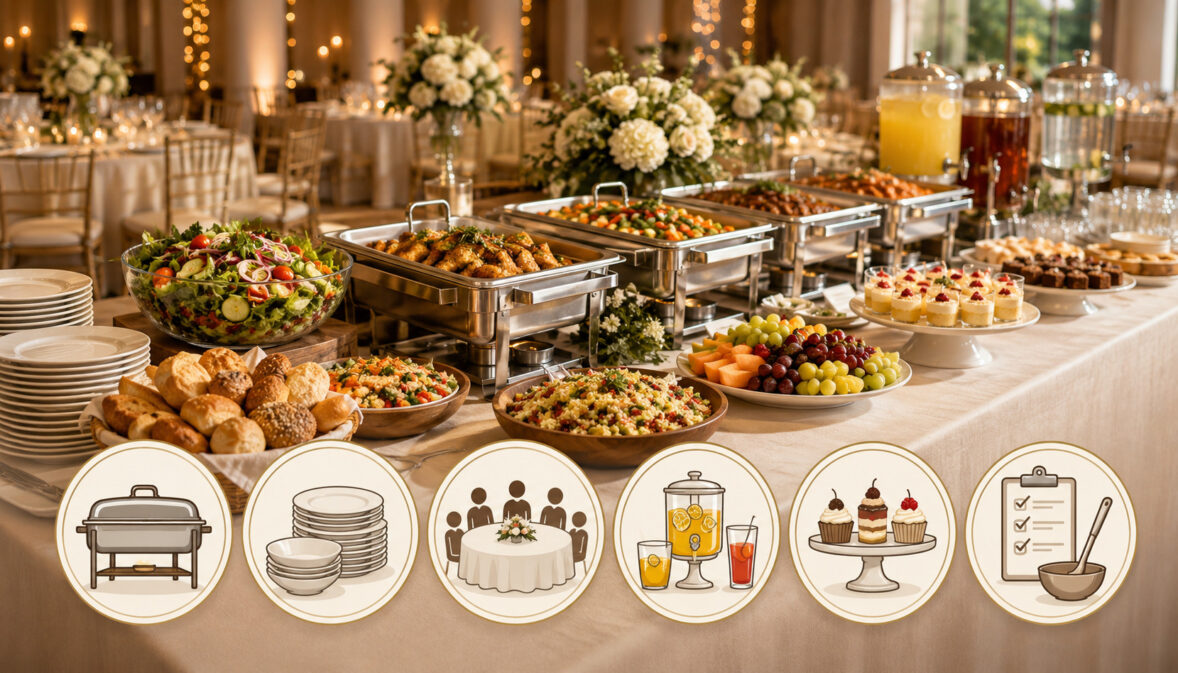
By Jermaine Thomas June 14, 2026
Food can shape the entire flow of an event. Guests may not remember every detail of the décor or schedule, but they often remember whether the meal felt generous, whether the line moved smoothly, whether options matched their needs, and whether refreshments were available when they expected them.
Learning how to estimate food quantities for events helps planners, caterers, couples, office managers, venue coordinators, family hosts, and hospitality teams make better decisions before the first tray is prepared.
The goal is not to guess perfectly. The goal is to build a thoughtful plan based on guest count, timing, service style, menu variety, portion sizes, dietary needs, venue rules, and budget.
A good event food quantity guide also helps reduce waste. Ordering too much food can strain the catering budget and create storage, cleanup, and leftover challenges.
Ordering too little can disrupt the guest experience, especially at weddings, conferences, office lunches, private parties, family gatherings, and long events where food is part of the schedule.
This guide is for general educational purposes. Food quantity needs can vary based on event size, menu, service style, guest preferences, dietary requirements, local rules, venue policies, staffing, equipment, and vendor availability.
Why Food Quantity Planning Matters for Events
Food quantity planning for events is both a hospitality decision and a logistics decision. It affects guest comfort, event pacing, staffing, purchasing, setup, storage, cleanup, and budget control. When food estimates are handled early, the rest of the event plan becomes easier to coordinate.
The most common question is, “How much food for an event?” The better question is, “How much food makes sense for this event, this guest list, this menu, this service style, and this timeline?”
A two-hour cocktail reception needs a different plan than a formal plated dinner. An office lunch needs different portions than a wedding reception with cocktail hour, dinner, dessert, and late-night snacks.
Accurate catering food estimates also help avoid preventable stress. If the buffet runs low before every table has eaten, staff may need to adjust service quickly. If too much food is prepared, the host may be left with leftovers that cannot be safely stored or reused.
Food safety is especially important for buffets and parties because perishable foods need proper time and temperature control. The FDA’s guidance on serving safe buffets is a useful reference for planning service, holding, and replenishment.
Food quantity planning also supports budget conversations. When planners understand event catering portions, they can decide where to spend more and where to simplify.
For example, a corporate catering menu may use fewer entrée options and more practical sides, while a wedding catering menu may allow for a wider cocktail hour and dessert presentation.
A thoughtful catering portion guide also improves communication. Caterers need more than a headcount. They need to know the event type, arrival pattern, timing, dietary restrictions, meal format, venue access, equipment, and whether the food is intended to be a full meal or light refreshments.
Start with Guest Count, RSVP Accuracy, and Event Type

Every event food planning process begins with the guest count, but not all guest counts are equally useful. Invited guests, expected guests, confirmed guests, checked-in guests, children, vendors, speakers, staff, and late additions may all affect food needs differently.
For guest count food planning, separate your numbers into categories. Confirmed adults usually drive the main meal estimate. Children may need smaller portions or separate kids’ meals. Vendors may need boxed meals or scheduled staff meals.
Speakers, entertainers, photographers, planners, security, volunteers, and venue teams may also need to be included depending on the contract and event length.
RSVP tracking is especially important for weddings, family celebrations, seated dinners, conferences, and private parties. An invited count can be much higher than the actual headcount.
On the other hand, casual gatherings, office lunches, open-house events, and backyard parties may have uncertain attendance, which may require a controlled buffer.
Guest Count Planning
A strong guest count food planning process uses several numbers instead of one. Start with the invited count, then track confirmed yes responses, declines, maybes, children, dietary requests, and expected walk-ins. For formal events, final catering counts are often due before the event, so the host needs a dependable system for confirming attendance.
For small parties, the difference between 25 and 35 guests can change the amount of appetizers, beverages, desserts, seating, and service supplies. For large conferences, a 5% change in headcount can affect dozens or hundreds of portions. This is why planners should avoid estimating from memory or casual conversations.
A practical approach is to create a live headcount document with columns for adult meal, kids’ meal, vegetarian option, vegan option, gluten-free option, food allergies, vendor meal, and special notes. This makes it easier to share accurate information with caterers and venue coordinators.
RSVP Tracking
RSVP tracking protects both the budget and the guest experience. A late RSVP deadline can leave too little time to adjust food orders, staffing, rentals, and prep schedules. An early deadline may require extra follow-up if guests delay their responses.
For weddings, milestone birthdays, family reunions, and private parties, ask guests to identify dietary needs when they respond. For corporate events, collect meal preferences through registration forms. For office lunches, use a simple shared form or internal sign-up sheet so the organizer can avoid over-ordering based on department size alone.
For conferences and multi-session events, track attendance by meal period. A guest who attends the morning keynote may not stay for lunch. A guest registered for the full event may skip breakfast but attend the reception. The more precise the RSVP process, the easier it is to create reliable catering food estimates.
When attendance is uncertain, plan with ranges instead of a single number. For example, a backyard gathering might be planned for 45 confirmed guests with food coverage for 50 to 55, depending on menu type and service style.
Event Type
Event type has a major effect on catering serving sizes. Guests behave differently at weddings, corporate meetings, brunch events, office lunches, birthday parties, conferences, cocktail receptions, backyard gatherings, and family celebrations.
At a wedding, guests may expect cocktail hour, dinner, dessert, and possibly late-night snacks. At a corporate lunch, they may prefer efficient service, easy-to-eat foods, and moderate portions.
At a cocktail reception, guests may eat standing up and choose smaller bites throughout the event. At a family gathering, guests may return to the buffet more than once, especially if the setting is relaxed.
Event type also affects timing. A breakfast meeting may need coffee, tea, fruit, pastries, and protein. A dinner event needs more substantial entrées and sides. A brunch event often combines breakfast and lunch portions, which can be tricky because guests may expect variety.
For more context on how event type changes menu planning and guest expectations, this guide to wedding and corporate catering differences explains how service goals vary between formal celebrations and business functions.
How Service Style Affects Food Quantity Estimates
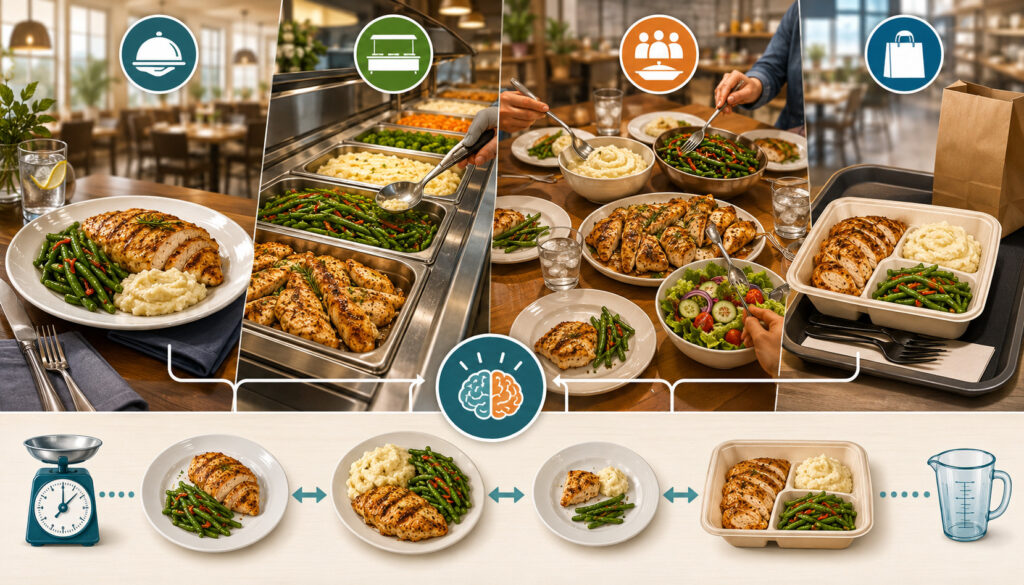
Service style is one of the biggest factors in food portions for events. A plated meal, buffet service, family-style service, food station setup, and cocktail reception all require different planning assumptions. The same guest count can require different food quantities depending on how the food is served.
Buffets often require more food than plated meals because guests choose their own portions. Some guests may take larger servings, sample multiple entrées, or return for seconds.
Plated meals are easier to control because each plate is portioned by the kitchen or service team. Family-style meals fall somewhere in between because food is shared at the table, but guests still control serving amounts.
Food stations can help manage flow and variety, but they also require careful planning. If one station is more popular than expected, it may run out early while another station has leftovers. For this reason, menu balance matters as much as total food volume.
Buffet Service
Buffet service is popular for weddings, corporate events, private parties, family gatherings, conferences, and casual celebrations because it gives guests variety.
However, buffet service often requires a larger planning buffer than plated meals. Guests may take uneven portions, return for seconds, or over-serve themselves when there are many attractive options.
For buffet portion planning, estimate each major category separately: entrée protein, vegetarian entrée, starch, vegetable, salad, bread, sauces, dessert, and beverages. Avoid assuming every guest will eat every item in equal amounts. A popular entrée may need more coverage than a lighter side dish.
Buffet refills also affect quantities. A good buffet plan does not place all food out at once. It stages food so trays can be replenished safely and attractively. This helps maintain quality, supports temperature control, and reduces the appearance of scarcity.
The FDA notes that hot foods should be kept hot and cold foods should be kept cold during buffet service. The FoodSafety.gov event food safety resources are helpful when planning buffet service, outdoor events, and seasonal gatherings.
Plated Meals
Plated meals offer the most controlled catering portion guide because every guest receives a planned serving. This format works well for weddings, galas, formal dinners, awards events, and seated corporate functions where timing and presentation matter.
For plated meals, the main estimate is based on confirmed headcount, entrée selections, dietary restrictions, vendor meals, and a small contingency. Since portions are controlled, there is usually less need for a large food buffer.
However, planners still need to account for extra meals for last-minute guest changes, service errors, dropped plates, or special dietary needs that were not captured earlier.
Plated meals also require accurate entrée counts. If guests choose between chicken, beef, fish, vegetarian, or vegan meals, the caterer needs the final breakdown before prep. For weddings and larger seated events, escort cards, place cards, or seating charts can help service staff deliver the correct meal to each guest.
A plated format can reduce some types of waste, but it may create other challenges. If many guests choose one entrée and change their minds during service, the kitchen may not be able to adjust. Clear RSVP collection is essential.
Family-Style Service
Family-style service places shared platters or bowls on each table, allowing guests to serve themselves while remaining seated. It creates a warm, communal feel and works well for weddings, rehearsal dinners, family celebrations, and private parties.
Food quantity estimates for family-style service must account for both portion size and table distribution. Each table needs enough food to feel abundant, but not so much that platters sit untouched.
A table of eight may need different platter sizes than a table of twelve. Guest demographics also matter. A table with several children may eat differently than a table of adults.
Family-style service often requires more serving pieces, table space, and staff coordination than plated meals. It may also require slightly higher quantities than plated service because guests can take second helpings. However, because food is distributed by table, planners can control portions more than they can with a fully open buffet.
Estimating Appetizers, Hors d’Oeuvres, and Cocktail Hour Food
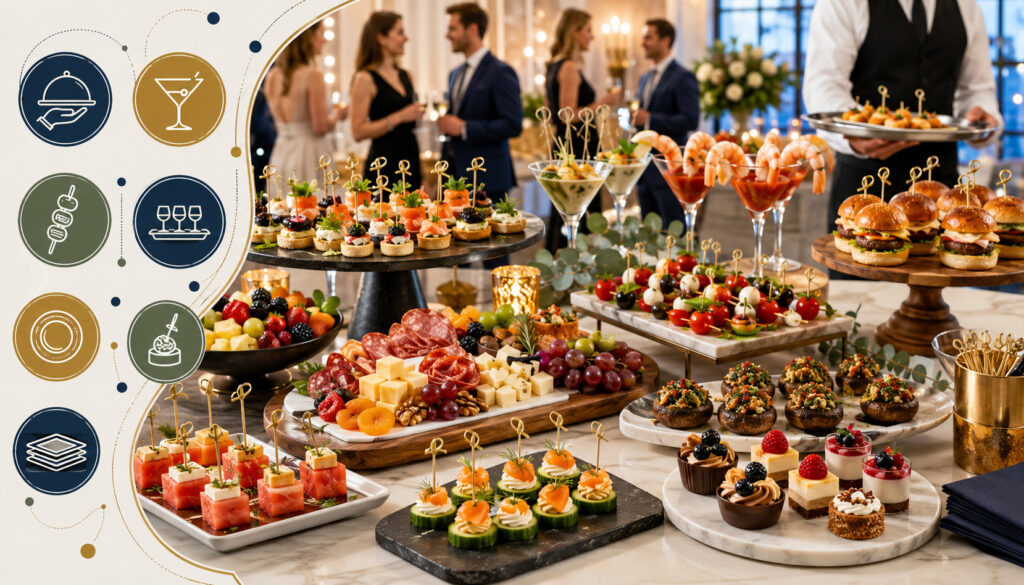
Appetizers and hors d’oeuvres can be light bites, meal bridges, or the main food experience. The right quantity depends on timing, event length, guest appetite, alcohol service, and whether a full meal follows. Cocktail hour before dinner needs fewer pieces than a reception where appetizers are the primary food.
A common appetizer planning range is 2 to 4 pieces per guest for a short pre-meal cocktail hour, 4 to 6 pieces per guest for a longer appetizer period before dinner, and 8 to 12 pieces per guest when hors d’oeuvres are replacing a meal.
Heavier appetizers, such as sliders, skewers, tacos, mini sandwiches, or filled pastries, count differently than lighter bites like fruit skewers, cheese cubes, or vegetable cups.
Cocktail receptions also require variety. Guests may prefer vegetarian options, gluten-free options, seafood, meat-based bites, or lighter items. If alcohol is served, food planning becomes even more important because guests may eat more over time and need substantial options.
Cocktail Hour
Cocktail hour is usually a transition period. It keeps guests comfortable while photos are taken, rooms are reset, or dinner service is prepared. For weddings, cocktail hour often lasts 45 to 75 minutes. For corporate receptions, networking events, and gallery-style gatherings, the cocktail period may be longer and may function as the main meal.
When dinner follows, plan appetizers as a warm-up rather than a full meal. Two to four pieces per guest may be enough for a short reception, especially if dinner begins soon. If the event includes alcohol, a longer wait, or limited seating, increase the estimate.
Passed hors d’oeuvres and stationary displays behave differently. Passed appetizers may be eaten quickly because they arrive directly to guests. Stationary displays may require more food at the start because guests see the full spread and serve themselves. Cheese, charcuterie, dips, fruit, and crudités should be planned with replenishment and food safety in mind.
Appetizer Portions
Appetizer portions depend on size, richness, and role in the event menu. A two-bite stuffed mushroom is not equal to a mini sandwich. A shrimp cocktail display is not equal to a bowl of chips. For this reason, estimate by category rather than counting all appetizers the same way.
For light appetizers before a meal, plan roughly 2 to 4 pieces per guest. For moderate appetizers, plan 4 to 6 pieces. For an appetizer-only event during a meal period, plan 8 to 12 pieces per guest, with at least a few hearty items.
Variety also changes consumption. If you offer six appetizer choices, guests may try several. If you offer only two choices, each item needs enough volume to serve a larger share of the guest count.
A balanced cocktail hour might include one protein-forward item, one vegetarian option, one gluten-free-friendly option, one lighter item, and one display or station.
For private parties and backyard gatherings, dips, chips, snack boards, wings, sliders, and skewers are common. These can disappear quickly when guests arrive hungry, so timing matters.
Hors d’Oeuvres as a Meal
When hors d’oeuvres replace dinner, the catering food estimates must be much higher. Guests need enough substantial food to feel that the event included a meal. This is common for cocktail receptions, networking events, open houses, fundraisers, and some birthday parties.
Plan a mix of passed bites, stations, and displays. Include protein, vegetarian, starch-based, fresh, and warm options. If the event overlaps with dinner, heavier items should make up a meaningful share of the menu. Mini tacos, sliders, skewers, meatballs, flatbreads, dumplings, stuffed pastries, and small bowls can help make the menu feel complete.
For a two-hour appetizer-only reception, 8 to 10 pieces per guest may work if some items are hearty. For a longer event or one held during dinner hours, 10 to 14 pieces may be more appropriate. Always adjust for guest demographics and alcohol service.
Estimating Main Courses, Side Dishes, and Buffet Portions
Main courses and sides form the center of most event menu planning. These estimates depend on protein type, number of entrée choices, service style, meal timing, and whether appetizers or desserts are included. A full dinner buffet needs more planning than a light office lunch, and a backyard barbecue needs different assumptions than a formal plated meal.
For many events, a typical adult entrée portion is often planned around 5 to 8 ounces of cooked protein per guest when served as the main meal. Buffet planning may require more total protein coverage because guests self-serve. If there are two entrée choices, do not simply prepare 50% of each unless guest preferences are known. Popular items may need a larger share.
Side dishes are often estimated in 4 to 6 ounce portions per guest, depending on the number of sides. Salads may be planned by the cup or ounce, while starches and vegetables may be planned by pan count, serving spoon yield, or weight. Bread, rolls, sauces, toppings, and condiments should not be forgotten.
Main Course Portions
Main course portions are usually driven by the event’s main meal period. Dinner events require more substantial portions than mid-afternoon gatherings. Lunch portions may be slightly lighter, but they still need to satisfy guests who may be returning to meetings, travel, or activities.
For plated meals, the kitchen controls portion size. A plated dinner might include one entrée portion, one starch, one vegetable, salad, bread, and dessert. For buffet service, guests may take more protein and fewer vegetables, or sample multiple entrées. This makes buffet portion planning more complex.
When offering multiple entrées, consider popularity. Chicken is often broadly accepted, beef may be popular at formal dinners, fish may need careful timing, and vegetarian entrées should be planned as intentional meals rather than afterthoughts. Vegan options and gluten-free options should be labeled clearly and protected from cross-contact where needed.
For casual gatherings, entrées such as barbecue, pasta, tacos, burgers, sandwiches, and casseroles require different calculations. For example, burgers can be counted by piece, while pulled meats may be estimated by cooked weight and bun count.
Side Dish Portions
Side dishes help round out the meal and manage the catering budget. They also provide options for guests with different appetites and dietary needs. Typical side dish estimates depend on how many sides are offered. If there are two sides, each may need a larger portion. If there are five sides, each item may need less per guest.
For planning purposes, many event hosts estimate 4 to 6 ounces of each major side per guest when only a few sides are offered. For buffet service with several sides, 3 to 4 ounces per side may be enough, but popular items such as macaroni and cheese, mashed potatoes, roasted vegetables, rice, pasta salad, and dinner rolls may need extra coverage.
Salads can be tricky. A plated salad is easy to count. A buffet salad depends on whether it is a main salad, side salad, or optional green item. Guests may eat less salad at heavy dinner events and more at lunch events, wellness-focused corporate meals, and warm-weather gatherings.
Buffet Portion Control
Buffet portion control is about layout, service utensils, tray size, and refill timing. Wide serving spoons, oversized plates, and large open pans can lead guests to take more than expected. Smaller plates, guided service, and staff-assisted carving stations can help portions stay closer to plan.
A buffet should be arranged in a logical order. Salads, bread, and sides often come before entrées so guests do not overload on protein first. However, the layout should also support traffic flow and accessibility. For large events, double-sided buffet lines or duplicate stations may be needed.
For large-scale events, logistics can affect food quantities as much as recipes. Holding equipment, kitchen access, service elevators, loading zones, and staffing all matter. This overview of large-scale catering logistics is useful for understanding how timing, staffing, and execution influence the meal.
Estimating Desserts, Late-Night Snacks, and Specialty Items
Desserts and specialty items often seem simple, but they can be difficult to estimate because guest interest varies widely. Some guests always want dessert. Others skip it after a heavy meal. At weddings and birthday parties, dessert may be ceremonial. At corporate events, desserts may be small, portable, and optional.
For a single dessert, plan one portion per guest plus a small buffer. For dessert bars, guests may sample more than one item, so smaller pieces can help manage quantity.
For cake, serving size depends on whether the cake is the main dessert or part of a larger dessert display. Mini desserts, cookies, brownies, cupcakes, pastries, fruit cups, and ice cream stations all have different serving patterns.
Late-night snacks are common for weddings, long receptions, after-parties, conferences, and celebrations with dancing or bar service. These are not usually planned for every guest in full meal portions. Instead, estimate based on remaining attendance, event length, and timing.
Dessert Portions
Dessert portions should match the meal and event format. After a heavy dinner, many guests prefer smaller sweets. After a light lunch, dessert may be more popular. At birthday parties, cake is expected, but guests may also enjoy cookies, fruit, or small pastries.
For cake, one slice per guest is a common planning point, but the actual number depends on slice size and whether there are other desserts. If a dessert bar includes cupcakes, cookies, brownies, and fruit, guests may take two or three small items. In that case, plan mini portions instead of full-size portions of everything.
For corporate events, individually portioned desserts are often easier. Cookies, dessert cups, bars, and mini pastries reduce mess and speed service. For family gatherings, a mix of familiar desserts can work well, but hosts should avoid offering so many choices that each item is overproduced.
Late-Night Snacks
Late-night snacks work best when they are simple, familiar, and easy to serve. Popular examples include sliders, fries, tacos, pizza, pretzels, breakfast bites, popcorn, mini sandwiches, or snack cups. They are especially useful when an event includes dancing, bar service, or a long gap after dinner.
Do not plan late-night snacks for the original full headcount unless most guests are expected to stay. For weddings and parties, estimate based on the likely number of guests still present at the snack service time. This may be 50% to 75% of the original count, depending on the event.
Late-night snacks should also be coordinated with the venue. Some venues restrict outside food, open flames, fryers, mobile carts, or late service times. Setup and cleanup may require additional staffing.
For events with alcohol service, snacks can improve comfort and pacing. However, they should not replace responsible bar management, water stations, and transportation planning.
Specialty Items
Specialty items include carving stations, seafood displays, grazing tables, cultural dishes, chef-attended stations, dessert stations, coffee bars, and interactive food stations. These items often create memorable experiences, but they require careful portion planning.
A carving station may need a planned serving weight per guest, plus a staff member who controls slices. A taco station needs tortillas, fillings, toppings, sauces, plates, napkins, and backup portions. A grazing table needs enough variety to look full while remaining safe and fresh throughout service.
Specialty items can increase waste if they are not tied to the event timeline. For example, a large grazing table may look impressive at the start but may not be fully eaten if dinner follows soon after. A chef-attended pasta station may create a line if staffing is too limited.
Estimating Beverages, Coffee, Tea, and Bar Needs
Beverage estimates are often overlooked, but they have a major impact on guest comfort. Running out of water, coffee, ice, mixers, cups, or non-alcoholic options can create frustration even when the food quantity is correct.
Beverage planning should include water, soft drinks, coffee, tea, juice, mocktails, bar service, mixers, garnishes, ice, cups, and refill timing.
For non-alcoholic events, estimate based on time of day and event length. Breakfast events need coffee, tea, water, and juice. Lunch events need water, iced tea, soft drinks, and possibly coffee. Dinner events may need water service, coffee after the meal, and bar-related beverages if applicable.
For bar service, work with licensed professionals and follow venue rules. Beverage consumption depends on event length, guest demographics, transportation plans, season, meal type, and whether drinks are hosted or cash bar. Always include water stations, especially for outdoor events and long receptions.
Beverage Estimates
A general beverage estimate starts with one drink per guest per hour, then adjusts for temperature, event type, alcohol service, and meal timing. For short meetings, water and coffee may be enough. For long conferences, guests may need multiple beverage breaks throughout the day.
Water should be available throughout the event, not only during the meal. Bottled water, water stations, pitchers, or infused water dispensers can all work depending on the setting. Outdoor events, warm venues, and active events require more water and ice.
Soft drinks and iced tea are common for lunches, backyard gatherings, family celebrations, and casual parties. For formal dinners, coffee and tea may be served with dessert. For breakfast catering, coffee is often one of the highest-demand items.
Do not forget cups, stirrers, sweeteners, creamers, napkins, lids, straws where appropriate, and waste bins. Beverage service creates its own setup and cleanup needs.
Coffee and Tea
Coffee and tea estimates depend heavily on time of day. Morning events require more coffee than afternoon events. Breakfast meetings, brunch events, conferences, training sessions, and office gatherings often need continuous coffee service or planned refills.
For morning meetings, estimate at least one to two cups of coffee per guest, with more for longer events. For lunch events, coffee consumption is often lower unless dessert or an afternoon session follows. For evening events, coffee may be served with dessert, but not every guest will drink it.
Tea, decaf coffee, dairy alternatives, sweeteners, and hot water should be planned intentionally. Guests may appreciate having options, especially during long meetings or cooler weather. For office lunches and corporate catering, self-serve beverage stations can reduce service delays.
Bar Service
Bar estimates should be handled carefully because they involve guest safety, venue rules, staffing, and local requirements. Hosted bars, cash bars, limited bars, beer-and-wine service, signature cocktails, and dry events all require different plans.
For a hosted bar, planners often estimate based on the number of drinking-age guests, event length, and service style. The first hour may have higher demand, followed by slower consumption. Wine service with dinner may require separate planning from cocktail hour.
Mixers, garnishes, ice, glassware, bar napkins, water, and non-alcoholic options should be included in the estimate. Mocktails, sparkling water, juices, and zero-proof options can support guests who do not drink alcohol.
Work with licensed bar professionals when required. Also confirm venue policies on outside alcohol, corkage, security, service cut-off times, and liability.
Adjusting Food Quantities for Time of Day and Event Length
Time of day changes appetite. A breakfast event, brunch event, lunch event, dinner event, afternoon reception, and late-night party all call for different portion planning. Event length also matters. A 90-minute office lunch is different from an all-day conference with breakfast, breaks, lunch, and a reception.
The food quantity checklist should begin with the event timeline. What time do guests arrive? Is there a meal before or after the event? Are guests coming from work, travel, a ceremony, or an activity? Will there be a gap between cocktail hour and dinner? Will guests be standing, seated, networking, dancing, or moving between sessions?
Meal duration also affects consumption. Guests may eat more when food remains available for several hours. They may eat less when food is served quickly during a structured program. In open-house events, guests may arrive in waves, which requires staged service rather than one large presentation.
Breakfast Events
Breakfast catering can range from light refreshments to a full meal. A simple continental breakfast may include coffee, tea, juice, fruit, pastries, yogurt, and granola. A heartier breakfast may include eggs, breakfast meats, potatoes, bagels, oatmeal, or breakfast sandwiches.
For early meetings, coffee demand is usually high. Food portions may be moderate if the event is short. For longer training sessions or conferences, breakfast should be more substantial, especially if lunch is not served for several hours.
Estimate one to two breakfast items per guest for a light setup, plus fruit and beverages. For full breakfast service, plan one entrée portion per guest, one or two sides, and beverage refills. If guests arrive over a long window, choose foods that hold well and can be replenished safely.
Breakfast events also need attention to dietary restrictions. Vegetarian options are usually easy to include, but vegan and gluten-free breakfast choices should be planned separately.
Lunch Events
Lunch catering is common for office lunches, corporate meetings, conferences, workshops, private gatherings, and daytime celebrations. Guests usually expect enough food to carry them through the afternoon without feeling overly full.
Sandwiches, wraps, salads, bowls, boxed lunches, buffets, and hot entrées are all common. Boxed lunches are easier to count because each guest receives one meal. Buffets require more planning because guests self-serve.
For office lunches, estimate based on actual attendance rather than total staff size. Some people may be remote, traveling, out sick, or bringing their own food. For conferences, lunch counts should align with registration check-ins and session attendance.
Lunch menus should include water and at least one or two additional beverage options. Coffee may be useful after lunch if the event continues into the afternoon.
Dinner Events
Dinner events usually require the most substantial food portions. Guests may arrive hungry, especially after work, travel, ceremonies, or long conference days. Dinner catering often includes appetizers, entrées, sides, salad, bread, dessert, beverages, and sometimes late-night snacks.
For dinner, plan a complete meal unless the invitation clearly describes the event as light refreshments or cocktails only. If the event begins during a normal dinner period, guests will likely expect a meal even if the format is casual.
Formal dinners may use plated service, while weddings, family gatherings, and private parties may use buffets or family-style service. Buffet dinners usually require extra attention to portion control, refills, and popular entrée items.
Dinner events with alcohol service should include enough food throughout the event. If dinner is delayed, appetizers may need to be increased. If dancing or entertainment continues late, a snack may be useful.
Brunch Events
Brunch events combine breakfast and lunch expectations, which makes food quantity planning more flexible but also more complex. Guests may choose eggs, pastries, fruit, salads, sandwiches, meats, sweets, coffee, juice, and specialty beverages.
Because brunch includes variety, portion sizes for each item may be smaller. However, guests often sample multiple foods. A brunch buffet should include enough protein, starch, fresh items, and sweet items to feel balanced.
Brunch works well for showers, family celebrations, office events, private parties, and post-wedding gatherings. It can be more budget-friendly than a formal dinner, but only if the menu is planned carefully. Too many stations or specialty items can increase cost and waste.
Plan beverages carefully. Coffee, tea, juice, water, and possibly sparkling or specialty drinks may all be expected depending on the event style.
Planning for Dietary Restrictions, Kids’ Meals, and Vendor Meals
Food quantity planning is not complete until dietary restrictions, food allergies, kids’ meals, and vendor meals are included. These categories may represent a small share of the guest count, but they can have a large impact on guest experience and event operations.
Dietary needs should be collected early and confirmed before final counts are submitted. Vegetarian options, vegan options, gluten-free options, dairy-free items, nut-free requests, and food allergies should be treated with care. Hosts should avoid assuming that one “special meal” works for everyone.
Kids’ meals should be planned based on age range and event type. A toddler, a school-age child, and a teenager will not eat the same amount. Vendor meals are also important for long events. Photographers, planners, musicians, DJs, officiants, security teams, and production crews may be on-site for many hours.
Dietary Restrictions
Dietary restrictions affect both quantity and menu design. A vegetarian guest should receive a complete meal, not just extra salad or sides. A vegan guest may need a separate entrée, sauce, and dessert. A gluten-free guest may need protection from cross-contact in buffet service.
The best approach is to track dietary needs in the RSVP process and share the final list with the caterer. Include the guest’s name, table number if applicable, meal type, and severity of allergy when known. For buffets, use clear labels and separate utensils for each dish.
Food allergies require careful communication. The CDC’s food safety resources can help hosts understand why safe handling matters, especially when serving groups. Caterers and venues should also explain what they can and cannot guarantee regarding allergen control.
Kids’ Meals
Kids’ meals can reduce waste and improve the experience for families. Children often eat smaller portions and may prefer simpler foods. Common kids’ meal options include chicken tenders, pasta, sliders, fruit, macaroni and cheese, grilled cheese, or smaller portions of the main meal.
For formal events, ask guests to identify children during RSVP. Separate children into age ranges when possible. Children under a certain age may share from a parent’s plate, while older children may need their own meal. Teenagers often eat adult portions.
Kids’ meals also affect timing. Children may need food earlier than adults, especially at weddings or long family events. If dinner service is late, consider a small snack or early kids’ meal.
For buffets, children may take unpredictable portions. A parent-assisted kids’ station or pre-plated kids’ meal can help reduce mess and waste.
Vendor Meals
Vendor meals are easy to forget, but they are essential for long events. Photographers, videographers, planners, entertainers, DJs, bands, security personnel, production teams, and venue staff may work through setup, ceremony, reception, and cleanup.
Vendor meals do not always need to match guest meals, but they should be planned, scheduled, and communicated. Some contracts require hot meals, while others allow boxed meals. The timing matters because vendors may need to eat before major program moments.
Include vendor meals in the final catering count, but track them separately from guest meals. This avoids confusion during service. If a caterer is preparing 150 guest meals and 12 vendor meals, both numbers need to be clear.
Reducing Food Waste Without Running Short
Reducing food waste is not about ordering the smallest possible amount. It is about making smart choices that match the event. A balanced plan includes accurate headcount tracking, realistic portion sizes, controlled menu variety, safe refill procedures, and leftover planning.
Food waste can happen when hosts overestimate attendance, offer too many menu items, place all food out at once, ignore timing, or fail to coordinate with the venue. Waste can also happen when food is not stored safely or when leftovers cannot be distributed due to policy or safety limits.
A good catering serving sizes plan leaves room for a practical buffer without turning every item into a surplus. Some items deserve extra coverage, such as water, bread, popular sides, and core entrées. Other items can be planned more tightly, especially specialty dishes that appeal to fewer guests.
Leftover Planning
Leftover planning should happen before the event, not during cleanup. Ask the caterer or venue what can be packaged, what must be discarded, and what storage is available. Some foods are safer and easier to handle than others. Hot buffet items, seafood, dairy-based dishes, and foods held at room temperature require special care.
The USDA’s guidance on safe handling of take-out and delivered foods explains the importance of time, temperature, cooling, and storage for prepared foods. This matters when guests want to take leftovers home or hosts want to save food after a party.
Packaging should be planned if leftovers are expected. Containers, labels, refrigeration, transport coolers, and timing all matter. For professional events, leftover policies may be set by the caterer, venue, or local requirements.
A helpful resource on smart portioning and leftover strategies explains how portion planning and post-event handling can work together.
Food Waste Reduction
Food waste reduction starts with menu design. A smaller menu with well-chosen options is often easier to estimate than a large menu with many overlapping dishes. Guests appreciate variety, but too much variety can increase leftovers because each item must be prepared in enough quantity to look abundant.
Use staged refills instead of placing everything out at once. This keeps the presentation fresh and allows staff to manage portions. For buffets, use appropriate serving utensils so guests do not accidentally take oversized portions.
Track what was eaten after the event. Caterers and office managers can record which items ran out, which items had leftovers, and how the headcount compared with actual attendance. Over time, this creates a useful internal event food calculator based on real patterns.
Catering Budget
Catering budget and food quantity planning are closely connected. Higher quantities increase food cost, labor, equipment, and sometimes rental needs. But cutting too aggressively can create poor service outcomes. The goal is balanced planning.
Budget decisions should focus on the whole menu. A host may choose one premium entrée instead of three, simplify dessert, use seasonal sides, offer a limited bar, or reduce late-night snacks if dinner is substantial. These choices can support budget control without making the event feel underplanned.
Transparency with caterers is important. Share the target budget, guest count, service style, dietary needs, and priorities. Ask where quantity buffers are useful and where they are not. For more planning context, this catering checklist for hiring and coordination can help hosts ask better questions before committing.
Common Food Quantity Planning Mistakes to Avoid
Even experienced planners can make food quantity mistakes when timelines shift, guest counts change, or menu variety grows too quickly. The most common problems are usually preventable with better communication and earlier planning.
One major mistake is relying on invited count instead of confirmed headcount. Another is forgetting that buffet service requires different estimates than plated meals. Hosts may also underestimate beverages, ignore event timing, forget vendor meals, or assume that dietary restrictions represent only a small detail.
Another mistake is offering too many menu items. More choices can sound generous, but each choice requires enough quantity to serve guests. Too many options can increase cost, slow service, and create leftovers. A focused menu is often more effective than a crowded one.
Ignoring Event Timing
Timing affects appetite more than many hosts realize. If guests arrive at noon, they expect lunch. If guests arrive at 6 p.m., they expect dinner. If an event starts at 3 p.m., light refreshments may be enough unless the schedule continues into dinner.
Problems happen when the invitation, menu, and timeline do not match. A “cocktail reception” during dinner hours may leave guests hungry if only light appetizers are served. A long ceremony followed by a delayed dinner may require a larger cocktail hour. An all-day conference without enough snack breaks can leave guests uncomfortable.
To avoid this, build the food plan around the guest journey. Consider when guests last ate, how long they will stay, whether they are seated or standing, and when the next meal will happen.
Forgetting Beverages
Beverages are often underestimated because planners focus on entrées and sides. But guests notice when water, coffee, ice, cups, or mixers run out. Beverage shortages are especially common at outdoor events, long meetings, brunches, weddings, and events with bar service.
A beverage plan should cover water from arrival through departure. It should also include coffee and tea when appropriate, non-alcoholic options, kids’ beverages, ice, cups, napkins, and service equipment.
For conferences and corporate events, beverage breaks may be needed between sessions. For weddings and private parties, water stations near the bar, dance floor, and outdoor areas can improve comfort.
Do not assume the venue automatically provides all beverage supplies. Confirm who is responsible for water service, ice, glassware, coffee equipment, and cleanup.
Overcomplicating the Menu
A menu with too many items can make catering food estimates harder. If there are five entrées, six sides, three salads, four desserts, and multiple stations, each item must be planned carefully. Guests may take small amounts of many things, or one item may dominate demand.
A simpler menu can still feel abundant when it is balanced. Choose a clear main item, a vegetarian or vegan option, a starch, a vegetable, a fresh item, a dessert, and appropriate beverages. Add specialty items only when they support the event purpose.
For family gatherings and backyard parties, too many homemade dishes can also create confusion. Guests may bring duplicate items, storage may be limited, and leftovers may become difficult to manage.
A strong event menu planning process focuses on guest needs, event flow, and realistic service rather than adding options for the sake of variety.
Event Food Quantity Checklist and Planning Table
A practical food quantity checklist helps hosts organize information before speaking with a caterer, venue, or hospitality team. It also helps office managers, couples, planners, and family hosts compare choices without relying on guesswork.
Start with the event basics: date, time, location, guest count, service style, meal type, venue restrictions, and budget. Then add menu details: appetizers, entrées, sides, desserts, beverages, dietary meals, kids’ meals, vendor meals, and late-night snacks.
Finally, confirm logistics: setup time, refrigeration, heating, serving equipment, staffing, labeling, cleanup, and leftover policy.
The table below gives general planning ranges. These are not fixed rules, but they provide a useful starting point for an event food calculator or catering food quantity guide.
| Food Category | Suggested Planning Range | Best For | Planning Tip |
| Light appetizers before a meal | 2–4 pieces per guest | Short cocktail hour, pre-dinner reception | Increase if dinner is delayed or alcohol is served |
| Moderate appetizers | 4–6 pieces per guest | Longer cocktail hour, networking reception | Include protein, vegetarian, and gluten-free-friendly choices |
| Appetizer-only reception | 8–12+ pieces per guest | Cocktail reception during meal hours | Add hearty items such as sliders, skewers, tacos, or small bowls |
| Plated entrée | 1 entrée per confirmed guest | Weddings, galas, seated dinners | Track entrée choices and dietary meals carefully |
| Buffet entrée protein | 5–8 oz cooked protein per adult guest | Dinner buffets, casual events | Plan extra for popular entrées and self-service |
| Side dishes | 3–6 oz per side per guest | Buffets, family-style meals, plated meals | Portion depends on number of sides offered |
| Salad | 1–2 cups per guest | Lunches, dinners, buffets | Plan less if many sides are offered |
| Dessert | 1 serving per guest | Cakes, plated dessert, dessert bars | Mini desserts may require 2–3 pieces per guest |
| Coffee | 1–2 cups per guest for morning events | Breakfasts, meetings, conferences | Include decaf, tea, creamers, sweeteners, and cups |
| Non-alcoholic beverages | 1 drink per guest per hour as a starting point | Most events | Increase for outdoor, warm, or long events |
| Kids’ meals | 1 smaller meal per child when needed | Weddings, family parties, private events | Separate toddlers, children, and teens when possible |
| Vendor meals | 1 meal per working vendor for long events | Weddings, productions, conferences | Confirm contract requirements and meal timing |
Food Quantity Checklist
Use this checklist before finalizing event catering portions:
- Confirm the invited count, RSVP count, and expected final headcount.
- Separate adults, children, vendors, staff, speakers, and volunteers.
- Identify the event type: wedding, corporate event, private party, birthday party, office lunch, conference, brunch, dinner, or casual gathering.
- Confirm whether food is a full meal, light refreshments, cocktail hour, or snack service.
- Choose the service style: plated, buffet, family-style, stations, boxed meals, or passed appetizers.
- List appetizers, hors d’oeuvres, entrées, sides, salads, desserts, snacks, and beverages.
- Track vegetarian, vegan, gluten-free, dairy-free, nut-free, and allergy-related needs.
- Plan kids’ meals and vendor meals separately.
- Confirm event timeline, meal duration, and refill schedule.
- Confirm venue rules for outside food, bar service, refrigeration, heating, open flames, and cleanup.
- Ask about food safety, temperature control, storage, and leftover policies.
- Build a reasonable buffer for last-minute changes.
- Label food clearly, especially allergens and dietary options.
- Review what was eaten after the event to improve future estimates.
Planning Example
Imagine a corporate meeting with 80 confirmed guests from 11:30 a.m. to 2:00 p.m. The organizer chooses a lunch buffet with two entrée options, two sides, salad, cookies, water, iced tea, and coffee. Because it is a structured lunch, portions can be moderate. The organizer should still include dietary meals, account for late registrants, and avoid offering too many entrée choices.
Now compare that with an evening backyard birthday party for 80 guests from 5:00 p.m. to 10:00 p.m. Guests may graze, return for seconds, drink more beverages, and stay longer. The same guest count may require more appetizers, beverages, snacks, and flexible refills.
This is why no single catering portion guide works for every event. The best estimates come from matching portion ranges to real event behavior.
FAQs
How do you estimate food quantities for an event?
Start with the confirmed guest count, then adjust for event type, time of day, service style, event length, menu variety, dietary needs, kids’ meals, vendor meals, and beverage service. Decide whether the food is a full meal, light refreshments, cocktail hour, or snack service.
After that, estimate each category separately: appetizers, entrées, sides, salads, desserts, beverages, and specialty items. Add a practical buffer for last-minute changes, but avoid over-ordering every item. Share the final headcount, timeline, and menu details with the caterer or venue before finalizing quantities.
How much food should you plan per guest?
For a full meal, plan one entrée portion per guest, plus sides, salad, dessert, and beverages. For buffet service, entrée portions often need a slightly larger buffer because guests serve themselves. For appetizers before a meal, 2 to 4 pieces per guest may be enough. For appetizer-only receptions, 8 to 12 or more pieces per guest may be needed.
The best estimate depends on whether the event is breakfast, brunch, lunch, dinner, cocktail hour, or a long reception. Guest demographics, menu richness, and alcohol service also affect how much people eat.
How do buffet portions differ from plated meal portions?
Plated meals are portion-controlled because each guest receives a prepared plate. This makes quantities easier to estimate. Buffet portions are less predictable because guests choose their own amounts, sample multiple items, or return for seconds.
Buffets often need more total food coverage, especially for popular entrées and sides. They also need staged refills, appropriate serving utensils, and temperature control. Plated meals need accurate entrée counts, dietary meal tracking, and a small contingency for last-minute changes or service issues.
How many appetizers should be planned for cocktail hour?
For a short cocktail hour before dinner, plan about 2 to 4 appetizer pieces per guest. For a longer cocktail hour, plan 4 to 6 pieces per guest. If hors d’oeuvres are the main food during a meal period, plan 8 to 12 or more pieces per guest, with several hearty options.
Adjust based on timing, alcohol service, guest appetite, and whether dinner follows. If guests will wait a long time before the main meal, increase the appetizer estimate.
How do you estimate beverages for an event?
A useful starting point is one beverage per guest per hour, then adjust for event length, time of day, weather, alcohol service, and guest preferences. Morning events often need more coffee. Outdoor and warm-weather events need more water and ice. Dinner events may need coffee, tea, water, soft drinks, and bar-related beverages.
Do not forget cups, ice, stirrers, creamers, sweeteners, mixers, garnishes, napkins, and refill plans. Beverage shortages can affect the event even when food quantities are correct.
How can planners avoid running out of food?
Use confirmed headcount instead of invited count, collect RSVPs early, track dietary needs, and build a reasonable buffer. Match portions to the service style and event timing. Buffets, long events, and meal-period cocktail receptions usually need more coverage than short meetings or plated dinners.
Also communicate clearly with the caterer. Share the schedule, guest demographics, menu priorities, venue rules, and expected arrival pattern. For buffets, use staged refills so food remains available without putting everything out at once.
How can event hosts reduce food waste?
Reduce waste by tightening the RSVP process, simplifying the menu, using realistic portion ranges, staging buffet refills, and planning leftovers before the event. Avoid offering too many similar menu items, and track what was eaten after the event to improve future planning.
Food safety matters when handling leftovers. Confirm packaging, refrigeration, transport, and discard policies with the caterer or venue. Not every leftover item can be safely saved or distributed.
What information should be shared with a caterer before finalizing quantities?
Share the confirmed headcount, event type, timeline, service style, menu preferences, dietary restrictions, allergy notes, kids’ meal count, vendor meal count, venue rules, equipment access, setup time, cleanup expectations, and budget range. Also explain whether food is intended as a full meal, cocktail hour, snack service, or light refreshment.
The more complete the information, the more accurate the catering food estimates will be. Caterers can then recommend portion ranges, refill plans, menu adjustments, and service strategies that fit the event.
Conclusion
Knowing how to estimate food quantities for events is one of the most useful skills in event planning. It helps hosts avoid running short, reduce unnecessary waste, manage budgets, and create a smoother guest experience. The process starts with the guest count, but it does not end there.
A reliable event food quantity guide considers event type, time of day, service style, menu variety, event length, dietary restrictions, kids’ meals, vendor meals, beverages, venue rules, food safety, staffing, and leftovers.
A buffet dinner, plated wedding meal, corporate lunch, brunch event, cocktail reception, backyard gathering, and conference all require different planning assumptions.
The best approach is practical and flexible. Confirm RSVPs, separate guest categories, use realistic portion ranges, plan beverages carefully, communicate with caterers, and build a reasonable buffer where it matters most. Keep the menu focused, label food clearly, and think through storage, setup, cleanup, and leftover handling before the event begins.
Food quantity planning does not need to be overwhelming. With the right checklist, clear communication, and a thoughtful understanding of how guests eat at different types of events, planners and hosts can make confident decisions that support both hospitality and efficiency.