
When people think about successful catering, they often focus on the food. They talk about menu selection, presentation, portion sizes, ingredients, and service quality. While all of these elements are important, there is another factor that frequently determines whether an event feels smooth and enjoyable or stressful and chaotic. That factor is guest flow.
Guest flow refers to how people move through an event space throughout the entire occasion. It includes how guests enter the venue, gather in different areas, access food and beverages, move between activities, and eventually leave the event. Although it may seem like a minor detail, guest flow can significantly influence the success of catering operations and the overall atmosphere of an event.
Many catering challenges that appear to be food-related are actually movement-related. Long buffet lines, crowded serving stations, empty food trays, delayed service, and frustrated attendees often stem from poor movement planning rather than poor food preparation. Even the best menu can struggle to impress guests if accessing that food becomes inconvenient or uncomfortable.
Understanding the relationship between guest flow and catering success helps event organisers create smoother experiences, improve service efficiency, and enhance guest satisfaction. When movement patterns and catering plans work together, events feel organised, comfortable, and memorable for all the right reasons.
What Guest Flow Really Means
Guest flow is often misunderstood as simply crowd management. In reality, it encompasses every aspect of how attendees interact with the event environment from arrival to departure.
At any gathering, people naturally move between different points of interest. They enter through registration areas, gather around social spaces, visit food stations, access restrooms, participate in activities, and eventually leave the venue. The way these movements occur influences comfort, convenience, and overall event perception.
When guest flow is well planned, attendees rarely notice it. People move naturally, lines remain manageable, and spaces feel comfortable rather than crowded. Guests can access services and amenities without frustration or confusion.
When guest flow is poorly managed, problems quickly become visible. Congestion develops around food stations, traffic bottlenecks emerge near entrances, and guests struggle to navigate the space efficiently. These issues often create negative impressions even when other aspects of the event are executed well.
For catering teams, understanding movement patterns is essential because food service depends heavily on where, when, and how guests move throughout the venue.
Why Catering Success Depends on More Than Food
Many event organizers believe that excellent food will ensure successful catering. Indeed, food quality is very important; however, catering should be understood as a service process and not just as a meal.
Catering is assessed by clients taking into account several aspects: the speed of their service, their comfort level during the process of eating, the accessibility of the stations where they will eat, and the orderliness of the whole process. An excellent menu will not have its effect if guests have to wait in long queues or walk in overcrowded space for a long period of time.
So, catering services should take into consideration operational aspects along with culinary ones. Preparation of the food, staff, location of the stations, replenishing procedures, and the movement plan influence the result of the process.
Competent caterers realize the significance of service efficiency in relation to guest satisfaction. They know that the food should not only be excellent but also served in a quick and convenient way.
It explains why client flow is so significant in catering. The best catering experience happens when excellent food is accompanied by efficient movement and service processes.
The Relationship Between Guest Movement and Food Service
Food service naturally attracts large groups of people to specific locations within an event. Whether guests are visiting buffet stations, beverage bars, food trucks, dessert displays, or plated service areas, catering activities create concentrated movement patterns.
If too many guests arrive at the same location simultaneously, congestion can occur regardless of how well the food is prepared. Long queues not only slow service but also affect the overall atmosphere of the event.
Guest flow planning helps distribute traffic more effectively. Strategic placement of food stations, multiple service points, and thoughtful venue layouts encourage more balanced movement throughout the space.
Timing also matters. Events that coordinate food service schedules with guest activities often experience smoother operations because traffic is distributed more evenly. Guests naturally spread across different areas rather than gathering in a single location all at once.
Understanding how people move allows event catering services to anticipate demand patterns and create service environments that feel efficient and welcoming.
How Poor Guest Flow Creates Catering Problems
Most catering problems that arise do not result from poor cooking but because of poor movement design. Long lines at buffets are a good example. Although inadequate staffing may lead to such situations, inadequate station placement is just as much of a cause.
Placing food stations near entrances, exits, entertainment sections or any place where there is a lot of movement increases the chances of congestion. This makes it difficult for guests to access their food effectively or be hampered by movement.
Congestion in food service areas also leads to food problems. Food may end up being cold, disorganised stations, among other issues because of the long wait times due to limited access for the limited number of staff members.
Safety problems also occur in such cases because congestion poses risks of spillage, accidents, and crowdedness that might not give good guest experiences despite food quality.
Event logistics become quite simple when movement patterns are focused on and not catering considered as a stand-alone function.
The Importance of Venue Layout
Venue layout has a significant influence on how guests interact with catering services. The physical arrangement of entrances, seating areas, food stations, bars, entertainment zones, and gathering spaces shapes movement patterns throughout the event.
A well-designed layout encourages natural circulation and reduces congestion. Guests can access food and beverages without disrupting other activities, while service staff can move efficiently between preparation and serving areas.
Poor layouts often force people into narrow pathways or create traffic intersections where multiple activities compete for space. These bottlenecks slow movement and increase frustration.
Event catering services frequently perform best when they are involved in venue planning early in the process. Their operational experience allows them to identify potential challenges and recommend layouts that support smoother service.
Effective venue planning recognises that food service is not separate from the event environment. It is an integrated part of the overall experience that depends heavily on physical space design.
Buffet Design and Traffic Management
One of the reasons why buffets have remained very popular is the flexibility associated with this catering option. But, there are some guest flow issues related to buffets if you do not consider certain details while planning this type of service.
For example, having just one line for a lot of guests is likely to slow down everything and result in bottlenecks. Guests will waste their time in lines and will not be able to enjoy the party.
To avoid it, it is better to have several points for access. Two-sided buffets, duplicates of serving stations and scattered food distribution may help a lot here.
It is also important where you put different food items. Putting those dishes that people like at the entrance to the line is likely to cause problems because guests will stop to choose something.
Knowledge of guest flow can help in creating a convenient buffet experience for guests.
Beverage Stations and Their Impact on Movement
Food service is not the only aspect of catering affected by movement patterns. Beverage stations can become major sources of congestion, particularly at large events.
Guests often visit bars and beverage areas multiple times throughout an event, creating ongoing traffic rather than a single service period. If beverage stations are poorly positioned, they can disrupt movement across the entire venue.
Strategically locating beverage stations helps distribute guests more evenly and reduces pressure on specific areas. Multiple service points often improve efficiency while encouraging guests to explore different sections of the event space.
The design of beverage areas also influences movement. Clear queue paths, adequate service capacity, and sufficient surrounding space help prevent congestion and improve accessibility.
Effective event logistics require organisers to consider beverages as carefully as food when planning guest movement and service operations.
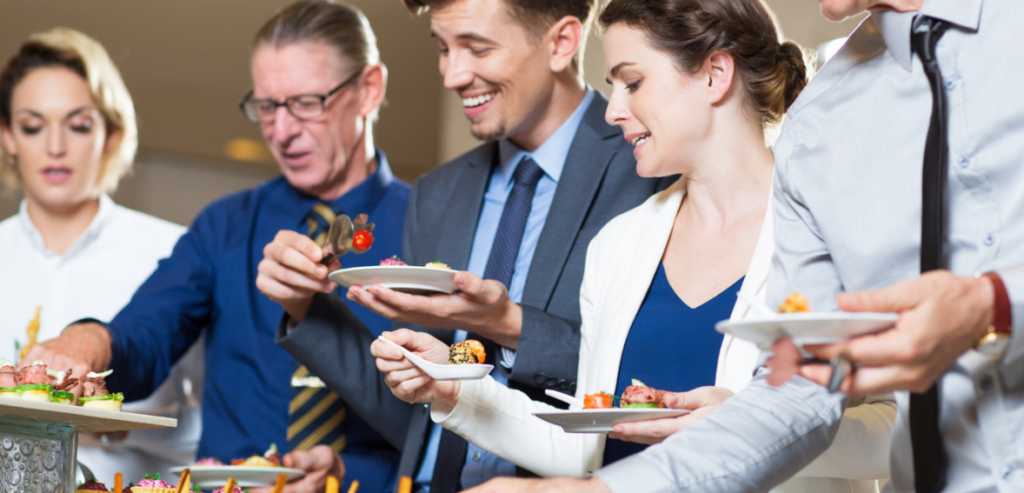
How Guest Flow Influences Perceptions of Service Quality
Guests rarely separate operational details from their overall event impressions. Their perception of service quality is shaped by the entire experience, not just the food itself.
For example, attendees may describe catering as slow even when food preparation occurs on schedule if they spend excessive time waiting in lines. Similarly, guests may perceive service as disorganised when congestion makes navigation difficult.
On the other hand, smooth movement contributes to positive impressions even when attendees are not consciously aware of it. Easy access to food, comfortable circulation, and efficient service create a sense of professionalism and competence.
Guest experience is influenced by emotional responses as much as practical outcomes. Frustration caused by crowding can affect overall satisfaction, while convenience and comfort contribute to positive memories.
This connection highlights why guest flow deserves attention during catering planning. Movement patterns influence how attendees perceive every aspect of the event.
Staffing Strategies and Movement Planning
Staff deployment becomes more effective when informed by guest movement patterns. Understanding where guests are likely to gather allows organisers to position personnel strategically throughout the venue.
Service staff can help direct traffic, answer questions, replenish food stations, and address issues before they escalate. Their visibility and accessibility contribute to smoother operations and improved guest experiences.
Event catering services often use movement analysis to determine staffing requirements. Areas experiencing high traffic may require additional personnel, while quieter zones can operate efficiently with fewer resources.
Staff mobility is equally important. Employees must be able to access service areas, storage locations, and preparation spaces without navigating congested pathways. Poor guest flow can hinder staff efficiency and create operational delays.
Integrating staffing plans with movement strategies supports better coordination and more effective service delivery.
Guest Flow in Different Types of Events
Different event formats create different movement challenges. Corporate conferences, weddings, trade shows, fundraisers, festivals, and private celebrations each generate unique traffic patterns that influence catering operations.
For example, conference attendees often move according to scheduled sessions, creating predictable peaks in demand. Weddings typically involve transitions between ceremonies, receptions, and dining periods. Festivals may experience continuous movement throughout the day.
Successful event logistics account for these variations by adapting catering strategies to match expected guest behaviour. Food service timing, station placement, staffing levels, and venue layouts should reflect the specific characteristics of each event.
Recognising these differences helps organisers create experiences that feel natural and efficient rather than forcing guests into inconvenient service patterns.
Tailoring guest flow strategies to the event type contributes significantly to overall success.
Technology and Modern Event Planning
Technology is increasingly helping organisers understand and manage guest flow more effectively. Digital planning tools, event management software, crowd monitoring systems, and venue analytics provide valuable insights into movement patterns.
These tools help identify potential bottlenecks, optimise layouts, and improve resource allocation. Event planners can model traffic flows before an event takes place, reducing the likelihood of operational surprises.
Technology also supports communication between catering teams, venue staff, and organisers. Real-time updates allow adjustments to be made quickly when conditions change.
While technology cannot replace experience and careful planning, it provides valuable support for managing complex events where movement patterns significantly influence outcomes.
Modern event catering services increasingly incorporate technology into their planning processes to improve efficiency and enhance guest experiences.
Why Early Collaboration Matters
One of the most effective ways to improve guest flow and catering success is involving catering professionals early in the planning process. Too often, caterers are brought into discussions after major venue and layout decisions have already been made.
Early collaboration allows catering teams to provide valuable operational insights regarding service requirements, movement patterns, and logistical considerations. Their experience can help identify potential challenges before they become costly problems.
When caterers, event planners, venue managers, and logistics teams work together from the beginning, they can create more integrated solutions. Decisions regarding layouts, schedules, staffing, and service formats become better aligned with overall event goals.
Event logistics function most effectively when all stakeholders understand how their decisions affect one another. Guest flow serves as a connecting factor that influences multiple aspects of event planning simultaneously.
Strong collaboration ultimately leads to smoother operations and better outcomes for guests.
The Long-Term Impact on Guest Satisfaction
The success of an event is often measured by how guests feel when they leave. Food quality certainly contributes to those impressions, but convenience, comfort, and overall flow play equally important roles.
Guests may not consciously analyse movement patterns, but they notice the results. Easy access to food, manageable wait times, comfortable spaces, and efficient service create positive experiences that people remember.
Strong guest experience outcomes often depend on dozens of small operational decisions working together effectively. Guest flow acts as a framework that supports those decisions and helps ensure they contribute positively to the overall event.
When movement and catering are aligned, events feel polished and professional. Attendees spend more time enjoying the occasion and less time dealing with logistical frustrations.
This lasting impression is one of the strongest reasons why guest flow deserves greater attention during event planning.
Conclusion
The connection between guest flow and catering success is often overlooked, yet it influences nearly every aspect of an event. While food quality remains essential, even exceptional menus can struggle to impress if guests encounter long lines, crowded spaces, or inefficient service processes.
Guest flow affects how people access food, interact with service areas, navigate venues, and ultimately perceive the event as a whole. Thoughtful planning helps create environments where attendees move naturally and comfortably, allowing catering operations to perform at their best.
Event catering services achieve stronger results when movement patterns are considered alongside menu planning, staffing, and service design. Venue layouts, buffet configurations, beverage station placement, and scheduling decisions all contribute to smoother experiences when guided by an understanding of guest behaviour.
Effective event logistics recognise that catering and guest movement are closely connected. When these elements work together, service becomes more efficient, staff operate more effectively, and attendees enjoy a more positive overall experience.
Ultimately, successful events are not defined solely by the food that is served but by how easily and comfortably guests can enjoy it. By paying closer attention to guest flow, organisers can create events that feel seamless, enjoyable, and memorable from beginning to end.