By Jermaine Thomas June 14, 2026
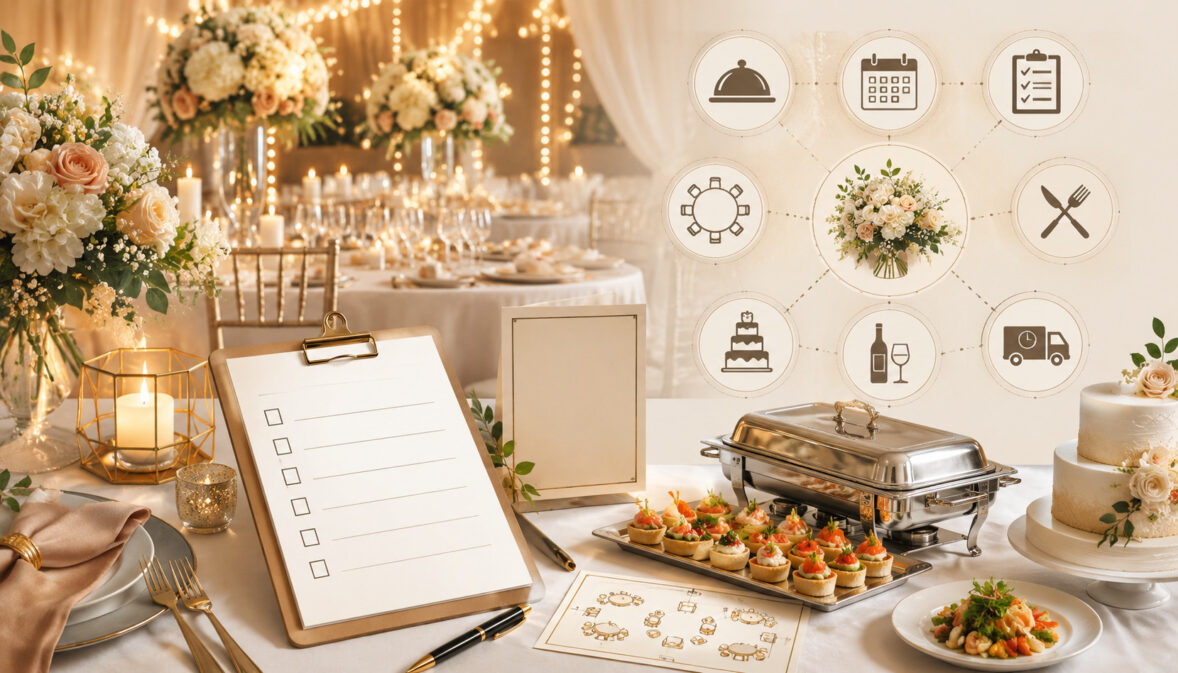
Wedding catering planning is one of the most important parts of creating a comfortable, organized, and memorable wedding reception. Food affects the event timeline, guest experience, seating layout, rental needs, bar service, staffing, cleanup, and overall budget.
It also touches nearly every guest in some way, from the couple and wedding party to grandparents, children, vendors, and guests with dietary restrictions.
A strong wedding catering planning guide should help you think beyond the menu. The question is not only “What food do we like?”
It is also “How will the food be served, when will it be ready, who needs a special meal, what does the venue allow, what equipment is required, and how will the catering team work with the planner, venue, photographer, DJ, and rental company?”
The best wedding catering plans start early, stay flexible, and get more detailed as the wedding date gets closer. Small weddings, large receptions, outdoor celebrations, rehearsal dinners, formal plated dinners, cocktail-style receptions, and family-focused celebrations all have different catering needs.
A backyard buffet may need tented prep space and extra trash removal. A ballroom plated wedding dinner may require more servers, timed meal service, and careful coordination with speeches. A casual brunch wedding may need coffee service, breakfast-friendly foods, and lighter portions than an evening reception.
This guide is for general educational purposes. Wedding catering needs can vary by event size, venue policies, menu preferences, service style, dietary requirements, budget, local rules, and vendor availability.
Why Wedding Catering Planning Matters
Wedding catering is not just a meal. It is a full hospitality operation that must fit into the emotional flow of the day. Guests arrive, mingle, find their seats, listen to speeches, eat, dance, visit the bar, enjoy dessert, and sometimes grab late-night snacks before leaving. Catering supports all of those moments.
When wedding food planning is rushed, small problems can spread quickly. A guest count that is too low can affect food quantities, staffing, table settings, and vendor meals.
A delayed ceremony can push back cocktail hour, which can affect hot appetizers, bar service, dinner timing, and cake cutting. A venue without enough kitchen access may require additional serving equipment, warming cabinets, prep tents, ice, generators, or delivery coordination.
Good wedding catering planning helps answer practical questions before the wedding day:
- How many guests are expected?
- How many guests have confirmed through RSVP tracking?
- What is the catering budget?
- Will dinner be plated, buffet-style, family-style, station-based, or cocktail-style?
- Who is responsible for rentals, linens, tableware, and serving equipment?
- What dietary restrictions and food allergies need attention?
- Will there be kids’ meals and vendor meals?
- How will leftovers be handled?
- Who confirms the reception timeline with the caterer?
- What is the backup plan for weather, late deliveries, or power issues?
A thoughtful wedding catering guide also protects the couple’s time and energy. Instead of making dozens of last-minute food decisions, the couple can rely on a clear catering checklist for weddings that has already covered menu tasting, staffing, rentals, service fees, gratuity, cancellation policy, setup time, cleanup, and final counts.
Start with Your Wedding Vision, Guest Count, and Budget

Before choosing appetizers, entrées, or desserts, start with the basics: your wedding vision, guest count, and catering budget. These three decisions shape almost everything else in the wedding catering planning process.
A formal black-tie reception usually calls for a different food service plan than a relaxed barn wedding, brunch reception, family barbecue, cocktail-style celebration, or intimate rehearsal dinner.
Your wedding vision does not have to be complicated. Think about how you want guests to feel. Do you want a slow, elegant dinner with multiple courses? A lively reception with food stations and signature drinks? A family-style meal where guests pass shared platters? A casual buffet that keeps the atmosphere relaxed? Your answer will guide the menu, staffing, rentals, and reception timeline.
Budget comes next. Wedding catering costs can include more than food. Couples often need to plan for service fees, gratuity, taxes, rentals, linens, place settings, bar service, bartenders, servers, delivery, setup, cleanup, cake cutting, late-night snacks, and special meal requests. Some caterers include many of these items in one proposal, while others list them separately.
Guest count is equally important. A difference of twenty guests can change the catering budget, number of tables, amount of food, staffing levels, bar estimate, rental order, and service timing. That is why RSVP tracking should be treated as a catering tool, not just a guest list task.
Guest Count Planning
Guest count planning begins with your invitation list, but it should not end there. Caterers typically need an estimated count early in the process and a final guarantee closer to the wedding day. The final guarantee is the number used for food production, staffing, rentals, and billing. Once that number is submitted, it may not be easy to reduce it.
For small weddings, guest count changes may feel manageable, but they still matter. Adding ten guests to a thirty-person dinner can significantly affect portions, table settings, and service timing. For large receptions, even a small percentage change can affect buffet replenishment, bar quantities, seating charts, and kitchen flow.
Ask your caterer how they handle guest count changes, late RSVPs, no-shows, and children. Some children may need full meals, while others may be served smaller kids’ meals. Wedding party members, parents, officiants, photographers, planners, DJs, musicians, and other vendors may also need meals depending on the length of the event and contract terms.
RSVP Tracking
RSVP tracking is one of the most underrated parts of wedding catering planning. It helps you confirm meal choices, dietary restrictions, attendance, children’s meals, and seating needs. Without organized RSVP tracking, couples may end up guessing how many vegetarian options, gluten-free meals, halal options, kosher options, or allergy-sensitive meals are needed.
If you offer meal choices for a plated wedding dinner, make sure your RSVP system connects each guest’s name to their entrée selection. This matters for seating charts and server instructions. A simple count of “forty chicken, thirty beef, ten vegetarian” is helpful, but servers also need to know which guest receives which meal at each table.
For buffet service, RSVP tracking still matters. The caterer may not need assigned meal cards, but they do need to know how many guests require vegetarian options, vegan options, gluten-free options, or allergy-conscious handling. The same applies to cocktail hour appetizers, dessert table items, and late-night snacks.
A clear RSVP deadline also gives the caterer enough time to order ingredients, finalize staff, prepare equipment, and confirm rentals. If many guests have not replied, assign a family member, planner, or trusted friend to follow up.
Catering Budget
A catering budget should include the full cost of wedding food service, not just the menu price. Ask each caterer whether the proposal includes staffing, rentals, linens, place settings, tableware, serving equipment, bar service, bartenders, non-alcoholic drinks, service fees, gratuity, taxes, delivery, setup, cleanup, and cake cutting.
Wedding catering costs vary by service style, menu complexity, guest count, venue access, staffing needs, event length, and beverage service. A plated meal may require more servers and more precise timing.
Wedding buffet catering may require serving staff, chafing dishes, display pieces, and enough space for guest flow. Food stations may need multiple attendants or chefs. Cocktail-style receptions can involve a large number of hors d’oeuvres and passed appetizers, especially if guests will not receive a full seated dinner.
Set priorities before requesting proposals. Some couples care most about a formal plated meal. Others want a generous cocktail hour, creative food stations, a dessert table, or late-night snacks. A useful wedding catering checklist should help you compare what is included in each quote so you are not surprised later.
Choose the Right Wedding Catering Style
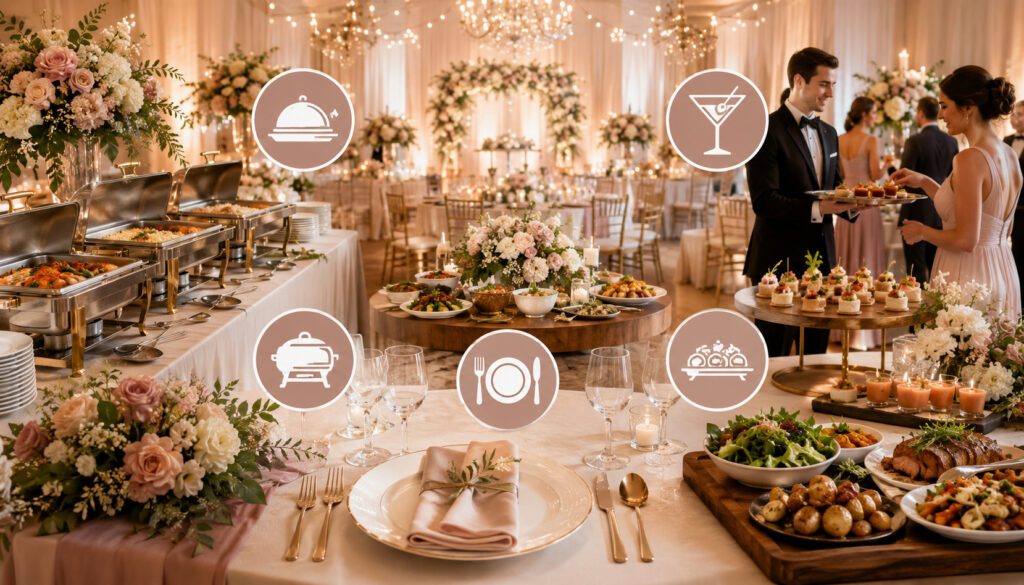
Choosing the right wedding food service style is one of the biggest decisions in this wedding catering planning guide. Service style affects budget, guest flow, staffing, rental needs, table layout, menu options, and the overall mood of the wedding reception.
There is no single best option for every couple. The right choice depends on your venue, guest count, formality, timeline, menu preferences, and how you want guests to interact.
A plated wedding dinner can feel polished and organized. Buffet service can offer variety and flexibility. Family-style service encourages conversation. Food stations create movement and allow guests to customize their plates. Cocktail-style receptions can feel social and modern, but they require careful portion planning so guests do not leave hungry.
You can also combine service styles. For example, you might serve passed hors d’oeuvres during cocktail hour, a plated salad, buffet entrées, a dessert table, and late-night snacks. Or you might plan a family-style rehearsal dinner followed by a more formal wedding reception catering plan the next day.
For menu ideas and service-style thinking, couples may find it helpful to read about how menu customization can support different event formats. The key is to match the food to the pace and personality of the event.
Plated Wedding Dinner
A plated wedding dinner is served to seated guests, usually by servers who bring each course to the table. This style often works well for formal receptions, ballroom weddings, country club events, and venues with strong kitchen access. It can create a calm, elegant meal experience and makes the reception timeline easier to control.
Plated service usually requires guests to select entrées in advance or gives the couple a limited menu with one main entrée and special meals for dietary needs. If you offer choices, your RSVP tracking and seating chart must be accurate. Servers need to know where each meal goes, and place cards or meal indicators should be clear.
A plated meal can reduce lines and help keep guests seated during speeches. However, it may require more staffing than buffet service. It can also be less flexible for guests who prefer to choose portions or sample multiple foods.
Wedding Buffet Catering
Wedding buffet catering is popular because it offers variety, flexibility, and a relaxed guest experience. Guests can choose what they want and often control their portion sizes. Buffets work well for casual receptions, outdoor weddings, rustic venues, family-focused celebrations, and weddings where the couple wants several menu options.
A buffet needs careful layout planning. Long lines can slow the reception, especially at large weddings. Ask whether the caterer recommends one double-sided buffet, multiple buffet lines, or table-by-table release.
Consider where guests will line up, how they will return to their seats, and whether the buffet blocks the dance floor, bar, restrooms, or photographer’s path.
Buffets also require attention to food safety and temperature control. Hot foods should stay hot, cold foods should stay cold, and serving utensils should be monitored. The FDA offers helpful educational guidance on serving safe buffets, including temperature and handling considerations.
Buffet service does not mean “no service.” You may still need staff to replenish food, guide guests, clear plates, maintain presentation, and handle cleanup.
Family-Style Service
Family-style service brings shared platters or bowls to each table so guests can serve themselves while seated. It feels warm, social, and communal. This style can work beautifully for garden weddings, vineyard receptions, intimate celebrations, and family-centered events where conversation is part of the experience.
Family-style dining requires enough table space. Shared platters compete with centerpieces, candles, glassware, bread baskets, table numbers, water carafes, and place settings. Before choosing this option, review the table layout with the caterer, florist, planner, and rental company.
This style may also require larger quantities than plated meals because guests serve themselves and platters need to look full. Servers must deliver and refresh dishes efficiently. Guests with allergies or dietary restrictions may need separate plated meals to avoid cross-contact from shared serving utensils.
Food Stations and Cocktail-Style Receptions
Food stations divide the menu into separate areas, such as carving stations, pasta stations, taco stations, salad stations, seafood displays, slider bars, brunch stations, or dessert stations. Stations can reduce one long buffet line and create a more interactive reception.
They are especially useful for large guest counts, mixed-age events, and receptions where guests will move around instead of staying seated all evening.
Couples exploring this option may enjoy reading about how live food stations can improve event flow. Stations work best when they are placed strategically, staffed appropriately, and supported by enough plates, utensils, napkins, and trash points.
Cocktail-style receptions rely on passed appetizers, hors d’oeuvres, small plates, and often a few heavier stations. This style can feel lively and flexible, but it must be planned carefully. If the reception overlaps with a normal dinner time, guests usually expect enough food to feel like a meal.
Provide seating for older guests, pregnant guests, children, and anyone who may not want to stand for long periods. Also consider how guests will handle drinks, plates, purses, and conversations at the same time.
Plan the Wedding Menu Around Guests and Event Flow
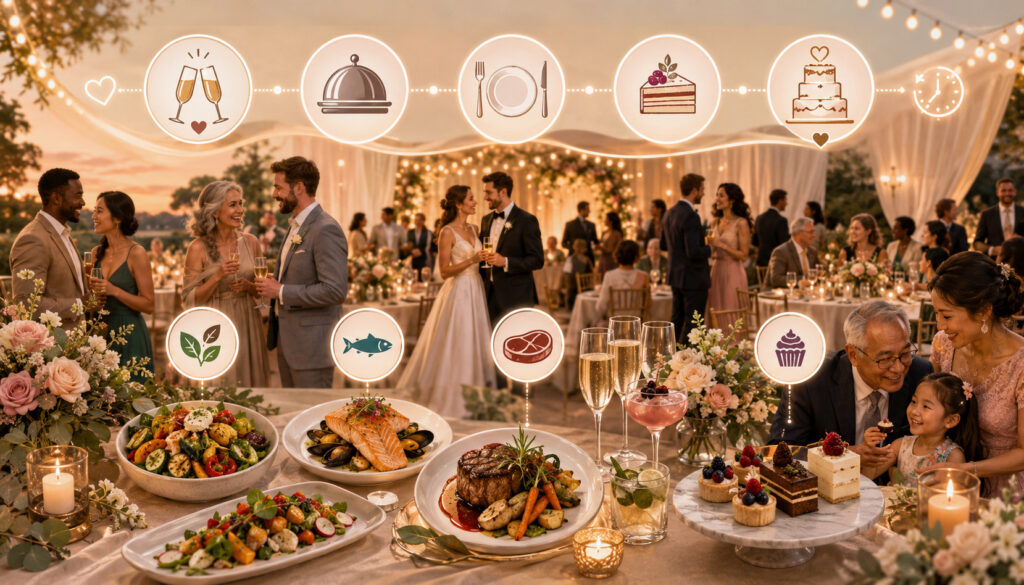
Wedding menu planning should balance personal taste with guest comfort and event timing. The menu should feel connected to the couple’s style, but it should also be practical for the venue, season, service style, and guest list.
A messy dish may be delicious but difficult to eat in formal attire. A delicate appetizer may not hold well during an outdoor cocktail hour. A heavy entrée may feel out of place at a midday brunch reception.
Start by thinking about the full food journey. Many weddings include pre-ceremony refreshments, cocktail hour, appetizers, dinner, dessert, wedding cake, coffee service, and late-night snacks.
Not every wedding needs all of these, but each food moment should serve a purpose. Cocktail hour keeps guests comfortable while portraits are taken. Dinner anchors the reception. Dessert creates a celebratory transition. Late-night snacks can support dancing and extended bar service.
A balanced menu usually includes familiar options, lighter items, filling dishes, and at least a few choices for common dietary needs.
For example, a buffet might include one poultry dish, one vegetarian entrée, one hearty side, one vegetable side, salad, bread, and a gluten-free-friendly option. A plated dinner might include a protein entrée, vegetarian or vegan alternative, salad, and dessert.
For more ideas on guest-centered menu thinking, this article on wedding menus that make guests feel considered can be a useful planning reference.
Cocktail Hour and Appetizers
Cocktail hour sets the tone for the reception. Guests may be hungry after the ceremony, especially if they traveled, skipped lunch, or waited through photos. Appetizers and hors d’oeuvres should be easy to eat, visually appealing, and timed carefully.
Passed appetizers work well when you want a polished experience and steady movement. Stationary displays, such as cheese boards, fruit displays, dips, crudités, or small grazing tables, allow guests to choose at their own pace. Many weddings use both.
For example, a caterer might pass warm hors d’oeuvres while also offering a stationary display near the bar.
Plan enough food for the length of the cocktail hour. A short thirty-minute cocktail hour may need fewer bites than a longer gap between ceremony and dinner. If photos, transportation, or room flips may take extra time, discuss a backup plan with the caterer.
Avoid appetizers that are too messy, too large, or difficult to manage with one hand. Guests are often holding drinks, greeting friends, and standing during this part of the event.
Menu Tasting
A menu tasting is your chance to evaluate flavor, presentation, portion size, and service expectations before the wedding day. It is also an opportunity to ask practical questions about timing, substitutions, dietary meals, rentals, and how the menu will scale for your guest count.
Come prepared. Bring your estimated guest count, venue details, wedding timeline, menu preferences, and known dietary restrictions. Take notes on what you like and what you want adjusted. If multiple family members attend, decide in advance who has final decision-making authority. Too many opinions can make menu tasting more stressful than helpful.
During the tasting, pay attention to how dishes work together. A rich appetizer, creamy salad, heavy entrée, and dense dessert may feel excessive as a full meal. A balanced menu includes contrast: fresh, warm, crisp, savory, light, and satisfying elements.
Ask whether the tasting portions reflect wedding-day portions. Also confirm whether tasting fees apply, whether changes are allowed afterward, and when the final menu must be locked.
Portion Planning
Portion planning depends on time of day, event length, guest count, service style, and menu type. Guests usually eat more at evening receptions than at mid-afternoon celebrations. They may also eat more when alcohol is served, when the event runs late, or when dinner is delayed.
For plated meals, portions are controlled by the caterer. For buffets and stations, portions require more forecasting because guests serve themselves or visit multiple stations. Caterers use experience to estimate quantities, but they need accurate guest counts and clear information about the event flow.
Late-night snacks should be planned differently from dinner. Not every guest will eat them, especially older guests or families with young children who leave early. However, guests who stay for dancing may appreciate simple, easy-to-eat foods.
Consider children separately. Kids’ meals often need smaller portions and familiar foods. Vendor meals should also be counted, especially for photographers, videographers, planners, DJs, musicians, and other professionals working long shifts.
Manage Dietary Restrictions, Allergies, and Special Meal Requests
Dietary needs are a major part of modern wedding catering planning. Guests may request vegetarian options, vegan options, gluten-free options, halal options, kosher options, dairy-free meals, nut-free meals, low-sodium meals, or other accommodations.
Some needs are preferences, while others involve food allergies or medical concerns. Both should be handled respectfully, but allergies require especially careful communication.
Start collecting dietary information through RSVPs. Use a clear prompt such as “Please list any dietary restrictions or food allergies.” Avoid waiting until the final week to ask. Caterers need time to plan ingredients, preparation methods, labeling, and service instructions.
Food allergy communication should be specific. “Nut allergy” is more useful than “special meal.” “Gluten-free due to celiac disease” is different from “prefers less bread.”
The American Academy of Allergy, Asthma & Immunology has helpful educational information on event planning and food allergy awareness, especially around communication and safe planning.
Dietary planning also affects the guest experience. Guests with special meals should not feel forgotten or singled out. If possible, make vegetarian, vegan, and gluten-free options appealing rather than treating them as afterthoughts. A well-planned wedding menu can be inclusive without becoming overly complicated.
Vegetarian, Vegan, and Gluten-Free Meals
Vegetarian and vegan meals should be satisfying enough to stand as complete entrées. A plate of plain vegetables is rarely enough for a guest attending a long reception. Consider hearty options such as stuffed squash, vegetable risotto, lentil-based dishes, pasta with plant-based sauce, grilled vegetable stacks, grain bowls, or flavorful curries where appropriate.
Vegan meals require attention to hidden ingredients, including butter, cream, cheese, eggs, honey, broth, and some sauces. Confirm with the caterer how vegan meals are prepared and plated. If a buffet includes vegan items, label them clearly.
Gluten-free meals also require careful planning. Some dishes are naturally gluten-free, but sauces, breading, soy sauce, pasta, desserts, and shared serving utensils can create problems. For guests with celiac disease or serious gluten sensitivity, cross-contact matters. Ask the caterer what procedures they can follow and whether separate plating is recommended.
Food Allergy Communication
Food allergies should be communicated in writing to the caterer, planner, venue, and anyone involved in meal service. Include the guest’s name, table number, allergy, severity if shared, and approved meal plan. This is especially important for plated dinners where servers must deliver specific meals.
Buffets and stations require extra caution because shared utensils and close food placement can increase cross-contact risk. If a guest has a severe allergy, a separately prepared and plated meal may be safer than asking them to navigate a buffet. Discuss this with the caterer well in advance.
Food labels should be helpful but not overpromise. A label saying “contains nuts” or “gluten-free option” is useful. A label saying “allergy safe” may be too broad unless the caterer can fully support that claim. Staff should know who can answer ingredient questions during the event.
The CDC provides general food safety education through its food safety resources, which can help couples understand why careful handling and prevention matter at large gatherings.
Kids’ Meals and Vendor Meals
Kids’ meals can make family-focused celebrations easier. Children may not enjoy the same plated entrée as adults, and smaller portions can reduce waste. Common kids’ meal options include pasta, chicken tenders, sliders, fruit, vegetables, or simple sandwiches, depending on the event style.
Ask parents during RSVP tracking whether their children need kids’ meals or adult meals. A twelve-year-old may prefer the adult buffet, while a four-year-old may need a smaller plate. High chairs, booster seats, sippy-cup-friendly drinks, and early meal timing may also matter.
Vendor meals are easy to forget, but they are important. Photographers, videographers, planners, DJs, musicians, and other vendors may be working for many hours. Their contracts may require meals, and they often need to eat when guests eat so they are ready for speeches, dances, and cake cutting.
Confirm where vendor meals will be served. Some venues provide a separate vendor table or green room. Make sure the caterer knows the number of vendor meals and whether they are the same meal as guests or a simpler option.
Build a Wedding Catering Timeline
A wedding catering timeline helps the food service match the reception timeline. It connects ceremony end time, cocktail hour, room flip, grand entrance, first dance, dinner service, speeches, cake cutting, dessert service, bar closing, late-night snacks, and cleanup.
Without a timeline, the caterer may not know when to fire entrées, pass appetizers, pour champagne, clear plates, or prepare coffee.
Start with the full event schedule. Work backward from dinner time to determine setup, kitchen prep, rental delivery, staff arrival, bar setup, ice delivery, cake delivery, and final table checks. Outdoor weddings may need more setup time because equipment, prep stations, water access, power, and weather protection take longer.
The wedding catering timeline should be shared with the planner, venue coordinator, caterer, photographer, DJ or band, rental company, florist, baker, and transportation provider when relevant. Everyone does not need every detail, but each vendor should know the parts that affect their work.
A practical catering timeline should also include buffer time. Ceremonies run late. Guests take longer to move from one space to another. Speeches can go over. Weather can slow service. A good timeline protects the event without making it feel rushed.
Before Booking
Before booking a caterer, confirm your date, approximate guest count, venue rules, desired service style, estimated budget, and general food preferences. You do not need a final menu immediately, but you should know enough to request a meaningful proposal.
Ask wedding caterer questions that reveal both food quality and logistical ability:
- Have you catered at this venue or a similar venue?
- What service styles do you recommend for our guest count?
- What is included in the proposal?
- How are staffing, rentals, service fees, and gratuity handled?
- Can you accommodate dietary restrictions and food allergies?
- Do you provide bar service or coordinate with bartenders?
- How do you handle setup, cleanup, and leftovers?
- What is the deposit and cancellation policy?
- When is the final guest count due?
- What happens if the timeline changes on the wedding day?
This stage is also the time to compare communication styles. A caterer who answers clearly, asks detailed questions, and explains limitations honestly may be easier to work with than one who gives vague answers.
During Planning
During the main planning period, refine the menu, service style, rentals, beverage service, dietary meals, staffing, and event timeline. Schedule a menu tasting if available. Review the catering contract carefully. Update the caterer as your guest count changes.
This is also when you should coordinate with the venue. Confirm kitchen access, refrigeration, prep space, loading areas, trash rules, open flame policies, alcohol rules, insurance requirements, power access, water access, and cleanup expectations.
Some venues have preferred caterer lists or strict outside vendor requirements. Others offer tables and chairs but not linens, glassware, or serving equipment.
Create a shared document or planning file with the catering proposal, floor plan, menu, rental order, guest count, dietary list, timeline, and vendor contact information. Keep it updated so the planner, venue, and caterer are working from the same information.
Final Week and Wedding Day
The final week is for confirmation, not major redesign. Submit the final guest count by the caterer’s deadline. Confirm special meals, kids’ meals, vendor meals, bar quantities, rental delivery, setup time, cleanup responsibilities, and the reception timeline.
Prepare a final catering packet or email with the key details:
- Final guest count
- Meal counts and dietary list
- Table count and seating chart
- Vendor meal count
- Timeline
- Venue contact
- Planner or day-of contact
- Floor plan
- Rental list
- Bar service details
- Cake and dessert delivery details
- Emergency contact information
On the wedding day, the couple should not be the main catering contact. Assign the planner, venue coordinator, or trusted family member to answer questions. This person should know where to find the contract, timeline, final counts, and special meal list.
Coordinate Venue Rules, Rentals, Setup, and Staffing
Venue coordination can make or break wedding reception catering. A beautiful venue may still have limited kitchen access, strict setup windows, noise restrictions, rental requirements, trash rules, or alcohol policies. Before finalizing your catering plan, make sure the venue and caterer understand each other’s needs.
Some venues have full commercial kitchens. Others only have warming areas, prep tables, or no kitchen at all. Outdoor venues, private homes, barns, museums, gardens, and historic buildings may require additional equipment.
This could include portable ovens, refrigeration, generators, prep tents, handwashing stations, ice, water access, lighting, flooring, or weather protection.
Rentals are another major detail. Depending on the caterer and venue, you may need tables, chairs, linens, napkins, chargers, plates, flatware, glassware, serving utensils, buffet tables, bar fronts, trays, chafing dishes, coffee cups, water pitchers, trash cans, and dish racks. Do not assume these are included unless the proposal says so.
Staffing should also match the service style. Plated meals need enough servers to deliver courses efficiently. Buffets need attendants to replenish food and maintain presentation. Bars need bartenders who can handle peak demand. Food stations may need chefs or attendants. Cleanup staff may be needed after the event ends.
Rental Needs
Rental needs depend on what the venue provides, what the caterer provides, and what the design plan requires. Ask for a clear rental responsibility list. If one vendor assumes another vendor is providing glassware, linens, or serving equipment, the mistake may not be discovered until very late.
For seated dinners, confirm guest tables, chairs, linens, napkins, chargers, dinner plates, salad plates, dessert plates, flatware, water glasses, wine glasses, champagne flutes, coffee cups, and table numbers.
For buffet service, confirm buffet tables, risers, chafing dishes, serving utensils, sneeze guards if needed, labels, and lighting. For bar service, confirm bar setup, ice bins, beverage tubs, cocktail napkins, straws or stirrers, garnish trays, glassware, and trash placement.
Rental timing matters too. When will items arrive? Who receives them? Who sets them up? Who breaks them down? Who checks for missing or damaged items?
Staffing
Staffing affects both service quality and timeline. A plated meal with too few servers can drag on and delay speeches or dancing. A buffet without attendants can become messy or run low before all guests are served. A bar with too few bartenders can create long lines during cocktail hour.
Ask the caterer how many staff members they recommend and what each person will do. Staff may include a catering manager, servers, bartenders, chefs, buffet attendants, station attendants, bussers, dish staff, setup crew, and cleanup crew. Clarify whether staff time includes setup and breakdown or only active service.
Staff meals and breaks should also be considered for long events. A professional catering plan should account for the team’s ability to work safely and effectively.
If your event includes multiple locations, such as a ceremony lawn, cocktail patio, dining tent, and indoor dance floor, staffing needs may increase. Staff may need to move food, clear glassware, refill water, maintain stations, and support transitions across spaces.
Setup and Cleanup
Setup and cleanup are easy to underestimate. Catering teams may need several hours to unload, prep, set tables, arrange buffets, chill beverages, prepare the bar, place food labels, and coordinate with other vendors. Cleanup may include clearing tables, packing leftovers, removing trash, cleaning prep areas, returning rentals, and loading equipment.
Confirm the venue’s allowed setup time and required exit time. Some venues charge extra if vendors arrive early or leave late. Others have strict rules because another event is scheduled before or after yours.
Ask who handles trash and recycling. Outdoor and private-property weddings often need a more detailed waste plan. If composting or eco-conscious service is important, coordinate early with the caterer, venue, and rental company.
Food safety also matters during setup and cleanup. The USDA explains that safe handling of leftovers includes cooking food to safe temperatures and refrigerating leftovers promptly through its leftovers and food safety guidance. Ask your caterer how long food can remain out, what can be packed, and what must be discarded.
Plan Beverages, Bar Service, Desserts, and Late-Night Snacks
Beverage service and dessert planning deserve the same attention as dinner. Guests often remember whether drinks were easy to access, whether water was available, whether coffee was served with dessert, and whether late-night snacks appeared at the right time. These details can support the mood of the reception without making the event feel overplanned.
Bar service may include beer, wine, cocktails, signature drinks, champagne, non-alcoholic drinks, sparkling water, iced tea, lemonade, coffee, tea, and mocktails. Some couples choose a full open bar.
Others offer beer, wine, and one or two signature drinks. Some choose a cash bar, limited bar, or alcohol-free reception. Venue rules, licenses, insurance, and local regulations can affect what is allowed.
Dessert can include wedding cake, cupcakes, mini desserts, pies, cookies, doughnuts, ice cream, cultural sweets, or a dessert table. If a separate baker provides the cake, the caterer still needs to coordinate cake delivery, storage, cutting, plating, serving, and cleanup.
Late-night snacks are optional but useful for long receptions, after-parties, and events with dancing and bar service. They should be simple, satisfying, and easy to eat.
Bar Service and Non-Alcoholic Drinks
Bar service planning starts with the guest list and reception style. A younger crowd with a long dance floor schedule may use the bar differently than a daytime family brunch. A formal dinner may need wine service at tables, while a casual outdoor wedding may use self-serve non-alcoholic drink stations and staffed bars.
Ask who provides alcohol, mixers, garnishes, ice, glassware, napkins, bar tools, bartenders, and liability coverage. Some venues require alcohol to be purchased through them. Others allow couples to provide alcohol but require licensed bartenders. Never assume the rules without checking the venue contract.
Non-alcoholic drinks should be planned with care. Water stations, iced tea, lemonade, soda, coffee, tea, sparkling water, and mocktails help guests who do not drink alcohol, children, pregnant guests, drivers, and anyone who wants a lighter option.
For more beverage planning ideas, this guide to creating a thoughtful beverage catering experience can help couples think beyond the basic bar.
Dessert Table and Wedding Cake Coordination
Wedding cake coordination involves more than choosing flavors. Confirm who delivers the cake, when it arrives, where it is stored, who places it on the cake table, who adds flowers or décor, who cuts it, and who serves it. Some caterers charge a cake-cutting fee, while others include it.
If the cake is displayed for several hours, consider room temperature, sunlight, humidity, and stability. Buttercream, fondant, whipped fillings, and delicate decorations may respond differently to heat. Outdoor weddings need extra care.
Dessert tables require planning for quantities, labels, serving utensils, plates, napkins, and replenishment. If you offer several dessert types, guests may take more than one. Mini desserts can be charming, but they may require higher counts than full-size slices.
If you have guests with dietary restrictions, consider labeling desserts that contain nuts, dairy, gluten, or alcohol. A small gluten-free or vegan dessert option can make the dessert course more inclusive.
Late-Night Snacks
Late-night snacks work best when they match the energy of the reception. After hours of dancing, guests usually want something easy and familiar. Sliders, fries, pretzels, tacos, mini grilled cheese, pizza, breakfast sandwiches, popcorn, cookies, or snack cups can work well depending on the venue and catering setup.
Timing is important. Serve snacks too early and guests may still be full from dinner. Serve them too late and many guests may have left. A common approach is to serve late-night snacks after the dance floor has been active for a while or shortly before the bar closes.
Late-night snacks also need service planning. Will they be passed, placed at a station, boxed for takeaway, or served from a cart? Who will clean up? Do they require heating equipment? Are extra napkins, plates, or containers needed?
For casual receptions and after-parties, late-night snacks can replace a more elaborate dessert course. For formal receptions, they can provide a relaxed contrast after a structured dinner.
Review Catering Contracts, Fees, Deposits, and Policies
A catering contract protects both the couple and the caterer by documenting expectations. It should clearly explain the menu, guest count, service style, staffing, rentals, fees, payment schedule, deposit, cancellation policy, change deadlines, setup and cleanup responsibilities, bar service, liability requirements, and what happens if the event changes.
Read the full contract before signing. Do not rely only on the proposal summary. If something was discussed verbally, make sure it appears in writing. This includes special meals, kids’ meals, vendor meals, cake cutting, late-night snacks, bar service, rentals, and service timing.
Wedding catering costs can include several categories. Food and beverage may be priced per person, by package, by consumption, or by item. Staffing may be hourly or included. Service fees may cover administrative and operational costs, but they are not always the same as gratuity. Taxes, delivery, rentals, and venue fees may be separate.
A deposit reserves the date and may be non-refundable. Payment schedules vary, so mark due dates on your planning calendar. Cancellation policies are also important. Ask what happens if the wedding is postponed, guest count changes, weather affects an outdoor event, or the venue becomes unavailable.
Couples who want to understand key contract elements can review this educational article on important catering contract terms.
Catering Contract Review
When reviewing a catering contract, compare it against your wedding catering checklist. The contract should match your expectations for menu, service style, event time, guest count, staff, rentals, bar service, special meals, and cleanup.
Look for details such as:
- Event date, location, and service times
- Menu items and substitutions
- Estimated and final guest count terms
- Final guarantee deadline
- Staffing levels and staff hours
- Rental responsibilities
- Setup and breakdown windows
- Beverage and bar service terms
- Dietary accommodations
- Vendor meal pricing
- Cake cutting or dessert service
- Service fees, gratuity, and taxes
- Deposit and payment schedule
- Cancellation and postponement policy
- Insurance or venue requirements
If you do not understand a fee, ask for clarification before signing. A professional vendor should be able to explain what each charge covers.
Service Fees, Gratuity, and Taxes
Service fees, gratuity, and taxes are often misunderstood. A service fee may cover administrative work, event coordination, equipment handling, or operational costs. It does not always go directly to servers or bartenders. Gratuity may be optional, suggested, or built into the contract. Taxes depend on applicable rules and the items or services being charged.
Ask the caterer to explain these items clearly. If gratuity is not included, ask what is customary and how it should be distributed. Some couples give gratuity to the catering manager to divide among staff. Others provide envelopes for specific team members. Follow the caterer’s guidance and your own comfort level.
Also review overtime fees. If the reception runs longer than planned, staff may need to stay late. That can create additional charges for servers, bartenders, kitchen staff, rentals, or venue access.
Bar service may have its own fees, including bartender minimums, corkage, glassware, ice, mixers, or alcohol handling charges. Confirm these before finalizing the beverage plan.
Cancellation Policy and Contingency Terms
Cancellation and postponement terms are not the most exciting part of wedding catering planning, but they are important. Life events, weather, illness, venue problems, or family circumstances can affect plans. A clear policy helps everyone understand deadlines, refunds, credits, and rescheduling options.
Ask what happens if you reduce the guest count. Some contracts allow changes until the final guarantee date. After that, the caterer may bill based on the guaranteed count because food and staffing have already been ordered.
Outdoor weddings need weather contingency terms. If the caterer must move from an outdoor buffet to an indoor service area, extra staff or equipment may be required. If a tent, generator, or refrigeration unit is needed, confirm who arranges it and who pays for it.
A good contingency plan does not assume something will go wrong. It simply gives the team a practical way to respond if conditions change.
Prepare for the Wedding Day: Communication, Timing, and Backup Plans
Event-day catering success depends on communication. By the time the wedding day arrives, the couple should not be answering questions about ice, buffet placement, vendor meals, or cake cutting. Those details should already be documented and assigned to the planner, venue coordinator, caterer, or trusted point person.
Create a final communication plan. Include the names and phone numbers of the planner, venue manager, catering manager, rental contact, baker, florist, DJ or band, photographer, transportation contact, and emergency family contact. Share the final timeline and floor plan with the people who need them.
Timing is especially important. The caterer needs to know when guests will arrive, when cocktail hour begins, when dinner should start, when speeches happen, when tables should be cleared, when dessert should be served, and when cleanup must be complete.
The DJ or band should know when to announce dinner, release tables, introduce speeches, and invite guests to dessert or late-night snacks.
Backup plans are part of responsible wedding catering planning. Outdoor weddings may need rain plans, wind protection, extra water, shade, and food temperature control. Remote venues may need backup ice, generators, lighting, or extra delivery time. Large receptions may need extra buffet lines or bar support.
Vendor Communication
Vendor communication should be centralized. Too many people giving instructions can confuse the catering team. Choose one main contact, usually the planner or venue coordinator. This person should understand the couple’s priorities and know when to make decisions.
Share the same final timeline with all vendors. If the photographer thinks dinner starts at seven, the caterer thinks it starts at six-thirty, and the DJ plans speeches at six-forty-five, the reception can become disorganized. A single timeline reduces confusion.
The catering team should also know about vendor load-in schedules. Florists may need tables set before placing centerpieces. Rental companies may need access before the caterer arrives. Bakers may need a stable cake table. Bartenders may need ice and glassware before guests arrive.
Reception Timeline
A reception timeline should be realistic. Guests need time to move, greet each other, find seats, visit the bar, and use restrooms. Servers need time to clear plates. The couple needs time for photos, dances, speeches, and private moments.
A common evening flow might include ceremony, cocktail hour, grand entrance, first dance, salad or first course, dinner, speeches, parent dances, cake cutting, open dancing, late-night snacks, last call, and send-off.
But not every wedding needs that structure. Brunch weddings, cultural weddings, cocktail-style receptions, and intimate dinners may follow different rhythms.
Discuss food timing with the caterer. Some dishes can wait better than others. Plated meals often require a clear “fire time,” meaning the kitchen begins final preparation based on the timeline. Buffets need replenishment timing. Stations may open in phases.
Build in small buffers. A few extra minutes between major events can make the reception feel more relaxed and give vendors room to adjust.
Food Safety and Temperature Control
Food safety should be part of every catering plan, especially for buffets, outdoor weddings, summer receptions, and events with long service windows. Hot foods, cold foods, raw ingredients, cooked dishes, desserts, and leftovers all require proper handling.
Ask the caterer how they manage temperature control, handwashing, serving utensils, covered transport, refrigeration, and buffet monitoring. For outdoor venues, ask whether they need shade, fans, ice, coolers, generators, or a prep tent.
The USDA provides a helpful safe minimum internal temperature chart for understanding safe cooking temperatures. While couples do not need to manage kitchen operations, knowing that safe food handling matters can help them ask better questions.
Leftovers should also be discussed before the event. Some foods may be safe to package if handled correctly. Others may need to be discarded after sitting out. Ask your caterer for their policy and avoid pressuring staff to pack food that should not be saved.
Common Wedding Catering Mistakes to Avoid
Even well-planned weddings can run into catering challenges. The goal is not perfection. The goal is to reduce avoidable problems by thinking ahead. Most catering mistakes happen because of unclear communication, incomplete guest counts, missed venue details, unrealistic timelines, or assumptions about what is included.
One common mistake is underestimating the guest count or delaying RSVP follow-up. Final counts affect food, staff, rentals, bar quantities, and seating. Another mistake is focusing only on entrées while forgetting cocktail hour, non-alcoholic drinks, vendor meals, kids’ meals, dessert service, or late-night snacks.
Couples may also overlook venue limitations. A venue without a full kitchen may still be a wonderful location, but it requires a different catering plan. Outdoor weddings need weather protection, power, water, lighting, and food safety planning. Historic venues may restrict open flames, cooking equipment, or load-in times.
Another mistake is choosing foods that do not match the event. Messy sauces, hard-to-cut entrées, overly spicy dishes, fragile displays, or foods that do not hold well can create service issues. This does not mean the menu should be boring. It means the menu should work in real event conditions.
Contract assumptions can also cause stress. Service fees, gratuity, overtime, rentals, cancellation terms, and final guarantee rules should be reviewed before signing.
Mistakes Before Booking
Before booking, avoid choosing a caterer based only on menu photos or the lowest estimate. A very low proposal may not include staffing, rentals, service fees, gratuity, setup, cleanup, or bar support. Compare full proposals, not just per-person menu prices.
Another mistake is booking before checking venue rules. Some venues require approved caterers, insurance certificates, licensed bartenders, or specific cleanup procedures. Others charge kitchen fees or require security for alcohol service. Know these requirements before signing a catering contract.
Do not skip references, reviews, or practical questions. Ask how the caterer handles large guest counts, weather changes, dietary restrictions, and timeline delays. The answers can reveal whether the team is prepared for your type of wedding.
Also avoid vague menu discussions. You do not need every detail finalized at booking, but the proposal should reflect your service style, estimated guest count, and general expectations.
Mistakes During Planning
During planning, one major mistake is failing to update the caterer as details change. A new guest count, revised ceremony time, added dessert table, extra bar hour, or changed floor plan can affect staffing and food service.
Another mistake is overlooking special meals. Vegetarian, vegan, gluten-free, halal, kosher, and allergy-related meals should be tracked early. Waiting until the final days can limit options and increase stress.
Couples may also forget rentals. Tableware, linens, glassware, serving utensils, buffet equipment, and bar supplies are not automatically included in every catering package. Review the rental list line by line.
Avoid designing a timeline without catering input. The caterer knows how long dinner service will take and when food should be prepared. If speeches, dances, and courses are too tightly packed, guests and staff may feel rushed.
Mistakes on the Wedding Day
On the wedding day, the biggest mistake is having no clear point person. The couple should not be interrupted with questions about table numbers, missing linens, vendor meals, or cake placement. Assign someone else to handle those details.
Another mistake is changing the timeline without telling the caterer. If photos run late or speeches move earlier, food timing may need adjustment. The planner or coordinator should communicate changes quickly.
Buffet and bar lines can also become a problem if guest flow was not planned. Large receptions may need multiple bars, multiple buffet lines, or table releases. Food stations should be spread out enough to prevent crowding.
Finally, do not ignore cleanup and leftovers. Confirm who packs personal items, cake stands, serving pieces, extra favors, unopened beverages, and approved leftovers. At the end of the night, everyone is tired, so the plan should already be clear.
Wedding Catering Checklist for Couples and Planners
A wedding catering checklist gives couples, planners, families, and venue coordinators a practical way to track details from early planning through the wedding day. It should cover more than the menu.
A complete catering checklist for weddings includes guest count, budget, service style, menu tasting, dietary restrictions, rentals, staffing, beverage service, dessert, contracts, timeline, venue rules, setup, cleanup, leftovers, and contingency planning.
Use the checklist below as a working guide. You can adapt it for a small backyard reception, large ballroom wedding, outdoor tented celebration, rehearsal dinner, brunch wedding, cocktail-style event, or formal plated dinner.
| Planning Area | What to Confirm | Why It Matters | Pro Tip |
| Guest Count | Estimated count, final guarantee, adults, children, vendors | Affects food quantities, staffing, rentals, and cost | Track uncertain RSVPs separately |
| Budget | Food, staffing, rentals, bar, service fees, gratuity, taxes | Prevents surprise expenses | Compare full proposals, not just menu price |
| Service Style | Plated, buffet, family-style, stations, cocktail-style | Shapes guest flow and staffing | Match style to venue and timeline |
| Menu | Appetizers, entrées, sides, dessert, late-night snacks | Creates a balanced guest experience | Choose foods that hold well during service |
| Dietary Needs | Allergies, vegetarian, vegan, gluten-free, halal, kosher | Helps guests eat safely and comfortably | Collect needs through RSVPs |
| Kids’ Meals | Count, menu, timing, seating needs | Supports family-friendly receptions | Ask parents during RSVP tracking |
| Vendor Meals | Count, menu, service time, location | Keeps working vendors fueled and available | Serve vendors when guests eat |
| Bar Service | Alcohol rules, bartenders, ice, mixers, glassware | Affects guest flow and compliance | Offer appealing non-alcoholic drinks |
| Rentals | Linens, place settings, glassware, serving equipment | Prevents missing event-day essentials | Create a responsibility list by vendor |
| Staffing | Servers, bartenders, chefs, attendants, cleanup crew | Determines service speed and quality | Confirm staff hours include setup and breakdown |
| Venue Rules | Kitchen access, load-in, open flames, trash, alcohol | Avoids logistical conflicts | Share venue rules with the caterer early |
| Timeline | Setup, cocktail hour, dinner, speeches, dessert, cleanup | Keeps food service aligned with the reception | Build in buffer time |
| Contract | Deposit, cancellation policy, final count, fees | Protects expectations | Get verbal promises in writing |
| Food Safety | Temperature control, buffet monitoring, leftovers | Supports safe service | Ask what can and cannot be packed |
| Backup Plan | Weather, power, late delivery, layout changes | Helps the team adjust calmly | Assign one decision-maker |
Before Booking Checklist
Before booking, confirm your estimated guest count, wedding date, venue, general budget, service style, and food priorities. Ask caterers for detailed proposals that include staffing, rentals, fees, and service expectations.
Review whether the caterer can support your type of wedding. A small rehearsal dinner, large reception, outdoor wedding, and cocktail-style celebration require different planning skills. Ask about similar events they have handled.
Check venue requirements before signing. Confirm whether outside caterers are allowed, whether insurance is required, whether alcohol service has restrictions, and whether kitchen access is available.
Save all proposals and compare them in the same format. One caterer may include rentals while another does not. One may include cake cutting while another charges separately. A consistent comparison prevents confusion.
During Planning Checklist
During planning, finalize the menu, schedule a tasting, track RSVPs, collect dietary restrictions, review rentals, confirm bar service, and build the reception timeline. Keep the caterer updated as your guest count and floor plan change.
Confirm how special meals will be labeled and served. If you have a plated dinner, connect meal selections to guest names and table numbers. If you have a buffet, decide how food labels will identify allergens and dietary categories.
Coordinate rentals with the caterer, planner, venue, and rental company. Make sure everyone knows who provides linens, tableware, glassware, serving equipment, bar equipment, and cleanup supplies.
Review the catering contract before final payment deadlines. Ask questions while there is still time to make changes.
Wedding Day Checklist
On the wedding day, make sure the caterer has the final timeline, floor plan, guest count, dietary list, vendor meal count, venue contact, planner contact, rental list, and setup instructions. The couple should be able to focus on the celebration.
Confirm that the bar, buffet, stations, dessert table, and cake table are placed according to the floor plan. Make sure guest flow is clear and that staff know when major events will happen.
The point person should communicate timeline changes to the caterer immediately. If the ceremony runs late, cocktail hour extends, or speeches move, food timing may need adjustment.
At the end of the night, follow the agreed cleanup plan. Collect personal items, approved leftovers, cake stands, décor, unopened beverages, and rental items as planned.
FAQs About Wedding Catering Planning
What should be included in a wedding catering checklist?
A wedding catering checklist should include guest count, budget, service style, menu, cocktail hour, appetizers, dinner, dessert, bar service, dietary restrictions, food allergies, kids’ meals, vendor meals, rentals, staffing, venue rules, catering contract, deposit, cancellation policy, final guest count deadline, setup time, cleanup plan, leftovers policy, and event-day contact information.
It should also include the reception timeline, including when the caterer arrives, when cocktail hour starts, when dinner is served, when speeches happen, when dessert is served, and when cleanup must be complete. The checklist should be updated as RSVPs, menu choices, and vendor details change.
How far in advance should wedding catering be planned?
Wedding catering should be planned as early as possible once the venue, date, estimated guest count, and general budget are known. Popular caterers and venues may book well in advance, especially for peak wedding dates.
Early planning helps you compare proposals, schedule a menu tasting, understand wedding catering costs, review venue rules, and build a realistic timeline. Final details such as guest count, special meals, rentals, and timeline confirmations are usually completed closer to the wedding, based on the caterer’s deadlines.
How do couples estimate food quantities for a wedding?
Couples should estimate food quantities with their caterer rather than guessing alone. Caterers consider guest count, event length, time of day, service style, menu type, alcohol service, and whether the meal is plated, buffet, family-style, station-based, or cocktail-style.
Accurate RSVP tracking is the best starting point. Count adults, children, vendors, special meals, and late additions separately. For buffets and stations, the caterer may plan extra portions because guests serve themselves or visit multiple areas. For plated meals, quantities are tied more directly to entrée counts and final guarantees.
What is the best catering style for a wedding reception?
The best catering style depends on the wedding’s size, venue, formality, budget, timeline, and guest expectations. A plated wedding dinner works well for formal receptions and structured timelines.
Wedding buffet catering offers variety and flexibility. Family-style service feels warm and communal. Food stations encourage movement and customization. Cocktail-style receptions feel social but require careful portion planning.
Many couples combine styles. For example, they may offer passed hors d’oeuvres, buffet dinner, wedding cake, and late-night snacks. The best choice is the one that fits the event flow and can be executed well at the venue.
How should dietary restrictions and allergies be handled?
Dietary restrictions and allergies should be collected through RSVPs and shared with the caterer in writing. Include the guest’s name, restriction or allergy, and meal plan. For plated dinners, connect special meals to table numbers and place cards. For buffets, use clear labels and consider separate plated meals for serious allergies.
Vegetarian, vegan, gluten-free, halal, kosher, and allergy-conscious meals should be planned early. Avoid assuming guests can simply eat around ingredients. For serious allergies, ask the caterer how they reduce cross-contact and who will answer ingredient questions during the reception.
What questions should couples ask a wedding caterer?
Couples should ask about menu options, service styles, similar wedding experience, staffing, rentals, bar service, dietary accommodations, food allergies, setup, cleanup, leftovers, fees, gratuity, taxes, payment schedule, deposit, cancellation policy, final guest count deadline, and timeline coordination.
Also ask how the caterer handles delays, outdoor events, limited kitchen access, vendor meals, kids’ meals, and last-minute changes. Good wedding caterer questions should reveal how the team manages both food quality and event logistics.
What catering costs should couples plan for?
Couples should plan for food, beverages, staffing, rentals, linens, tableware, serving equipment, bartenders, service fees, gratuity, taxes, delivery, setup, cleanup, cake cutting, late-night snacks, kids’ meals, vendor meals, and possible overtime. Some proposals include many of these items, while others separate them.
When comparing wedding catering costs, ask for a detailed breakdown. A lower menu price may not include rentals or staffing, while a higher package may include more services. Compare the total event cost, not only the per-person food price.
What should be confirmed with the caterer before the wedding day?
Before the wedding day, confirm the final guest count, meal counts, dietary restrictions, allergy meals, kids’ meals, vendor meals, menu, service style, bar service, rentals, staff arrival time, setup plan, cleanup plan, reception timeline, venue access, floor plan, cake service, dessert service, late-night snacks, leftovers policy, and emergency contact.
The caterer should also have the planner or day-of contact’s information. The couple should not be the main contact for catering questions during the event.
Conclusion
A strong wedding catering planning guide helps couples and planners move from broad ideas to clear decisions. The goal is not just to choose delicious food. The goal is to create a catering plan that fits the guest count, budget, venue rules, service style, dietary needs, event timeline, staffing, rentals, beverage service, dessert plans, and cleanup requirements.
Successful wedding catering planning starts with the big picture: the type of wedding reception you want, the number of guests you expect, and the budget you can realistically support.
From there, you can choose between plated meals, buffet service, family-style dining, food stations, cocktail-style receptions, or a combination of styles. You can plan appetizers, hors d’oeuvres, entrées, desserts, wedding cake, bar service, non-alcoholic drinks, late-night snacks, kids’ meals, and vendor meals in a way that supports the full event flow.
The most useful wedding catering tips are often practical. Track RSVPs carefully. Ask clear wedding caterer questions. Review the catering contract. Confirm service fees, gratuity, deposits, and cancellation terms.
Share dietary restrictions early. Label food thoughtfully. Coordinate rentals and venue rules. Build a realistic wedding catering timeline. Assign one event-day contact. Discuss food safety, temperature control, leftovers, setup, cleanup, and contingency plans before the wedding day.
Every wedding is different. A small backyard celebration, large hotel reception, outdoor tented dinner, formal plated wedding dinner, casual buffet, rehearsal dinner, and cocktail-style wedding will each need a different approach.
With careful planning and clear communication, wedding reception catering can support the celebration smoothly, allowing guests to feel cared for and allowing the couple to stay focused on the meaning of the day.