By Jermaine Thomas June 9, 2026
The catering industry has historically been one of the more resistant corners of the food service world to technological transformation, operating on systems of handwritten order sheets, phone-based coordination, and the kind of manual process management that relies on experienced staff and established relationships to function without the infrastructure that technology provides.
That resistance is giving way, driven by the practical pressures of labor costs, client expectation changes, and the operational complexity of managing large-scale events where the coordination demands have grown beyond what purely manual systems can reliably handle.
Catering technology trends that are reshaping the industry range from digital menu presentation and interactive food planning tools to smart event food planning systems that connect kitchen operations, guest management, and client communication in integrated platforms that change how events are planned, executed, and evaluated.
Digital Menus and the Client Experience Transformation
Digital menu catering applications have transformed one of the most time-consuming and error-prone aspects of catering business development, which is the process of creating, presenting, revising, and finalizing the food and beverage proposals that convert inquiries into confirmed events. The traditional catering proposal process involved printing or emailing static documents that became outdated as soon as any detail changed, required complete regeneration for every revision cycle, and provided clients with a reading experience that was informational but not engaging.
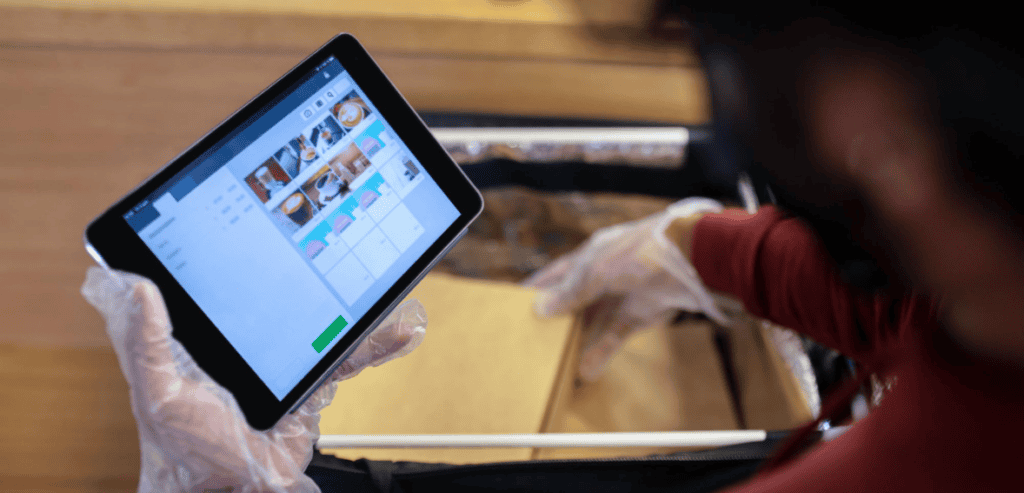
The digital catering platform for menus allows the caterer to build an interactive menu for the client to choose what dishes they would like by viewing the photography, deselect and select the dishes in order to build their own menu, view the financial consequences, and submit the order through the platform as part of the basis for the event agreement.
Technology used in food services with regards to menu management also allows for dynamic dietary accommodation management that events call for; whereby the platform manages the dietary needs of the guests on the list and identifies the available menu dishes that can cater to each requirement, as well as alerting the caterer of any missing dietary accommodations on the currently built menu prior to the event. Menu management catering technology trends also include allergen tracking software, where every ingredient in every menu item is accounted for as well as providing allergen information required by regulation and expected by clients as the norm.
Event Planning Platforms and Coordination Technology
The coordination demands of large-scale catering events are genuinely complex, involving the synchronization of kitchen production timelines, delivery logistics, staffing schedules, equipment inventory, and client communication across timelines that span weeks of planning and culminate in a single high-stakes execution window. Smart event food planning platforms that manage these coordination demands through integrated project management, communication, and operational tracking tools reduce the coordination overhead and the error risk that manual management creates.
The application of technology in food service to event coordination enables catering establishments to have one place with all the information about the event in question, which includes the finalized menu, number of guests, dietary restrictions, location and time delivery needs, staffing needs, equipment needs, and any past interactions between the establishment and its clients regarding the event.
Technology trends related to catering event planning include the incorporation of kitchen production management, whereby the confirmed menu automatically creates prep lists and station assignments from that menu instead of relying on the executive chef to interpret the client’s order into production instructions. In regards to event coordination, the area of staffing management enables the catering establishment to coordinate and plan its staff for the event through the use of a platform that keeps track of all aspects of the staffing process instead of using manual systems such as text messaging and phone calls.
Smart Kitchen Technology and Production Management
The kitchen production dimension of catering operations presents specific technology opportunities that differ from the restaurant kitchen context because catering production is characterized by high volume, batch production, variable timing that depends on event schedules, and the logistical challenge of maintaining temperature, quality, and presentation standards during transport from production to service location.
Smart technologies in food event planning technology, used in terms of catering production management, assist management in dealing with production issues that may occur within the scope of their operations, including the accurate scaling of recipes in accordance with the actual amounts needed for every event in accordance with the number of guests attending; scheduling of production processes in case more than one event requires the same kitchen capacity during the same day; and documentation of the food safety temperature process necessary for the transportation of the food product.
Integration of digital menu catering solutions with the production management solution enables operators to make sure that the approved menu is seamlessly transferred into the production planning as a task to prepare the meals with an indication of its amount, thus skipping the transcription phase and avoiding the problem of production mistakes caused by a late client change of mind. Tech in food service used for food safety documentation ensures temperature control, food safety log documentation, and HACCP certification via electronic solutions instead of paper records.
Client Communication and Relationship Technology
The client relationship dimension of catering business management includes communication, contract management, payment processing, and feedback collection workflows that technology platforms are increasingly handling more efficiently than the manual and semi-manual processes that smaller catering operations have historically relied upon.
Trends in catering technology concerning client communication technology include the use of automated touchpoints that will notify clients on how well they are progressing at every stage of the planning timeline from informing them that their inquiries have been received, scheduling tasting appointments of the menu, sending confirmation before the event takes place, and communicating with clients after the event takes place, thus eliminating the need for a staff member to communicate with the clients manually whenever there is any need to do so at the right time.
The smart event food planning platform that incorporates contract and payment management allows caterers to send contracts automatically based on confirmed events, collect digital signatures and payments for deposits and balances automatically, therefore eliminating the need for different software solutions for every part of the commercial relationship. Collection and management of client feedback is another trend in catering technology since the process ensures collection of clients’ feedback, analysis of levels of satisfaction on particular services provided, and the services that clients liked or disliked.
Technology Adoption Challenges and Practical Realities
The adoption of catering technology is not without the practical challenges that accompany the introduction of new systems into operations that have developed effective if manual processes over years of experience.
Tech in food service adoption requires staff training investment that takes time away from the operational work the technology is eventually intended to support, creates a period of reduced efficiency as the team learns new workflows, and produces the resistance that is common when experienced staff are asked to change practices that have served them well in their current form.
Digital menu catering and event management platform implementation also requires the data migration work of converting existing event records, client information, and recipe databases into the format that the new system requires, which is often more time-consuming than pre-implementation estimates suggest.
The catering operations that navigate technology adoption most successfully are those that implement incrementally rather than attempting to simultaneously adopt new tools for every aspect of the business, starting with the highest-pain operational areas where the efficiency gain is most immediately visible and using the success of that initial adoption to build organizational confidence and capability before expanding to additional technology applications.
Conclusion
Catering technology trends that encompass digital menu catering platforms, smart event food planning systems, kitchen production management tools, and client communication technology are collectively transforming how catering businesses manage their operational complexity and deliver their client experience.
Tech in food service applied to the catering context enables the coordination quality, the documentation accuracy, and the client experience consistency that manual systems cannot reliably provide at scale, creating competitive differentiation for catering operations that invest in technology adoption relative to those that continue with purely manual processes.
The catering businesses that engage thoughtfully with available technology, implementing it in ways that match the specific operational challenges of their business model and client base, are building the operational infrastructure for sustainable growth in a competitive market where client expectations for both food quality and service professionalism continue to rise.